Metsä’s Kuura Exit Puts Finland’s Textile-Fibre Ambitions Under Pressure
Kuura textile fibre
Metsä abandons Kuura mill
Metsä Group has cancelled plans to build a commercial Kuura textile-fibre mill in Kemi, Finland. The decision highlights the difficult market conditions facing new wood-based materials, particularly when lower-cost capacity is expanding rapidly in Asia.
Metsä said the Kuura project no longer had sufficient commercial grounds to continue in its current form. The company did not describe the decision as a technical failure. Instead, it pointed to a significant change in the global market for man-made cellulosic fibres.
The announcement is important for Finland’s bioeconomy. The country has a strong pulp industry, extensive forest resources and advanced process-engineering capabilities. However, these advantages do not automatically translate into profitable textile-fibre production.
Why Kuura became difficult to finance
Kuura was designed to convert Finnish softwood pulp into a higher-value textile material. The fibre could have been used in clothing, home textiles and technical applications.
The proposed Kemi facility was expected to produce approximately 100,000 tonnes of fibre per year and employ about 250 people. Production would not have started before 2029, while a construction decision had previously been considered for late 2026.
The commercial challenge emerged from the wider man-made cellulosic fibre market. This sector includes materials such as viscose and lyocell, which are produced from cellulose using different chemical and industrial processes.
According to Metsä, substantial new capacity has appeared in Asia in a relatively short period. The resulting overcapacity has weakened prices and reduced the competitiveness of fibres produced with higher environmental or regional costs.
This creates a difficult equation for European producers. A new fibre must offer reliable quality, competitive production costs and sufficient volumes. At the same time, textile companies must be willing to sign long-term contracts or pay a premium for lower-impact production.
Metsä’s conclusion was that too few customers were currently prepared to pay that premium.
The development also illustrates a broader limitation of sustainability strategies in the textile industry. Brands may set ambitious targets for renewable materials, lower emissions and reduced water use, but purchasing decisions remain strongly influenced by price, supply security and processing performance.
Packaging receives priority
While cancelling the Kuura mill, Metsä is moving ahead with a different fibre-based product. The group plans to invest approximately EUR 25 million in a new Muoto moulded-fibre packaging line at its Äänekoski site.
The line is scheduled to start operating in 2028 and is expected to have nominal capacity exceeding 100 million products per year. Valmet will supply the production technology.metsagroup
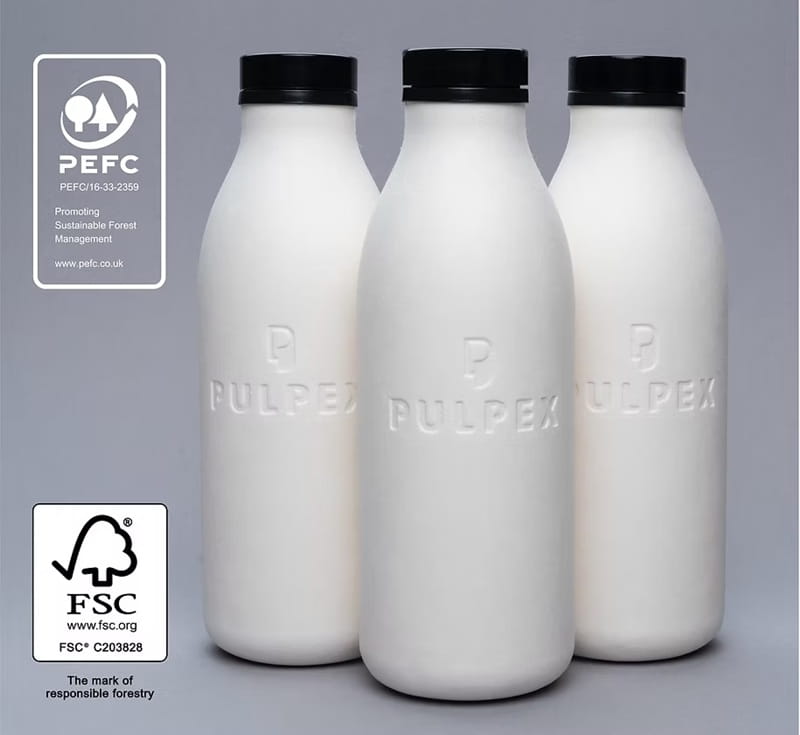
Muoto products are made directly from wet wood pulp. The material is designed to combine low weight, stiffness and shapeability for applications including food, serving and other packaging formats.
Metsä’s decision suggests that packaging currently offers a clearer route to commercialisation than new textile fibres. Demand for alternatives to selected fossil-based and single-use plastic applications is being supported by regulatory developments, customer commitments and changes in packaging design.
The European Union’s Packaging and Packaging Waste Regulation may also support fibre-based solutions in some product categories. However, fibre packaging is not automatically suitable for every application. Barrier performance, recyclability, food-contact compliance, transport efficiency and total material use still need to be assessed on a case-by-case basis.
The contrast between the two projects is significant:
-
Kuura was exposed to global textile prices and intense Asian competition.
-
Muoto targets packaging applications with more localised value chains.
-
Muoto can use existing mill-site infrastructure and a nearby demonstration facility.
-
The packaging line requires a smaller investment than the proposed textile-fibre mill.
Metsä is therefore directing development capital toward a product that appears closer to market demand and easier to integrate into existing operations.
Spinnova faces a crucial test
The cancellation of Kuura has shifted attention toward Spinnova, another Finnish company developing wood-based textile fibres.
Spinnova’s technology mechanically processes cellulose into fibre without dissolving the cellulose. The company says its process can use wood pulp and waste-based raw materials while avoiding the chemical dissolution stage associated with some conventional cellulosic-fibre routes.
The technology is different from Kuura, so Metsä’s decision does not directly determine Spinnova’s technical prospects. The companies nevertheless face a similar commercial problem: producing a sustainable fibre is not enough unless the process can reach stable operation and competitive economics.
Spinnova has publicly filed a registration statement for a proposed US initial public offering and dual listing on the Nasdaq Capital Market. The company is preliminarily targeting at least USD 15 million, or approximately EUR 13 million, in gross proceeds.wwd+1
The proposed funds would support the ramp-up of Spinnova’s Eteläportti demonstration facility in Jyväskylä, further commercialisation work and general corporate purposes. The offering is expected to be considered for September or October, although the timing, price and number of securities have not yet been determined.
The transaction remains conditional on several factors, including shareholder approval, an effective registration statement, Nasdaq approval and suitable market conditions. Spinnova has also warned that the proposed offering may not proceed.tradingview
From brand interest to binding demand
Spinnova has attracted attention from international brands, including Adidas, Ecco and brands associated with Bestseller. Products containing Spinnova fibre have reached consumers, demonstrating that the material can be incorporated into commercial items.
However, brand trials, pilot projects and limited collections are not equivalent to binding purchase commitments. A large-scale production plant requires more predictable demand.
Spinnova’s public filing makes this distinction particularly important. The company has stated that many relationships with brands and value-chain partners vary in scope and should not be interpreted as material collaboration agreements. The company will likely need offtake agreements that specify volumes, quality requirements and delivery conditions.
This is a familiar challenge for emerging materials. A brand may be interested in testing a new fibre, but converting that interest into recurring orders requires the material to satisfy several industrial criteria:
-
Consistent fibre quality from batch to batch.
-
Reliable production uptime.
-
Compatibility with spinning, weaving, dyeing and finishing equipment.
-
A cost structure that supports commercial customers.
-
Sufficient supply volumes over several years.
The greatest challenge is often not laboratory performance but the transition from demonstration-scale production to dependable industrial supply.
Financial pressure remains significant
The proposed US fundraising could give Spinnova additional time to improve its demonstration operation and attract investors. It would also broaden the company’s access to capital markets.
At the same time, a new share issue would dilute existing shareholders. The final effect cannot be calculated until the offering size and pricing are known.
Recent reporting based on Spinnova’s preliminary prospectus also points to the gap between technological visibility and financial scale. The company reported limited revenue compared with its operating losses, while its commercialisation programme continues to require external funding.wwd
The planned financing should therefore not be interpreted as proof that a large commercial plant has become economically viable. It is better understood as an attempt to finance the next stage of validation.
For investors and industrial partners, the key questions are likely to include:
-
How much will it cost to restart and operate Eteläportti?
-
Can the facility produce consistent fibre at a higher throughput?
-
What production-cost reductions are achievable?
-
Will Spinnova secure binding customer commitments?
-
How much additional capital could be required after the proposed offering?
Spinnova is scheduled to publish its January–June 2026 half-year report on 31 August. The report may provide more information about cash resources, demonstration-facility trials and the company’s commercialisation timetable.tradingview
A warning for Finland’s bioeconomy
Metsä’s Kuura decision is not evidence that wood-based textile fibres are technically impossible. It is evidence that technical feasibility and commercial competitiveness are separate conditions.
Finland can produce advanced cellulose-based materials, but domestic production must compete with global supply chains. If Asian capacity expands faster than demand, even a fibre with strong environmental credentials may struggle to command a premium.
The same lesson applies to other emerging materials, including recycled polymers, bio-based plastics and low-carbon chemical products. Sustainability can create market value, but customers still require performance, availability and acceptable pricing.
For producers, the commercial strategy may need to focus on applications where customers can justify a premium or where regulation is changing the competitive environment. Packaging is one example, although it also faces demanding requirements related to barriers, recycling systems and end-of-life management.
Textile-fibre producers may need to target higher-value segments first, such as premium blends, technical textiles or applications where traceability and environmental performance have measurable commercial value. Kuura textile fibre
What to watch next
The cancellation of the Kuura mill leaves Spinnova with greater visibility but not an easier market.
Spinnova must show that its technology can move beyond brand demonstrations and operate with reliable economics. The proposed US listing could provide capital and increase investor exposure, but it does not remove the need for customers, scale and competitive production costs.
Metsä’s move into Muoto packaging sends an equally clear message: in the current market, the strongest opportunities may be found where sustainable materials solve a specific regulatory or performance problem and can be manufactured using existing industrial infrastructure.
The central question for Finland’s wood-based materials sector is therefore no longer whether cellulose can be converted into new products. The more important question is whether those products can achieve sufficient scale, pricing power and customer commitment before development capital runs out.
Polybion Scales Bacterial Cellulose for Industrial Use
More…