Breakthrough Nylon Recycling Deal Gives Epoch Biodesign Commercial-Scale Advantage
Breakthrough Nylon Recycling Deal Gives Epoch Biodesign Commercial-Scale Advantage
Epoch secures a Spanish polymer plant
Epoch Biodesign has acquired the former DOMO nylon 6,6 polymerisation facility in Blanes, Catalonia. The transaction gives the British materials-technology company access to an established industrial site that it plans to use for recycled polyamide production.
The facility has reported production capacity of approximately 52,000 tonnes per year. Epoch says the acquisition will allow it to integrate more of its recycling chain, from the treatment of nylon waste to the manufacture of high-performance recycled polymers.interplasinsights
The company’s move is significant because many advanced-recycling businesses can produce recovered monomers or intermediate materials but do not control the final polymerisation stage. Owning polymer-production assets could help Epoch shorten development cycles, test formulations more quickly and supply customers with materials at a more commercial scale.
Renewable Carbon News reported that the acquisition price was slightly above EUR 4 million and that approximately 60 jobs at the Blanes site are expected to be retained. The plant was previously operated by DOMO Chemicals.renewable-carbon
Why nylon 6,6 matters
Nylon 6,6, also known as polyamide 6,6 or PA6.6, is an engineering polymer used where strength, heat resistance, wear performance and dimensional stability are important.
Typical applications include:
-
Automotive components.
-
Industrial parts and machine elements.
-
Electrical and electronic components.
-
Technical textiles.
-
Apparel and performance clothing.
-
Ropes, airbags and other demanding applications.
Unlike many commodity plastics, nylon 6,6 is often selected because it provides a particular combination of mechanical and thermal properties. Replacing it with a lower-performing material is therefore not always straightforward.
This performance profile also makes end-of-life recovery important. If discarded nylon can be converted into virgin-quality building blocks, manufacturers may be able to use recycled material without accepting a significant loss in performance.
The source material supplied for this article states that global nylon 6,6 consumption exceeds 2 million tonnes annually, while less than 1% is recycled at the end of its life. That comparison illustrates the scale of the opportunity, although precise recycling rates can vary depending on the definition of “recycled,” the product category and the geographic area measured.
From waste to polymer
Epoch Biodesign is developing enzymatic recycling technologies for nylon and other polymers. Its approach uses enzymes designed with the help of artificial intelligence to break polymer waste down into its constituent chemical building blocks.
For nylon 6,6, the objective is to recover the monomers used to make the polymer. These recovered molecules can then be purified and reintroduced into polymer production.
The process can be described in four stages:
-
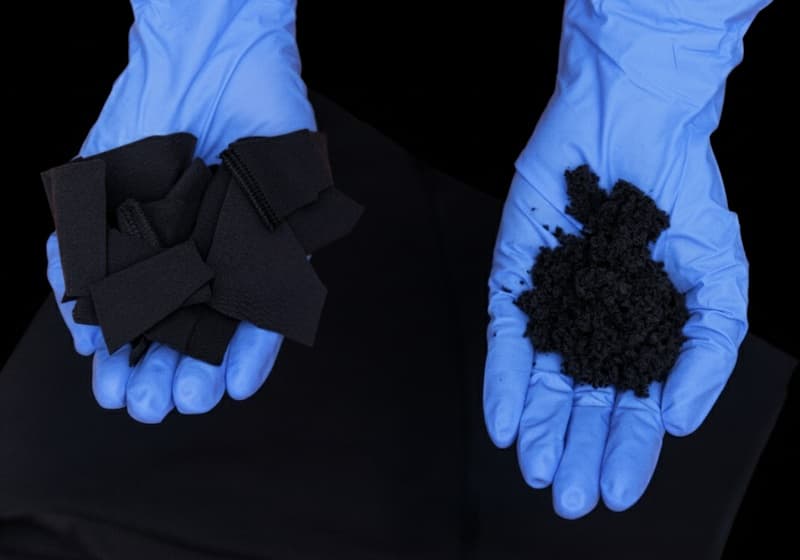
Nylon waste is collected and prepared for processing.
-
Enzymes break the polymer chains into smaller chemical components.
-
The recovered monomers are purified.
-
The monomers are polymerised again to produce recycled nylon 6,6.
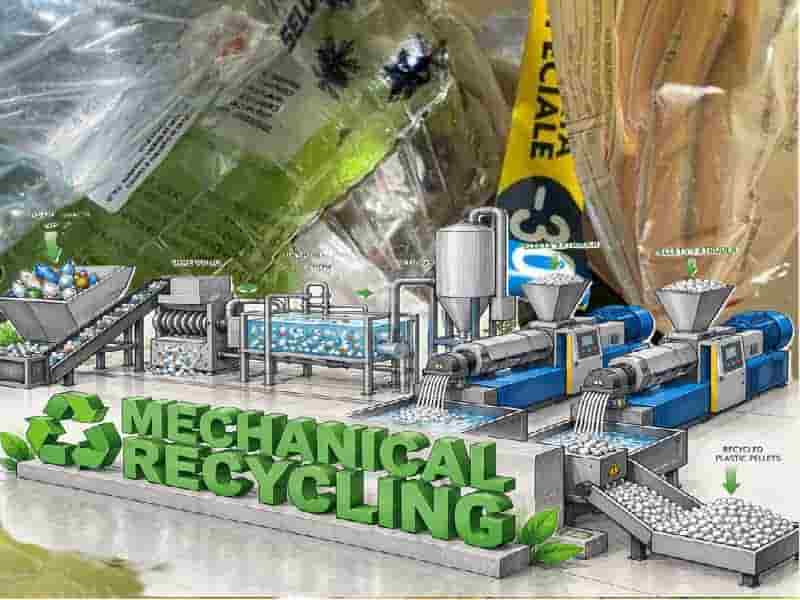
This route differs from mechanical recycling. Mechanical recycling normally involves sorting, washing, melting and reprocessing plastic. It can be effective for suitable, relatively clean waste streams, but repeated processing and contamination may affect material quality.
An advanced chemical or enzymatic route aims to return the polymer to a more fundamental chemical stage. If the recovered monomers meet the required purity specifications, the resulting polymer may be suitable for applications that demand consistent, high performance.
The term “infinite recycling” should nevertheless be used carefully. No recycling system is literally unlimited in practice. Collection losses, contamination, energy use, purification requirements and polymerisation efficiency all affect the number of times a material can realistically circulate.
Vertical integration lowers development barriers
The Blanes acquisition gives Epoch control over an important part of the value chain. The company can now work more directly on the transition between recycled monomers and finished polymer.
This may provide several advantages:
-
Faster testing of polymer grades and formulations.
-
Greater control over quality and process conditions.
-
A clearer route to customer qualification.
-
Reduced dependence on an external polymer producer.
-
More direct feedback between waste processing and final material performance.
The acquisition also gives Epoch the opportunity to use existing industrial infrastructure instead of building a new polymerisation site from the ground up.
That does not eliminate the technical and financial risks. A plant designed for conventional polymer production may require modifications before it can process recycled feedstocks. Equipment compatibility, purification quality, catalyst performance, process stability and product certification will all matter.
The company will also need to demonstrate that its recycled nylon can meet the specifications required by automotive, textile and industrial customers. A laboratory result or pilot batch is not enough for sectors that require stable supply, traceability and long-term technical support.
Scale is the next challenge
Epoch’s acquisition provides commercial-scale polymerisation capacity, but capacity is not the same as output. The effective production rate will depend on the availability and quality of recycled nylon waste, the conversion efficiency of the enzymatic process and the time required to qualify products with customers.
Feedstock supply will be particularly important. Nylon 6,6 waste can come from different sources, including production scrap, discarded textiles, automotive components and industrial products. These streams may contain dyes, coatings, blends, additives or other polymers that complicate processing.
A successful recycling model therefore requires more than an efficient enzyme. It also needs:
-
Reliable collection systems.
-
Accurate sorting and identification.
-
Pre-treatment that removes contaminants.
-
Efficient monomer recovery and purification.
-
Consistent polymerisation.
-
Customers willing to purchase recycled grades.
-
A cost structure that can compete with virgin nylon.
The availability of suitable waste may also determine which applications Epoch can serve first. Industrial scrap and relatively concentrated waste streams are generally easier to manage than mixed post-consumer textiles.
Partnership activity continues
Epoch has previously been developing its recycling technology through pilot-scale work. Renewable Carbon News reported that the company planned to commission a larger demonstration facility in London with annual nylon 6,6 recycling capacity of more than 150 tonnes.renewable-carbon
The company also announced a cooperation agreement with US fibre producer Invista in February 2026, according to the same report. Such partnerships can help emerging recycling companies access technical expertise, feedstock knowledge and potential customer routes.
The Blanes site adds another dimension to this development. Instead of remaining primarily a technology developer, Epoch is moving closer to the position of an integrated materials producer.
That change could improve commercial credibility, but it also increases operational responsibility. Running a polymerisation facility requires expertise in process safety, maintenance, quality control, energy management and regulatory compliance. Nylon 6,6 recycling
What the acquisition means for the nylon market
The transaction reflects a broader shift in the plastics industry. Advanced recycling companies are increasingly seeking assets that connect laboratory technology with real manufacturing capacity.
For polymer producers and compounders, recycled nylon can offer a way to reduce reliance on virgin fossil-based feedstocks while maintaining familiar material properties. For brands and manufacturers, locally produced recycled polyamide may support recycled-content targets and supply-chain traceability.
The commercial value will depend on the difference between the cost of recycled and virgin nylon 6,6. Enzymatic processing may offer environmental and quality advantages, but the technology must ultimately operate at a cost acceptable to customers.
Energy demand, solvent or chemical use, waste-treatment requirements and transport distances should also be included in any life-cycle assessment. Recycled content alone does not prove that a product has a lower total environmental impact.
Epoch will therefore need to demonstrate both technical performance and credible environmental data. Independent life-cycle assessments, chain-of-custody documentation and product certification could become increasingly important as customers face stricter sustainability reporting requirements.
A promising but unproven step
The acquisition of the Blanes site gives Epoch Biodesign an important industrial platform for nylon 6,6 recycling. It could help the company close the gap between enzyme development and commercial polymer production.
The move is not, however, a guarantee of successful large-scale recycling. The company must still validate its process, secure suitable waste streams, restart or adapt the facility, produce consistent polymer grades and win long-term customer contracts.
If those steps are successful, the Blanes plant could become a reference point for advanced polyamide recycling in Europe. It would demonstrate a more integrated route in which plastic waste is converted into recovered monomers and then returned to high-performance polymer production.
The most important test will be whether Epoch can deliver recycled nylon 6,6 with dependable quality, competitive economics and verifiable environmental benefits. That will determine whether this acquisition becomes a major circularity milestone or simply another promising pilot in the development of advanced plastics recycling.
More…