Iran War Oil Prices: Brent Near $88 as Supply Risks Persist
Iran War Oil Prices: Brent Near $88 as Supply Risks Persist
Updated: August 28, 2026
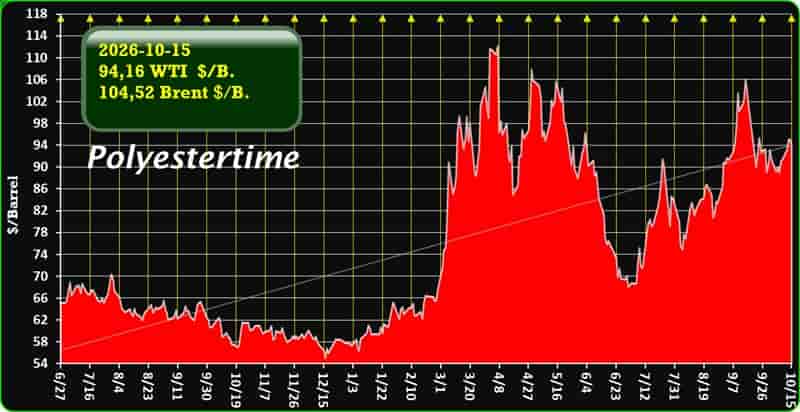
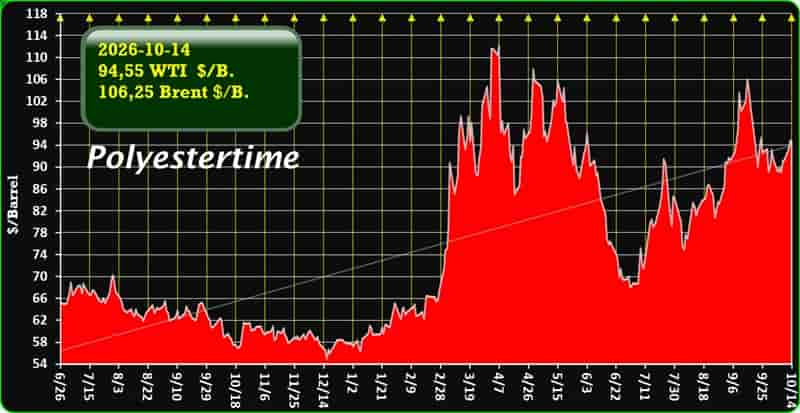
Brent crude is trading around $88 a barrel, while West Texas Intermediate, or WTI, is near $83. Those prices reflect a market caught between two powerful forces: serious risks to Middle Eastern oil supplies and hopes that diplomacy could restore safer shipping through the Strait of Hormuz.
Prices remain unusually sensitive to military, diplomatic and shipping developments. A single announcement concerning the strait, sanctions, negotiations or attacks on energy infrastructure can move the market sharply.
The quoted Brent and WTI figures should therefore be understood as approximate intraday levels rather than fixed closing prices. In the latest reported settlement, WTI rose to $83.53 a barrel and Brent reached $89.70 after both benchmarks recovered from three consecutive declines, according to The Wall Street Journal.
Oil prices at a glance
- Brent crude: approximately $88 a barrel
- WTI crude: approximately $83 a barrel
- Main upside risk: renewed disruption to Gulf production and shipping
- Main downside influence: diplomatic progress and improved tanker traffic
- Market condition: highly volatile and driven by breaking news
Why the U.S.–Iran war is affecting oil prices
The war matters to energy markets because the Gulf contains some of the world’s largest oil producers and export terminals. The Strait of Hormuz is the region’s most important maritime outlet.
Restrictions, attacks or extended delays in this passage can prevent crude oil and refined fuels from reaching international buyers. Even when some vessels continue to sail, higher insurance costs, security requirements and transport delays can raise the effective cost of every barrel.
Oil prices do not respond only to volumes that have already been lost. Traders also price in the possibility of future disruption. This additional geopolitical risk premium can rise rapidly when negotiations deteriorate or military activity intensifies.
Conversely, credible evidence of safer navigation or a diplomatic agreement can remove part of that premium. This explains why prices have moved in both directions despite the continuing conflict.
The Strait of Hormuz remains the central issue
Talks involving Iran and Oman have raised hopes that a workable shipping corridor could be established. Reports of increased vessel traffic have also offered the market some reassurance.
However, the political and operational conditions needed for a sustained reopening remain uncertain. A preliminary understanding is not the same as unrestricted, commercially reliable transit. Shipowners, insurers and commodity traders need evidence that vessels can operate safely and predictably before treating the supply problem as resolved.
U.S. Central Command has conducted mine-clearance and maritime operations in the area. Its official material documents the military effort to protect navigation and enforce U.S. policy, although statements from a party to the conflict should be considered alongside independent reporting. See the U.S. Central Command source.
For the oil market, the decisive question is not simply whether an individual ship can pass. It is whether large and regular flows of crude oil, diesel, gasoline and jet fuel can move through the region without repeated interruption.
Supply conditions remain tight
The conflict has already produced significant losses in Gulf output and exports.
In its August Oil Market Report, the International Energy Agency estimated that global oil supply reached 101.5 million barrels per day in July. That was 6.3 million barrels per day below the previous year’s level, with 8.3 million barrels per day of Gulf production still shut in.
The IEA also reported that observed global oil inventories fell by 69 million barrels in July. Stocks had declined by approximately 410 million barrels since the beginning of the war. These figures indicate that the market has been using stored oil to absorb part of the disruption.
The agency projected a global supply deficit of 1.8 million barrels per day for the third quarter of 2026. Its assessment nevertheless remains a forecast and will change if production, shipping conditions or demand develop differently. The complete figures and methodology are available in the IEA Oil Market Report for August 2026.
Why oil has not remained above $100
Severe disruption does not automatically produce a permanently rising price.
High fuel costs can weaken consumption, while producers outside the affected region may increase output or exports. Emergency inventories, alternative pipelines and longer shipping routes can also replace part of the missing supply.
The IEA forecasts that world oil demand will decline by 1.6 million barrels per day in 2026, partly because high prices and disruption are limiting consumption. Weaker demand acts as a brake on crude prices even while physical supplies remain constrained.
The U.S. Energy Information Administration forecasts Brent spot prices averaging around $85 a barrel during the third quarter of 2026. That projection assumes severe restrictions on Hormuz transit through August, followed by a gradual recovery in regional production. The EIA emphasizes that the outlook is highly dependent on those assumptions. See the August 2026 Short-Term Energy Outlook.
Diplomacy can move prices as quickly as military action
Recent price movements demonstrate how rapidly expectations can change.
Oil fell earlier in the week as discussions between Iran and Oman encouraged hopes of a shipping arrangement. It subsequently recovered when optimism weakened and the market also turned its attention to escalating risks surrounding Russian supply.
This does not mean the Iran-related risk has disappeared. It means traders are assessing several supply threats simultaneously. The price of Brent incorporates conditions in the Middle East, Russian exports, global inventories, refinery capacity and expectations for economic growth.
Markets will look for verifiable outcomes rather than broad political statements. These include sustained tanker movements, lower shipping insurance costs, restored Gulf production and an agreement accepted by the principal parties. Iran war oil prices
How consumers and businesses may be affected
Crude prices influence fuel costs, but the relationship is neither immediate nor exact.
Petrol, diesel and aviation-fuel prices also depend on refinery availability, transportation costs, taxes, exchange rates and local inventories. Refining constraints can therefore keep consumer prices elevated even when crude oil falls.
The IEA reported particularly tight markets for diesel, jet fuel and gasoline during the conflict. Businesses that depend heavily on transportation may continue to face higher costs and unpredictable delivery schedules.
The broader economic effects could include:
- Higher road and air transportation costs
- Pressure on household energy budgets
- More expensive agricultural and industrial inputs
- Increased inflation risk in oil-importing economies
- Improved revenue for exporters able to maintain production
Iranian civilians are also experiencing severe economic pressure from warfare, sanctions, lost oil revenue and inflation, according to Associated Press reporting. These human consequences should not be reduced to their effect on commodity prices.
What could send oil prices higher?
Brent and WTI could rise if:
- Shipping through the Strait of Hormuz deteriorates again
- More Gulf production or export infrastructure is disabled
- Tanker attacks raise insurance and freight costs
- Diplomatic talks break down
- Global inventories decline faster than expected
- Disruption to Russian oil adds another supply shock
A prolonged interruption would probably affect refined fuels as well as crude oil, increasing the economic impact.
What could push prices lower?
Oil prices could fall if:
- A credible and enforceable shipping agreement is reached
- Gulf production returns faster than expected
- Tanker traffic and insurance availability normalize
- Global demand weakens
- Producers outside the Gulf add sufficient supply
- Commercial or emergency inventories rebuild
A ceasefire headline alone may cause a short-term price reaction. A durable decline would require evidence that physical supply and transport conditions are genuinely improving.
Outlook for Iran war oil prices
The current Brent price near $88 and WTI price near $83 suggest that the market still sees a meaningful supply risk, but not an irreversible loss of Gulf oil.
The most likely feature of the near-term market is continued volatility. Prices may move sharply as traders interpret negotiations, military activity, tanker movements and inventory reports.
Readers should distinguish among confirmed events, official claims and forecasts. No single price target can reliably account for the political and military decisions still ahead.
The clearest indicators to watch are sustained shipping volumes through the Strait of Hormuz, actual Gulf production, global inventory changes and concrete diplomatic commitments. Until those indicators improve together, oil prices are likely to retain a substantial geopolitical risk premium.
Sources and methodology
This article was updated on August 28, 2026. It uses approximate intraday market levels supplied for Brent and WTI, checked against current financial reporting. Supply and demand figures come from the IEA and EIA. Military claims are identified by source and are not presented as independently verified facts.
Oil Prices and the US–Iran War: Why Brent Is Near $86 and WTI Near $81
More…