Asia Petrochemical Prices Stay Elevated as Supply Risks Intensify – Polymer Price Trends
Asia petrochemical prices – Full price table (24/08/2026 →31/08/2026)
| ITEM | 24/08/2026 | 31/08/2026 | +/− |
|---|---|---|---|
| Bottle grade PET chips domestic market | 7,730 yuan/ton | 7,900 yuan/ton | +170 |
| Chinese bottle-grade PET chips FOB export price | 1,050 $/ton | 1,085 $/ton | +35 |
| LDPE CFR Est China | 1,080 $/ton | 1,080 $/ton | – |
| PET Semidull — Fiber chips | 7,350 yuan/ton | 7,450 yuan/ton | +100 |
| PET Bright — Fiber chips | 7,350 yuan/ton | 7,450 yuan/ton | +100 |
| Pure Terephthalic Acid PTA domestic market | 6,440 yuan/ton | 6,200 yuan/ton | -240 |
| Pure Terephthalic Acid PTA FOB China | 830 $/ton | 840 $/ton | -10 |
| Monoethyleneglycol (MEG) South China | 6,083 yuan/ton | 6,048 yuan/ton | -35 |
| Monoethyleneglycol (MEG) CFR China | 725 $/ton | 710 $/ton | -15 |
| Paraxylene PX FOB Taiwan market | 1,094 $/ton | 1,075 $/ton | -19 |
| Paraxylene PX FOB South-Korea market | 1,083 $/ton | 1,064 $/ton | -19 |
| Paraxylene PX FOB EU market | 1,336 $/ton | 1,401 $/ton | +65 |
| Polyester filament POY 150D/48F domestic market | 8,950 yuan/ton | 8,900 yuan/ton | -50 |
| Recycled Polyester filament POY 150/48F domestic market | 7,200 yuan/ton | 7,200 yuan/ton | – |
| Polyester filament DTY 150D/48F domestic market | 9,850 yuan/ton | 9,900 yuan/ton | +50 |
| Polyester filament FDY 68D/24F | 9,750 yuan/ton | 9,750 yuan/ton | – |
| Polyester filament FDY 150D/96F domestic market | 9,100 yuan/ton | 9,100 yuan/ton | – |
| Polyester staple fiber 1.4D 38mm domestic market | 7,830 yuan/ton | 7,940 yuan/ton | +90 |
| Caprolactam (CPL) domestic market | 12,925 yuan/ton | 13,200 yuan/ton | +275 |
| Caprolactam (CPL) CFR China | 1,840 $/ton | 1,330 $/ton | -510 |
| Nylon 6 chips overseas market |
China / Northeast Asia (CFR Spot) $1,700 – $1,820 Southeast Asia (CFR) $2,100 – $2,150 Europe (FD/CFR Western Europe) $2,120 – $2,670 .North America (Delivered / Ex-Works)$2,900 – $2,940
|
China$1,600 – $1,720 / MT Germany / Europe$2,100 – $2,180 / MT United States$3,080 – $3,180 / MT Brazil$3,150 – $3,280 / MT UAE / Middle East $3,600 – $3,750 / MT
|
– |
| Nylon 6 chips conventional spinning domestic market | 13,100 yuan/ton | 13,400 yuan/ton | +300 |
| Nylon 6 chips high speed spinning domestic market | 12,750 yuan/ton | 13,600 yuan/ton | +850 |
| Nylon 6.6 chips domestic market | 16,700 yuan/ton | 16,800 yuan/ton | +100 |
| Nylon6 Filament POY 86D/24F domestic market | 14,500 yuan/ton | 14,350 yuan/ton | -150 |
| Nylon6 Filament DTY 70D/24F domestic market | 16,600 yuan/ton | 16,750 yuan/ton | +150 |
| Nylon6 Filament FDY 70D/24F | 14,500 yuan/ton | 14,900 yuan/ton | +400 |
| Spandex 20D domestic market | 31,700 yuan/ton | 31,700 yuan/ton | – |
| Spandex 30D domestic market | 31,200 yuan/ton | 31,200 yuan/ton | – |
| Spandex 40D domestic market | 28,500 yuan/ton | 28,500 yuan/ton | – |
| Adipic Acid China domestic market | 8,375 yuan/ton | 8,500 yuan/ton | +125 |
| Adipic Acid Europe market | 1,900 $/ton | 1,750 $/ton | -150 |
| Benzene domestic market East China | 8,200 yuan/ton | 8,500 yuan/ton | +300 |
| Benzene CFR China | 1,115 $/ton | 1,021 $/ton | -94 |
| Ethylene South East market | 1,000 $/ton | 1,030 $/ton | +30 |
| Ethylene NWE market CIF | 893 $/ton | 891 $/ton | -2 |
| Acrylonitrile (ACN) domestic market | 12,200 yuan/ton | 11,750 yuan/ton | -450 |
| Acrylonitrile ACN Southeast Asia | 1,445 $/ton | 1,380 $/ton | -65 |
| Acrylic staple fiber (ASF) CFR China | 15,905 yuan/ton | 15,805 yuan/ton | -100 |
| VSF viscose staple fiber | 14,300 yuan/ton | 14,400 yuan/ton | +100 |
| PP Powder domestic market | 10,300 yuan/ton | 10,650 yuan/ton | +350 |
| Naphtha overseas market | 757 $/ton | 739 $/ton | -18 |
| Phenol domestic market (Jinan Dezheng / Yanshan Petrochemical, Shandong) | 8,305 yuan/ton | 8,150 yuan/ton | -155 |
| Recycled PET | 4,350 yuan/ton | 4,400 yuan/ton | +50 |
Asia Petrochemical Prices Stay Elevated as Supply Risks Intensify
Geopolitical uncertainty, restricted feedstock flows and production cuts are supporting prices, although demand remains uneven across Asia.
What is driving the market?
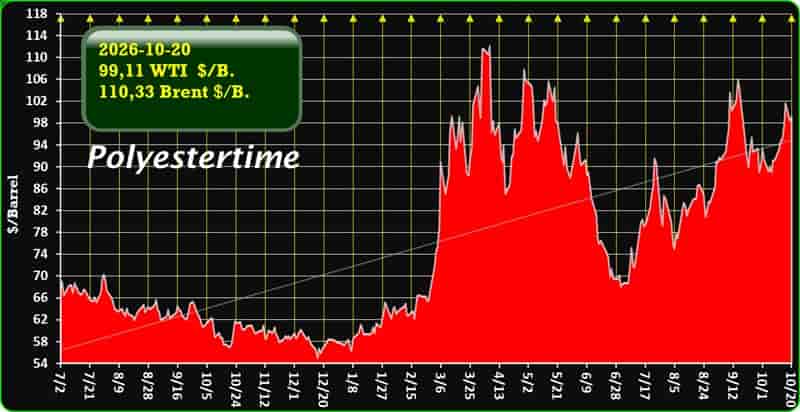
Asia’s petrochemical prices are entering September with a firm tone, but the market is not experiencing a broad-based recovery in consumption. Higher crude oil values, restricted Middle Eastern supply and lower operating rates are increasing replacement costs and limiting spot availability.
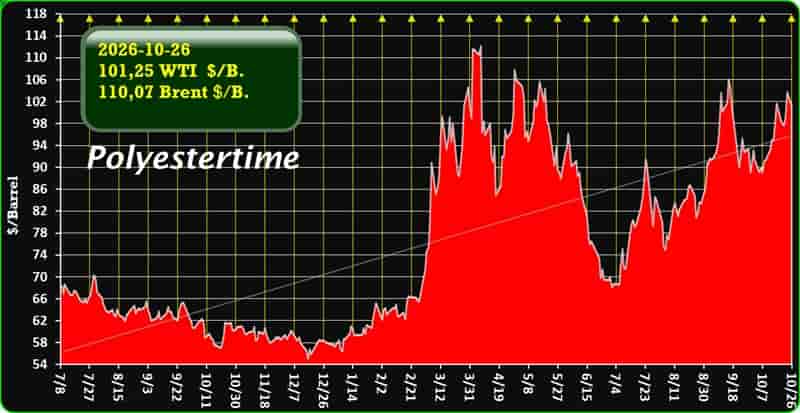
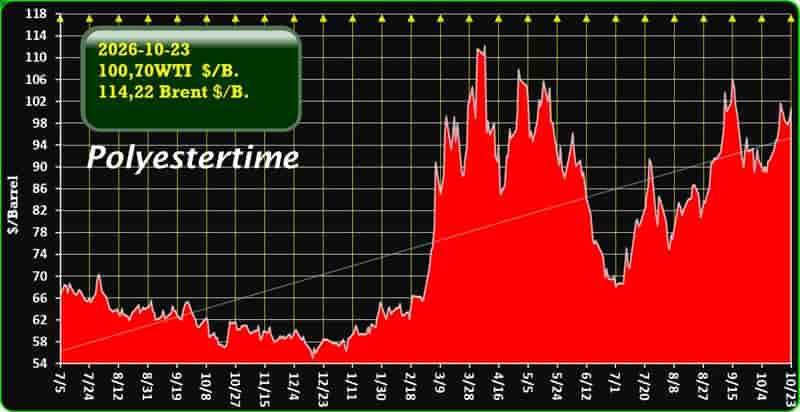
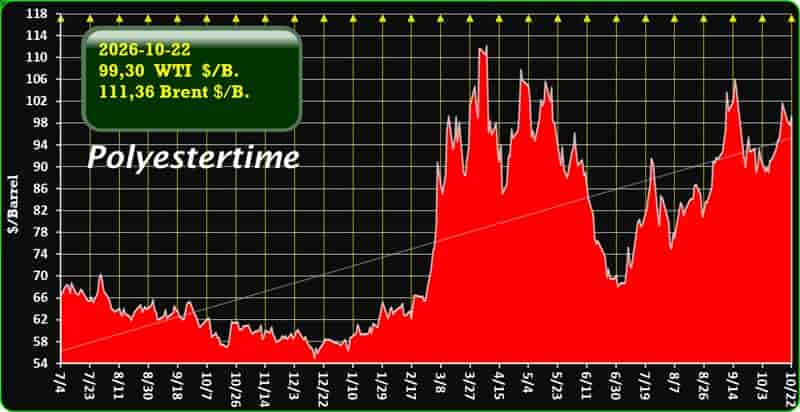
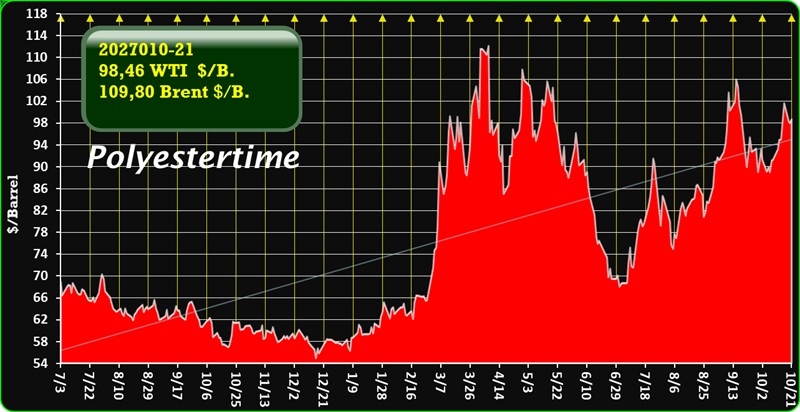
Oil-market volatility remains a key influence. Brent crude settled at $89.70 per barrel on 27 August, rising 2.1% after a three-session decline as traders reassessed the outlook for US-Iran relations and regional supply risks. This movement has reinforced support for naphtha, olefins and several downstream products.reuters
However, buyers have generally remained cautious. High prices are limiting affordability, while many consumers are relying on existing inventories or term contracts instead of building substantial spot positions. The result is a market where sellers have stronger negotiating power, but demand is still too weak to support a uniform rally.
Olefins remain supply-sensitive
Ethylene demand is selective
Ethylene has benefited from relatively better performance in selected derivatives, including polyethylene, ethylene oxide, monoethylene glycol and EPDM. These outlets are providing support to ethylene values even though demand from PVC and EVA buyers remains comparatively subdued.
Cracker economics are also influencing purchasing decisions. Producers are becoming more cautious about securing additional naphtha because feedstock availability is limited in some origins and upstream costs have increased. This is reducing the incentive to operate at maximum rates.
Propylene prices continue to rise
Northeast Asian propylene prices have strengthened for a second consecutive week. The main drivers are higher crude values, tight regional availability and firmer domestic prices in China.
Trading activity remains limited because high offers are difficult for polypropylene producers and other consumers to absorb. If the propylene rally continues, integrated producers may reduce polypropylene output and redirect more propylene to the merchant market.
Southeast Asian propylene prices have also firmed as spot cargoes remain scarce. The potential restart of facilities in Malaysia and Thailand during the second half of September could improve availability, although the timing and reliability of those restarts will be important for the regional balance.
Aromatics and ABS gain cost support
Higher styrene monomer costs are supporting Asian acrylonitrile butadiene styrene prices. ABS values have reached their strongest levels in several months in some regional markets, helped by earlier production cuts and reduced availability.
This price strength does not necessarily indicate stronger consumption from the automotive, appliance or electronics sectors. Instead, it reflects the pass-through of higher feedstock costs and tighter short-term supply.
Toluene prices are likewise responding to crude oil and naphtha movements. Reduced refinery operating rates in China are limiting domestic availability, although export economics have remained attractive. China’s toluene exports more than doubled year on year in July, according to data cited by ICIS.icis
MEG, EVA and PVC show mixed signals
MEG faces the sharpest supply pressure
Monoethylene glycol is one of the most supply-constrained products in the current Asian market. Reduced Middle Eastern exports have tightened availability for August and September, while crude-based Chinese plants have faced difficulty operating at optimal rates because of feedstock limitations.
ICIS reported that MEG prices rose by almost 8% in the week ending 21 August. Coal-based Chinese producers, by contrast, have maintained high operating rates because production margins remain attractive.icis
Downstream polyester and PET producers have responded by reducing output or shutting selected units. This limits consumption, but it has not fully offset the impact of reduced supply. MEG therefore remains vulnerable to further price increases if crude values rise or Middle Eastern shipments remain restricted.
EVA supply is limited
EVA import prices are stable to firm as producers attempt to transfer higher ethylene costs to buyers. Availability is being restricted by lower operating rates at several swing plants and by the prioritisation of LDPE production over EVA.
This creates a challenging environment for converters and manufacturers that need reliable EVA volumes. Buyers may face higher replacement costs even when final demand for photovoltaic, footwear or wire-and-cable applications is not particularly strong. Asia petrochemical prices
India supports PVC restocking
India’s PVC market has shown some improvement as pipe manufacturers begin preparing for stronger activity after the monsoon season. Nevertheless, higher container freight costs are contributing significantly to price increases, meaning that logistics—not only fundamental demand—is influencing import economics.
The recovery is likely to remain cautious. A sustained improvement would require better construction activity, improved affordability and more predictable freight conditions.
Methanol rises on restricted supply
Methanol prices have increased across several Asian markets as Middle Eastern supply remains constrained. Southeast Asian availability is also being affected by maintenance and recent operating disruptions.
Chinese methanol values have risen alongside stronger domestic futures. Seasonal procurement could provide additional support in September as buyers prepare for China’s week-long National Day holiday from 1 to 7 October.
In Taiwan and South Korea, spot demand is less dynamic because many buyers are already covered by term volumes. This illustrates the broader market pattern: prices are being supported by supply risk, while spot consumption remains selective.
September outlook
The most probable scenario is a firm but volatile Asian petrochemical market. Supply is expected to remain tight in several chains, while demand improves only gradually.
-
China: Pre-holiday restocking could provide temporary support before the October National Day break.
-
India: The end of the June-to-September monsoon season may encourage a cautious recovery in PVC and other construction-linked products.
-
Feedstocks: Crude and naphtha volatility will remain central to pricing decisions.
-
Olefins: Propylene and ethylene should remain sensitive to operating rates, spot availability and derivative margins.
-
MEG and methanol: Reduced Middle Eastern supply leaves both markets exposed to further upside risk.
-
Polyolefins: PE may perform better than PP if ethylene availability remains constrained and Chinese restocking materialises.
A significant price correction would require several developments at the same time: improved Middle Eastern exports, successful regional plant restarts, lower crude values and weaker-than-expected Chinese procurement. Until then, supply constraints are likely to keep prices elevated even without a strong recovery in end-user demand.
For buyers, the main priority is risk management rather than aggressive stock building. Monitoring feedstock exposure, regional availability, freight costs and plant-restart schedules will be essential for procurement decisions during September.
Sources and methodology
This article was prepared using the supplied market analysis and recent reporting from ICIS and Reuters. ICIS identified constrained production, higher feedstock costs, rising propylene values and acute MEG tightness in Asia. Reuters reported that Brent crude settled at $89.70 per barrel on 27 August after renewed uncertainty over US-Iran relations.reuters+1
Market assessments can change rapidly. Product prices, operating rates, freight costs and geopolitical conditions should therefore be checked against the latest verified assessments before making commercial decisions.
More…