OCEANZYME Tests Enzymes for Marine Plastic Recycling
OCEANZYME Tests Enzymes for Marine Plastic Recycling
A Spanish research consortium is investigating whether enzymes and marine microorganisms can recover plastic waste that conventional recycling processes struggle to handle.
The OCEANZYME project will examine litter collected from two Spanish marine regions, searching for bacteria and enzymes capable of breaking down highly degraded plastics. Its researchers will also study whether the recovered compounds can be used in products for fisheries and aquaculture.
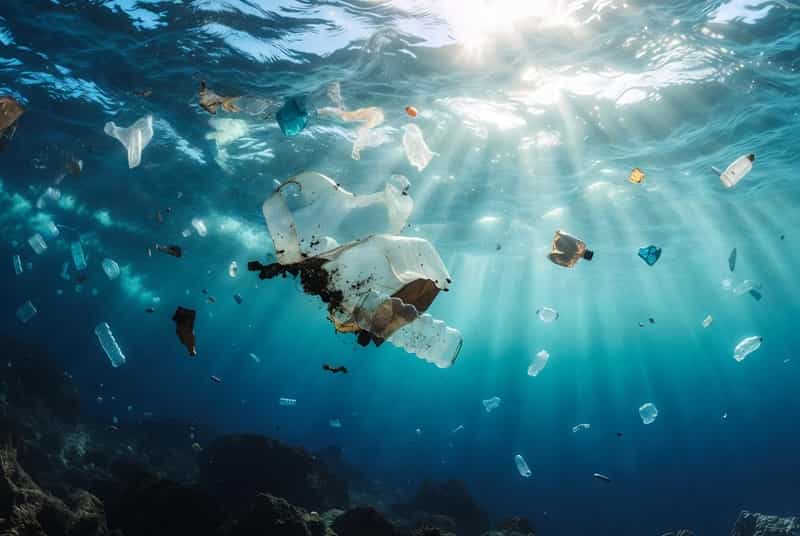
The initiative addresses a difficult part of the marine pollution problem: plastic that has spent long periods exposed to salt water, sunlight, changing temperatures and mechanical erosion.
Key points
OCEANZYME will run from 2026 to 2028.
The project combines marine-litter recovery, metagenomics, microbiology, enzyme testing and molecular modelling.
Collection campaigns will focus on Spain’s North Atlantic and Levantine-Balearic marine regions.
Researchers will look for microorganisms and enzymes with the potential to degrade selected plastic compounds.
The resulting materials may be assessed for applications connected with fishing and aquaculture.
Why marine plastic is difficult to recycle
Plastic recovered from the sea is not equivalent to clean, separately collected household packaging.
Long exposure to the marine environment can alter its surface, structure and mechanical performance. Waste collected from the seabed may also be contaminated, fragmented or mixed with other materials.
These conditions make sorting and conventional mechanical recycling more difficult. Even when the plastic can be processed, the resulting material may not have sufficient quality for reintroduction into demanding applications.
AIMPLAS identifies degradation, material heterogeneity and the difficulty of separating different waste streams as major obstacles to recovering marine litter.
OCEANZYME is exploring a biological route for waste that may no longer be suitable for established mechanical processes.
How enzymatic recycling works
Mechanical recycling normally cleans, sorts, melts and reforms plastic without fundamentally changing its polymer chains.
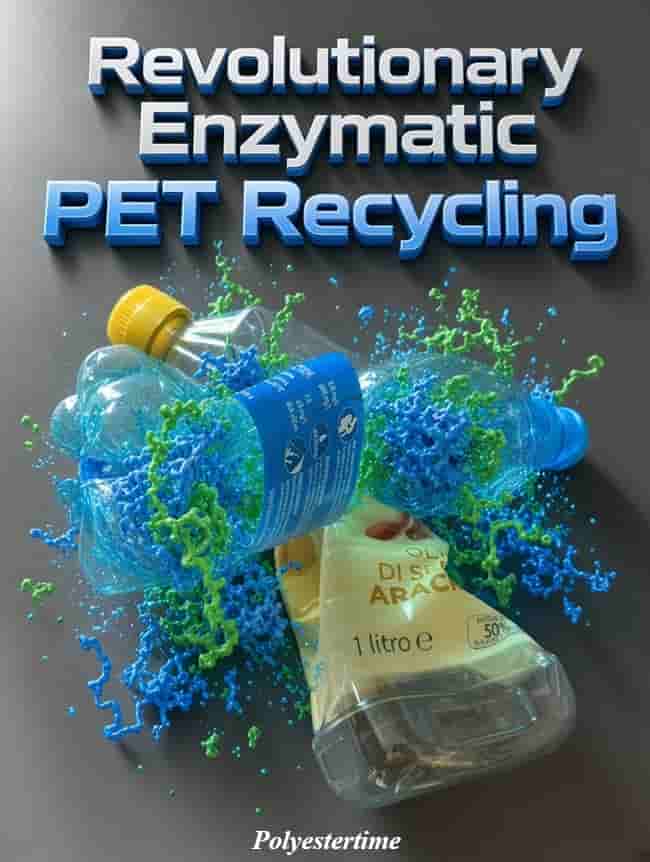
Enzymatic recycling takes a different approach. Selected enzymes act as biological catalysts that can break susceptible polymers into smaller chemical components.
Under suitable conditions, those components may be purified and reused as secondary raw materials. The objective is not simply to fragment the plastic but to recover compounds with sufficient quality for another production cycle.
The technology is promising, but its performance depends on several factors. These include the type of polymer, crystallinity, contamination, additives, temperature, pretreatment requirements and the ability of the enzyme to remain active under process conditions.
OCEANZYME is therefore a research project rather than a commercially proven solution for mixed marine litter.
Scientists will study microbes already living on the waste
Plastic surfaces in the sea can become colonised by complex microbial communities.
OCEANZYME will characterise plastic collected during its campaigns and analyse the microorganisms associated with it through metagenomics. This technique allows researchers to examine genetic material recovered from an environmental sample without having to cultivate every organism individually.
The analysis could reveal genes linked to enzymes capable of acting on particular plastic compounds.
Researchers will simultaneously attempt to isolate bacteria in pure cultures. These organisms can then be studied under controlled laboratory conditions to determine whether they demonstrate useful degradation activity.
The project’s primary research partners say this integrated approach will combine metagenomic analysis, enzyme characterisation, molecular simulation and bacterial isolation.
Molecular modelling will help identify promising enzymes
Finding a potentially useful enzyme is only one stage of the process.
OCEANZYME researchers plan to model selected enzymes in three dimensions together with their target plastic substrates. Molecular simulations can help scientists investigate how an enzyme may interact with a polymer and which structural characteristics could support or restrict degradation.
Promising candidates will then need to be produced and tested experimentally.
This combination of computational and laboratory work should help the consortium prioritise enzymes before assessing whether they can operate effectively on weathered marine plastics.
The process does not guarantee that every identified enzyme will become an industrial recycling tool. Activity observed during initial testing must still be evaluated for reaction speed, stability, scalability and environmental performance.
Collection campaigns will target two Spanish marine regions
The project will conduct passive-fishing campaigns in the North Atlantic and Levantine-Balearic regions.
Passive fishing, frequently associated with “fishing for litter” programmes, enables participating fishing vessels to bring ashore waste collected in their nets during normal operations rather than returning it to the sea.
OCEANZYME’s partners report average seabed-litter densities of between 40 and 300 objects per square kilometre in the targeted regions. The figure describes the range cited for those marine areas and should not be interpreted as a uniform measurement across every collection location.
Once brought ashore, the plastic will be classified and characterised before its microbial communities and recycling potential are investigated.
Who is participating in OCEANZYME?
The project is coordinated by the Spanish non-profit organisation Asociación Vertidos Cero.
Its scientific and technical consortium comprises:
AIMPLAS, the Plastics Technology Centre;
the Institute of Marine Sciences, or ICM-CSIC; and
the Institute for Advanced Chemistry of Catalonia, or IQAC-CSIC.
OCEANZYME began at the end of January 2026 and is scheduled to continue until 2028.
It is being developed with the collaboration of the Biodiversity Foundation of Spain’s Ministry for Ecological Transition and Demographic Challenge through the Pleamar Programme. It is also co-financed by the European Union through the European Maritime, Fisheries and Aquaculture Fund.
These organisational and funding details are confirmed by the participating CSIC institutes.
Potential uses in fisheries and aquaculture
The consortium will explore whether products recovered through enzymatic processing could be used in sectors including fisheries and aquaculture.
That objective could help create a circular relationship between marine-waste recovery and industries operating around the sea. Potential applications, however, will depend on the composition, purity, safety and technical performance of the recovered substances.
The project has not yet announced a commercially validated product made from OCEANZYME-derived material.
Claims that the programme will definitively turn marine litter into new fishing gear or packaging would therefore be premature. The present goal is to identify biological recycling routes and evaluate where their outputs might be technically suitable.
A complementary option, not a replacement for prevention
Enzymatic recycling could offer a useful pathway for selected polymers that are too degraded for high-quality mechanical recycling.
It should not be viewed as a substitute for preventing plastic leakage, improving waste collection or reducing unnecessary material consumption.
Recovering waste from deep marine environments is operationally difficult and expensive. Enzymatic treatment may also require sorting and pretreatment before the biological reaction can begin.
The environmental case will ultimately depend on the complete process, including collection, transport, energy consumption, reaction conditions, purification and the value of the recovered materials. Marine plastic recycling
What OCEANZYME must demonstrate
The project’s most important contribution may be determining what is technically realistic.
Researchers will need to establish which polymers can be treated, whether marine contamination inhibits enzyme activity and how quickly degradation occurs.
They will also have to examine whether the process can work on heterogeneous real-world waste rather than only on clean laboratory samples.
Additional questions concern enzyme production costs, pretreatment requirements and the environmental footprint of the entire recovery chain.
These considerations are especially important because heavily weathered plastics may behave differently from newly manufactured test material.
Recent attention highlights growing interest in the project
Industry coverage published on 28 July 2026 renewed attention around OCEANZYME and its proposed combination of marine-waste collection and enzymatic recycling. The report confirmed the project period, consortium and planned investigation of degraded seabed plastics.
The underlying project itself is not newly launched this week. Primary CSIC sources date its start to late January 2026 and publicly described the programme in May.
Distinguishing the project’s original launch from its more recent media coverage avoids presenting established information as a new scientific result.
Outlook
OCEANZYME brings together capabilities that are often treated separately: litter recovery, marine microbiology, polymer science and computational modelling.
Its integrated design could reveal whether microorganisms associated with marine waste provide useful starting points for new recycling enzymes.
The project remains at the investigation stage, and no industrial performance results have yet been published. Its value will depend on whether it can move from identifying biological activity to demonstrating a safe, scalable and environmentally credible recycling process.
Even a limited result could improve understanding of how weathered marine plastics interact with microorganisms and which waste streams are realistic candidates for biotechnology-based recovery.
For now, OCEANZYME represents a targeted attempt to recover value from a particularly difficult form of pollution—without overstating enzymatic recycling as a complete solution to marine plastic waste.
Heat-Tolerant Enzymes Revolutionize PET Recycling
More…