Oil price surges near $100 as fragile ceasefire doubts and supply risks fuel volatility across global energy markets and investor uncertainty
Oil price trend April 9, 2026: volatility dominates global markets
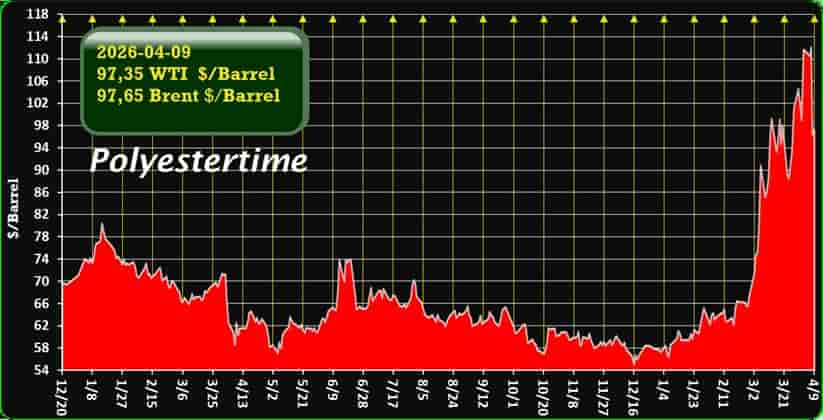
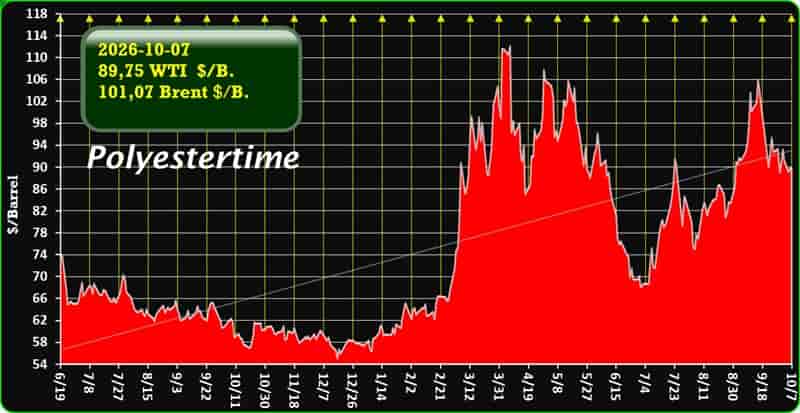
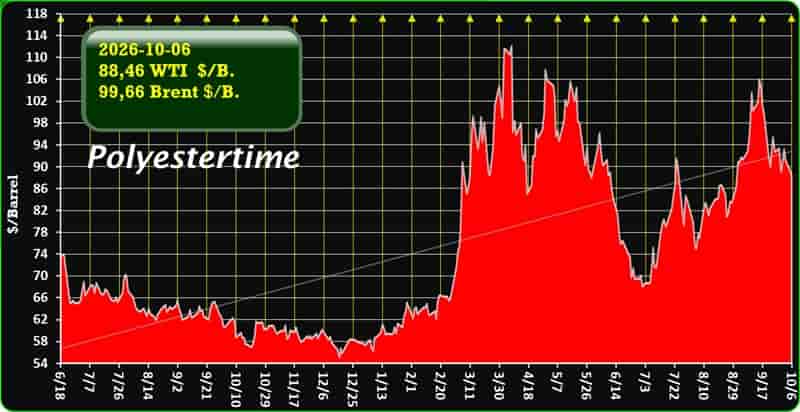
The oil price remains highly volatile on April 9, 2026, with both Brent and WTI crude trading in the $90–$100 per barrel range, reflecting a market driven more by geopolitical risk than fundamentals.
After a dramatic sell-off earlier this week, prices rebounded sharply. Brent crude climbed back toward $96–$97 per barrel, while WTI followed closely, reflecting renewed concerns about supply disruptions and fragile geopolitical developments.
This sharp rebound highlights a market still pricing in a significant geopolitical risk premium.
Current oil price snapshot
| Benchmark | Price Range (April 9, 2026) | Trend | Key Driver |
|---|---|---|---|
| Brent Crude | $95 – $100 | Rebounding | Middle East tensions |
| WTI Crude | $95 – $100 | Rebounding | Supply uncertainty |
| Monthly Trend | +11% approx. | Upward | War-driven volatility |
Brent has gained over 11% in the past month, underlining the sustained upward pressure caused by geopolitical instability.
Key drivers behind today’s oil price movement
1. Geopolitical tensions and ceasefire uncertainty
The dominant force behind today’s oil price is the fragile situation in the Middle East.
- A temporary ceasefire between the U.S. and Iran initially triggered a sharp price drop
- However, ongoing military activity and doubts about the truce quickly reversed sentiment
- Continued tensions around the Strait of Hormuz, a key global oil chokepoint, are keeping markets on edge
Investors are particularly concerned because around 20% of global oil flows pass through this region, making any disruption immediately impactful.
Markets are effectively pricing in a “risk premium,” reflecting the possibility of renewed escalation.
2. Supply-side uncertainty and disruptions
Global supply remains fragile despite temporary easing signals:
- Shipping risks in the Gulf continue to threaten logistics
- Insurance and transport costs remain elevated
- Any disruption could rapidly tighten supply
Recent weeks saw oil prices surge above $110 before correcting, illustrating how sensitive the oil price is to supply shocks.
Even with the ceasefire, confidence in stable supply has not been restored, keeping prices elevated.
3. Demand outlook and global economic signals
On the demand side, the picture is mixed:
- Strong consumption in Asia continues to support prices
- However, global economic uncertainty is weighing on expectations
- Equity markets have shown weakness due to energy-related risks
Asian stock indices and European markets declined as higher energy costs raised concerns about inflation and growth.
This creates a tension between short-term demand resilience and long-term economic caution.
4. OPEC+ and structural market balance
While not the immediate driver today, OPEC+ remains a key structural factor:
- Production discipline continues to support higher price levels
- Limited spare capacity globally amplifies shocks
- The market remains tight even without geopolitical stress
Combined with ongoing disruptions, this reinforces a structurally bullish baseline for the oil price.
Investor sentiment: cautious and reactive
Investor sentiment is currently fragile and highly reactive:
- Markets initially reacted positively to ceasefire news
- Rapid reversal followed as doubts emerged
- Traders are increasingly short-term oriented, reacting to headlines
This has resulted in:
- Extreme daily volatility (double-digit moves within 24 hours)
- Increased hedging activity
- Elevated risk premiums across energy assets
In essence, the oil price is being driven more by headline risk than fundamentals.
Short-term outlook: where could oil prices go next?
The short-term outlook for the oil price remains uncertain but can be framed around two main scenarios:
Bullish scenario (continued tensions)
- Ceasefire collapses or tensions escalate
- Supply disruptions intensify
- Prices could move back above $100–$110 per barrel
Bearish scenario (stabilization)
- Ceasefire holds and shipping normalizes
- Risk premium fades
- Prices could retreat toward $85–$90 per barrel
According to recent forecasts, Brent is expected to remain near $95 in the near term, before easing later in 2026 if supply stabilizes.
What this means for the global economy
The current oil price environment has significant implications:
- Inflation pressure: Higher energy costs feed into consumer prices
- Economic slowdown risks: Especially for energy-importing economies
- Market volatility: Increased uncertainty across equities and currencies
- Energy transition impact: High prices may accelerate investment in alternatives
For policymakers and investors, the key variable remains geopolitical stability.
Conclusion
As of April 9, 2026, the oil price is firmly anchored near $100 per barrel, shaped by geopolitical instability, supply uncertainty, and cautious investor sentiment.
While fundamentals still matter, the market is currently dominated by risk perception and geopolitical developments. In the short term, volatility is likely to persist, with prices highly sensitive to any change in the Middle East situation.
For global markets, this means one thing: expect continued uncertainty, elevated prices, and rapid swings in sentiment.
Oil price volatility shocks markets as Brent and WTI retreat below $100 amid Iran ceasefire, uncertainty lingers over supply, demand, and outlook
More…