Oil Price Trend Today: Brent & WTI Slide Amid Oversupply, Geopolitical Tension, Weak Demand Signals and Investor Caution in Global Energy Markets – Jan 5, 2026
Oil Price Trend as of January 5, 2026: Brent & WTI Movements Explained
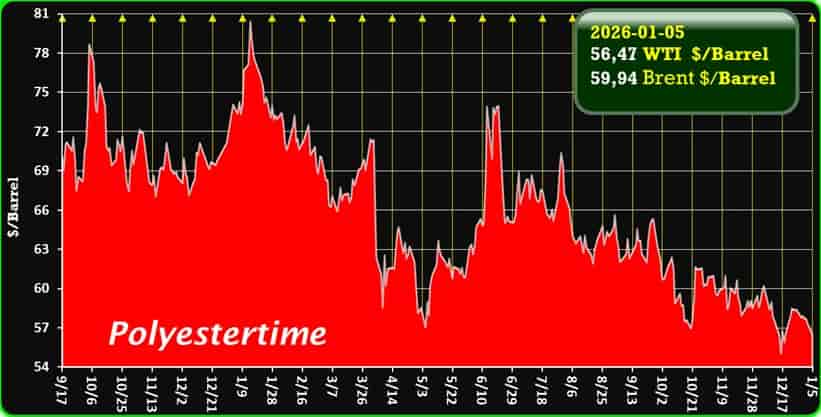
Understanding today’s oil price dynamics is crucial for consumers, investors and policymakers. On January 5, 2026, benchmark crude prices continued their subdued trend, with Brent crude trading around $59.94 per barrel and U.S. West Texas Intermediate (WTI) near $56.47 per barrel. These levels reflect persistent downward pressure from ample supply, geopolitical shocks and economic headwinds influencing the global energy complex.
📉 Current Brent & WTI Price Snapshot
| Benchmark | Price (Approx.) | Trend Today |
|---|---|---|
| Brent Crude | ~$59.94 / b | Slight decline / sideways pressure |
| WTI Crude | ~$56.47 / b | Modest downward move |
Both benchmarks are trading lower compared with recent weeks and remain below levels seen in late 2024 and 2025. Prices dipped around ~0.4–0.8% on the day, with Brent near $60 b and WTI around $56–$57 b in Asian trading — reflecting mixed reactions in global markets. ANSA.it+1
🔍 Key Market Drivers Behind Today’s Oil Price Trends
1. Global Supply vs. Demand Balance
The oil price continues to be weighed down by signs of oversupply. Global inventories have climbed, and production from major exporters remains robust even as demand growth cools in 2026. Several forecasts suggest a continuing surplus throughout early 2026, which keeps downward pressure on prices. EIA
At the same time, overall demand growth in China and other major consumers has softened amid broader economic slowdowns, weakening the demand side of the oil equation.
2. Geopolitical Developments: Venezuela and Beyond
Geopolitical events are impacting oil price sentiment this week. The U.S. military operation that led to the capture of Venezuelan President Nicolás Maduro generated market volatility, but its impact on oil prices has been muted so far. Venezuela holds some of the world’s largest crude reserves, yet current production is minimal due to underinvestment and sanctions — limiting any immediate supply disruption. Reuters+1
Traders are also watching broader geopolitical tensions, including potential risks involving Iran and other producers, which can introduce a “risk premium” into crude markets. MarketWatch
3. OPEC+ Strategy and Global Production Policies
OPEC+ continues to influence sentiment around the oil price, having signaled a pause on increasing production in the early months of 2026. This cautious approach aims to help support prices, but with a global supply glut in place, the effect has been limited. MarketScreener Italia
Saudi Arabia and other key producers have so far kept output stable, balancing between supporting prices and maintaining market share.
4. Economic Data and Investor Sentiment
Investor sentiment toward oil price is cautious. With slowing global economic indicators and mixed macroeconomic data, investors are hesitant to price in sharp rallies. A strong U.S. dollar and safe-haven flows into gold and other assets have also contributed to softer crude sentiment. AP News
Moreover, recent trends show energy stocks underperforming relative to broader markets — signaling risk-averse positioning in the sector.
📊 The Broader Energy Market View
The subdued oil price environment has implications across energy markets:
-
Fuel Costs: Lower crude often feeds into lower gasoline and diesel pricing, though taxes and refining costs can dampen direct consumer benefits. petrolioggi.it
-
Energy Stocks: Weak crude prices can suppress energy sector returns and capital spending plans.
-
Inflation: Cheaper oil can help lower inflationary pressures, benefiting broader economies.
🔮 Short-Term Outlook: What’s Next for Oil Prices?
Looking ahead, the oil price trend in early 2026 may remain under pressure unless significant shifts occur:
Bullish Factors (Upside):
-
Unexpected supply disruptions (geopolitical flare-ups)
-
Coordinated OPEC+ production cuts
-
Better-than-expected global economic data
Bearish Factors (Downside):
-
Continued oversupply in 1Q-2Q 2026
-
Weak global demand growth
-
Strong dollar dynamics
Short-term forecasts suggest Brent could test support below $57 b if supply and demand imbalances persist, with resistance near the mid-$60s should risk appetite improve. FOREX24.PRO
🧠 What This Means for the Global Economy
A sustained softer oil price environment through 2026 has mixed implications:
-
Consumers benefit from lower energy costs at the pump.
-
Importing nations may see reduced inflationary pressures.
-
Exporting economies reliant on crude revenues face fiscal strains.
-
Energy Investments could slow as producers adjust capital expenditures.
In conclusion, the oil market remains in a delicate phase where geopolitical headlines, supply fundamentals and demand momentum all tug at the oil price. Prices are likely to hover around current levels in the near term, with volatility driven by macroeconomic releases, policy decisions and evolving global risks.