Breakthrough innovation turns fish farming waste into scalable PCR beauty packaging solutions 7
A new frontier for PCR beauty packaging
PCR beauty packaging is rapidly becoming a strategic priority for global brands, yet one persistent bottleneck remains: access to high-quality, locally sourced recycled material. Recent developments from Norner, a Norway-based R&D specialist, highlight a promising solution by converting fish farming waste into viable packaging feedstock.
This approach signals a structural shift in how PCR beauty packaging can be sourced, moving away from dependence on imported recyclates toward localized, circular systems. At a time when geopolitical tensions and energy price volatility are increasing raw material costs, the ability to produce PCR beauty packaging domestically is gaining urgency across the industry.
Turning fish farming waste into valuable material
One of the most innovative aspects of this development is the use of discarded high-density polyethylene pipes from aquaculture operations. Traditionally considered low-value waste, these materials are now being engineered into high-performance inputs for PCR beauty packaging.
The technical challenge lies in the mismatch between pipe-grade HDPE and bottle-grade requirements. Pipe materials have fundamentally different rheological and mechanical properties, making them unsuitable for standard blow-molding processes without modification. Through advanced polymer engineering, including rheological analysis and compounding, Norner has successfully transformed this waste into material that behaves similarly to virgin HDPE.
This breakthrough demonstrates that unconventional waste streams can be leveraged to produce PCR beauty packaging without compromising processing efficiency or product quality.
Why PCR beauty packaging demand is accelerating
Regulatory pressure is a major driver behind the shift toward PCR beauty packaging. The EU Packaging and Packaging Waste Regulation is pushing brands to increase recyclability and incorporate higher levels of recycled content.
At the same time, the cosmetics sector remains highly competitive and design-driven. Packaging must not only be sustainable but also visually appealing and functionally reliable. This dual pressure creates a complex environment where PCR beauty packaging must meet both environmental targets and premium branding expectations.
Additionally, rising oil and energy costs are making virgin plastic less economically attractive, further strengthening the business case for PCR beauty packaging.
Key challenges in scaling PCR beauty packaging
Despite its advantages, PCR beauty packaging introduces several technical and perceptual challenges. Recycled materials often exhibit variability that can affect consistency and performance.
Common issues include:
- Color variations that impact brand identity
- Residual odors from previous use cycles
- Contamination risks
- Reduced mechanical strength compared to virgin polymers
These factors directly influence consumer perception. In the beauty industry, where packaging is integral to brand value, even minor imperfections can undermine trust and shelf appeal.
Functionality adds another layer of complexity. PCR beauty packaging must protect sensitive formulations, comply with strict safety standards, and deliver a seamless user experience. Achieving this often requires additional testing, formulation adjustments, and cost investment.
Balancing sustainability with premium aesthetics
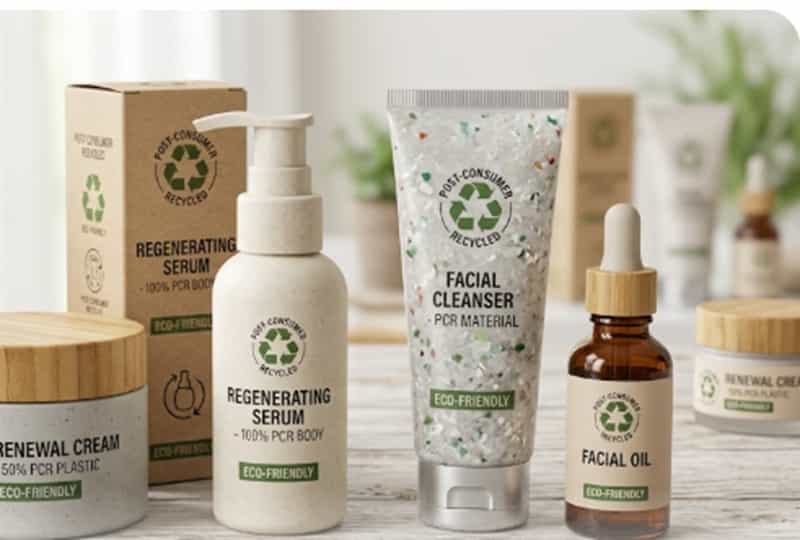
The central tension in PCR beauty packaging lies in reconciling sustainability with aesthetics. Consumers expect flawless packaging, while sustainability targets push for higher recycled content.
Rather than viewing this as a trade-off, industry leaders are increasingly adopting a systems approach. This involves engineering materials, design, and processing conditions simultaneously to optimize performance.
Interestingly, some brands are beginning to embrace the natural variability of PCR materials as a design feature. Subtle color differences and material textures can be positioned as proof of authenticity, reinforcing sustainability narratives rather than detracting from them.
Moreover, evidence suggests that many brands could integrate at least 10% PCR content without noticeable impact on aesthetics, while others are already exceeding this threshold.
Expanding into flexible formats
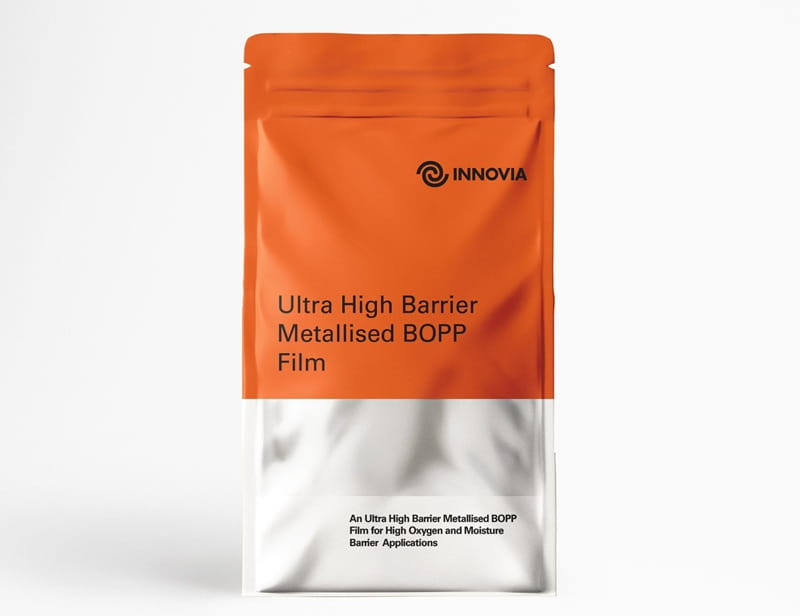
A notable trend in PCR beauty packaging is the expansion beyond rigid containers into flexible packaging formats. Monomaterial structures based on polyethylene or polypropylene are increasingly being combined with recycled content.
Flexible packaging presents additional technical challenges, particularly in maintaining barrier properties and mechanical integrity. However, advancements in material science are making it possible to incorporate PCR into these formats, opening new opportunities for sustainable design.
This evolution underscores the growing maturity of PCR beauty packaging as it moves into more complex and demanding applications.
Technology as an enabler of next-generation packaging
Technological innovation is playing a decisive role in advancing PCR beauty packaging. Developments in polymer engineering, additives, and odor removal technologies are significantly improving the quality and usability of recycled materials.
Advanced recycling processes and material formulations are enabling:
- Higher PCR content without performance loss
- Fully recyclable monomaterial packaging
- Lightweight designs that reduce material usage
- Enhanced customization and branding possibilities
These innovations are transforming PCR beauty packaging from a compromise solution into a competitive advantage.
A systemic shift toward circular beauty packaging
The use of fish farming waste represents more than a technical achievement; it reflects a broader transition toward circular economy principles. By converting local waste streams into valuable resources, companies can reduce environmental impact while strengthening supply chain resilience.
PCR beauty packaging is no longer limited to simple material substitution. It is evolving into a holistic design challenge that integrates sustainability, functionality, cost efficiency, and consumer experience.
As technology continues to advance and regulatory frameworks tighten, the adoption of PCR beauty packaging is expected to accelerate. Companies that invest in material innovation and system-level thinking will be best positioned to lead this transformation.
Conclusion: from waste to competitive advantage
The successful conversion of fish farming waste into high-quality PCR beauty packaging demonstrates the potential of unconventional resources to reshape the industry. It addresses one of the most critical barriers—material availability—while maintaining performance and aesthetic standards.
In a market where sustainability is becoming non-negotiable, PCR beauty packaging is emerging as a cornerstone of future-ready product design. The ability to balance environmental responsibility with brand excellence will define the next generation of packaging innovation.
More…