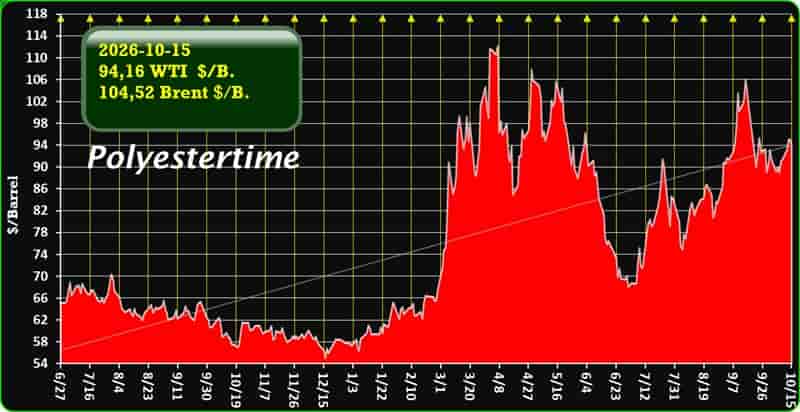
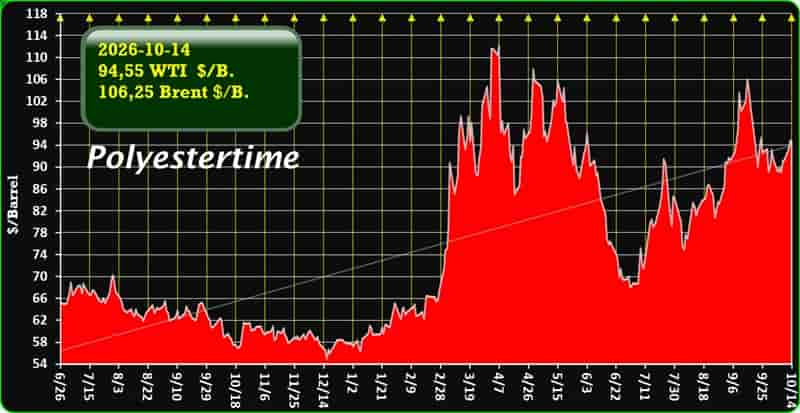
Oil price surge above $110 signals deep market stress as war risks and supply shocks overpower OPEC+ efforts to stabilize crude markets
Oil price trend April 2026: Why crude remains above $110 despite OPEC+ supply increase
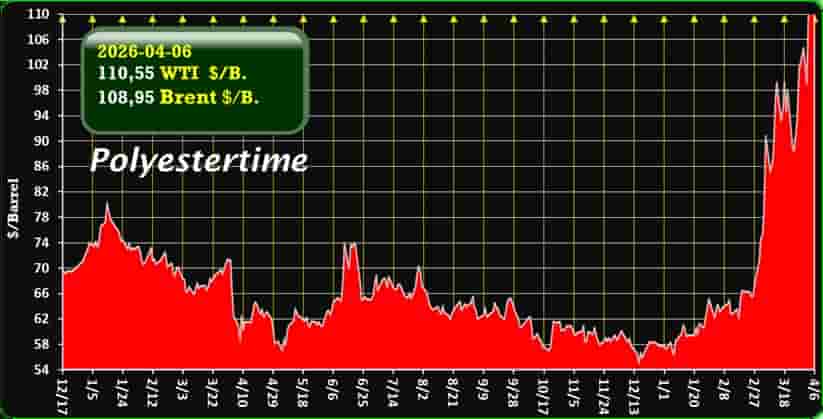
The oil price environment as of April 1, 2026 reflects one of the most stressed commodity markets in recent years. Both Brent and WTI crude benchmarks are trading in the $105–$115 per barrel range, with Brent hovering around $110–$111 and WTI closely aligned due to extreme short-term supply tightness.
Despite OPEC+ announcing a production increase, the market remains structurally tight. The current oil price dynamics are being driven more by geopolitical risk and logistics disruption than by incremental supply changes.
Current oil price snapshot (April 2026)
| Benchmark | Price Range ($/B) | Market Condition |
|---|---|---|
| Brent Crude | 105 – 115 | Strong geopolitical premium |
| WTI Crude | 105 – 115 | Near-term supply tightness |
| Market Structure | Backwardation | Immediate delivery prioritized |
Recent data shows Brent climbing above $110 with continued upward pressure linked to supply disruptions and conflict-related uncertainty.
Key drivers behind today’s oil price strength
1. Geopolitical tensions dominate the oil price outlook
The primary driver of the current oil price surge is escalating conflict in the Middle East, particularly involving Iran and critical energy infrastructure.
- Drone strikes on oil facilities in Kuwait, UAE, and Bahrain have intensified supply fears
- Ongoing uncertainty around the Strait of Hormuz — a route for roughly 20% of global oil flows — has severely disrupted shipments
- Conflicting signals on military escalation vs. diplomacy are fueling volatility
This geopolitical risk premium is the single largest contributor to the elevated oil price environment.
2. Supply disruptions outweigh OPEC+ output increases
OPEC+ has approved a 206,000 barrels per day production increase starting April 2026, signaling an attempt to stabilize the oil price.
However, this increase is widely seen as insufficient because:
- Physical supply routes remain constrained
- Shipping and insurance costs have surged
- Logistics bottlenecks limit actual delivery
In practical terms, the oil price is reacting to available barrels, not theoretical production quotas.
3. Extreme market tightness and backwardation
The oil price structure has shifted into strong backwardation, where near-term contracts trade at a premium to future deliveries.
- Immediate supply is scarce, pushing spot prices higher
- Buyers are paying premiums for faster delivery
- The market signals urgency and short-term shortage
Analysts describe the situation as “unprecedented tightness,” with supply disruptions removing over 10% of global availability in some scenarios.
4. Demand resilience and global economic factors
Despite high oil price levels, demand remains relatively strong:
- Post-pandemic consumption trends remain stable
- Emerging markets continue to absorb supply
- Industrial demand has not collapsed
At the same time, rising oil price levels are feeding inflation concerns, often referred to as “war-driven inflation”, affecting transport, manufacturing, and consumer costs globally.
Investor sentiment: Fear-driven but opportunistic
Investor sentiment in the oil price market is currently dominated by risk hedging and short-term positioning:
- Traders are pricing in worst-case geopolitical scenarios
- Volatility is driven by headlines rather than fundamentals
- Energy stocks are outperforming broader equity markets
Even temporary signs of de-escalation cause sharp pullbacks, but prices remain structurally elevated above $100.
This indicates a market that is reactive, not stable.
Why OPEC+ output hikes are not cooling the oil price
The current situation aligns with the narrative that “supply increases are not enough to calm markets.”
Key reasons include:
- Output increases are modest relative to lost supply
- Physical delivery constraints limit effectiveness
- Geopolitical uncertainty outweighs policy signals
In essence, the oil price is being set by risk perception, not production policy.
Short-term oil price outlook
Looking ahead, the crude price trajectory will depend on three critical variables:
Bullish scenario (prices remain high or rise)
- Continued disruption in the Strait of Hormuz
- Escalation of Middle East conflict
- Further infrastructure damage
Bearish scenario (prices ease)
- Diplomatic resolution or ceasefire
- Reopening of key shipping routes
- Faster-than-expected supply recovery
Forecast models suggest Brent could stabilize around $110–$115 in the near term, but longer-term projections still point to potential declines if supply normalizes.
What this means for the global economy and energy markets
The current crude price environment has broad implications:
- Inflation pressure: Higher fuel and transport costs
- Economic slowdown risks: Especially in energy-importing regions
- Energy transition acceleration: Renewables become more competitive
- Corporate impact: Airlines and manufacturing sectors face margin pressure
At the same time, oil-exporting nations and energy companies are benefiting from elevated revenues.
Conclusion
The crude price trend in April 2026 highlights a market driven by geopolitical disruption, tight supply, and fragile sentiment rather than traditional supply-demand balance.
Despite OPEC+ efforts to increase production, prices remain above $110 because structural constraints and risk premiums dominate the market.
In the short term, the crude price is likely to remain volatile and elevated, with global economic consequences depending heavily on how quickly geopolitical tensions ease and supply routes normalize.
More…