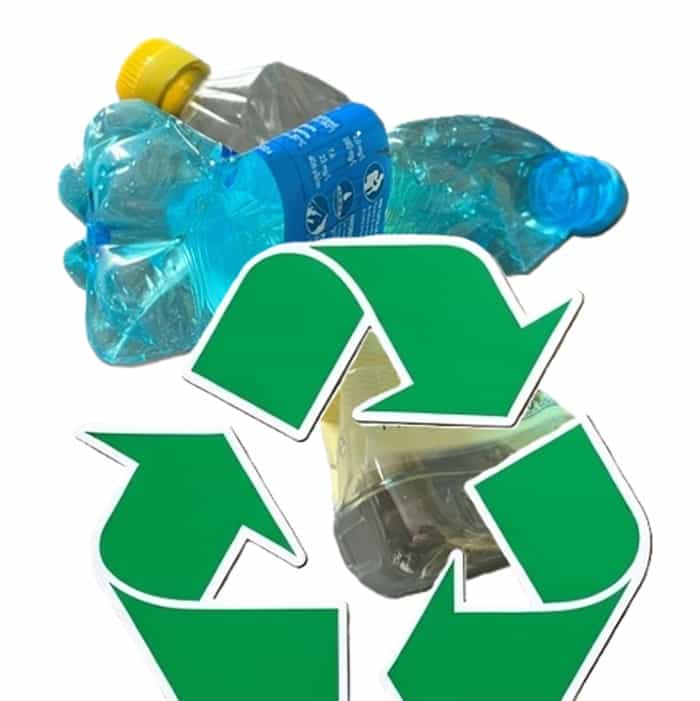
PET Bottle – The National Association for PET Container Resources (NAPCOR) has released its latest report revealing that PET (polyethylene terephthalate) bottle recycling rates in the United States achieved a historic high in 2023. The US PET bottle collection rate rose to 33 percent, a four-percentage point increase from 29 percent in 2022, marking the highest rate since 1996 16-12-2024 - Archive
PET Bottle
- Nylon Chips – Novapet Introduces Innovative Handled PET Amphora for Olive Oil Packaging 09-12-2024
- New enzyme technology for environmentally friendly plastic recycling
PET Bottle
2023 US PET Bottle Recycling Rates Hit Record Highs
NAPCOR’s Report Highlights Milestones in PET Recycling Across North America
The National Association for PET Container Resources (NAPCOR) has released its latest report revealing that PET (polyethylene terephthalate) bottle recycling rates in the United States achieved a historic high in 2023. The US PET bottle collection rate rose to 33 percent, a four-percentage point increase from 29 percent in 2022, marking the highest rate since 1996. Additionally, the average content of post-consumer recycled (PCR) PET, also known as recycled PET (rPET), in US bottles and jars reached an unprecedented 16.2 percent, up from 13.2 percent in 2022. This surge reflects a growing national demand for recycled PET.
PET plastic, identified by the #1 resin code, stands out for its recyclability, durability, and versatility. Unlike other plastics, it is widely accepted in US recycling programs and boasts higher recycling rates. PET bottles can be fully recycled and manufactured with up to 100 percent recycled material. Studies highlight PET’s environmental efficiency; for example, a 16.9 oz. PET plastic bottle consumes 80 percent less energy during production than a 12 oz. aluminum can, generates 80 percent less solid waste, and produces significantly fewer emissions linked to global warming and acid rain.
“PET plastic bottles are integral to a circular economy because they can be designed to be remade,” said Laura Stewart, NAPCOR’s executive director. “Our 2023 PET Recycling Report highlights that despite fewer bottles being available for recycling, more bottles were recycled, resulting in a higher recovery percentage. Collaboration among manufacturers, consumers, retailers, and recyclers ensures PET is selected, collected, and recycled—benefitting the planet.”
Record-breaking Collection Rates
In 2023, the US recycled 1,962 million pounds of PET bottles, up from 1,911 million pounds in 2022—a 2.7 percent increase and the highest annual weight recorded. Despite this, the total weight of PET bottles available for recycling dropped to 5,952 million pounds, a 9.8 percent decline from 2022’s 6,599 million pounds. The reduction stemmed from decreased domestic sales of both virgin and recycled PET for non-food/beverage applications, such as personal care and household cleaner packaging.
Rising rPET Content
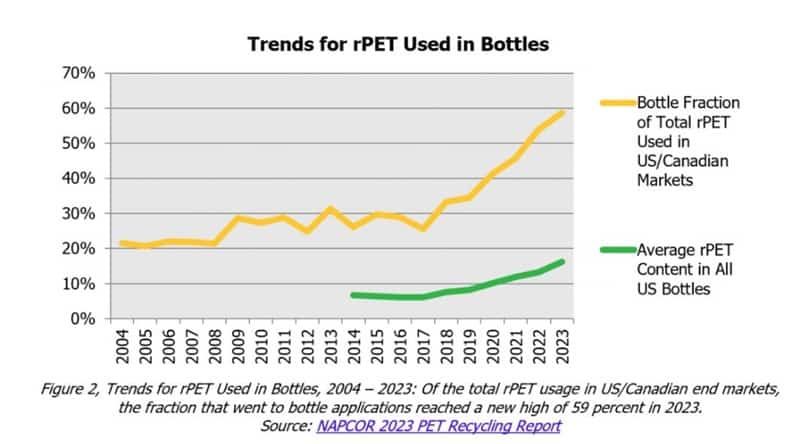
Driven by voluntary brand commitments and recycled content laws, rPET content in US bottles has grown significantly. After stagnating between six and seven percent from 2014 to 2017, the percentage has steadily climbed, reaching a record high of 16.2 percent in 2023. This represents an 11 percent increase from 2022, with rPET usage in US bottles rising to 966 million pounds from 870 million pounds. Furthermore, recycled PET’s application in bottles accounted for 59 percent of total rPET usage in US and Canadian markets in 2023, surpassing the previous record of 54 percent in 2022.
“The growing demand for PCR content underscores the need for improved PET collection and recycling systems,” Stewart noted. “NAPCOR and the PET industry are committed to collaborating with government and stakeholders to meet this demand.”
North America Sets New Standards
North America, comprising the US, Canada, and Mexico, achieved a milestone recycling rate of 41.3 percent in 2023, exceeding the global benchmark established by the Ellen MacArthur Foundation. In 2016, the foundation defined successful recycling as a 30 percent recycling rate across regions with populations exceeding 400 million. Since NAPCOR began tracking the North American rate in 2019, the region’s PET bottle recycling rate has consistently surpassed this threshold.
Report Highlights
The 2023 PET Recycling Report delves into key aspects of the PET recycling ecosystem, including:
- PET Bottle Recycling Rates: US and North American statistics.
- Post-consumer PET Bottle Recycling Activity: Data on collection, purchases, clean rPET flake production, material efficiency, reclamation byproducts, and end-use applications.
- PET Thermoform Market Analysis (US and Canada): Insights into recycling activity, market trends, converter activity, and sheet capacity.
- rPET in the US Fiber Market: Volumes of rPET used in textiles and carpet fibers.
- PET/rPET Supply Chain Trends (2023–2024): Analysis of pricing, bale trade, reclamation capacity, and market developments.
Progress and Opportunities
NAPCOR’s 29th report, based on comprehensive surveys, market interviews, import data, and independent analysis, underscores the progress made in PET recycling. Despite challenges, such as reduced bottle availability, the industry has shown resilience and innovation, setting a foundation for future growth in PET recycling. The report is available for purchase on the NAPCOR website, offering detailed insights into the state of PET recycling, including trends in the thermoform and fiber markets.
The 2023 report highlights an optimistic trajectory for PET recycling, with the US and North America demonstrating leadership in adopting sustainable practices. By strengthening collaboration across the PET value chain, stakeholders can continue advancing toward a more circular and environmentally sustainable economy.