PET bottle efficiency improves with new blowing block technology – Polymer Price Trends
PET bottle efficiency – Full price table (22/06/2026 →29/06/2026)
| ITEM | 22/06/2026 | 29/06/2026 | +/− |
|---|---|---|---|
| Bottle grade PET chips domestic market | 7,550 yuan/ton | 7,100 yuan/ton | -450 |
| Chinese bottle-grade PET chips FOB export price | 1,020 $/ton | 970 $/ton | -50 |
| LDPE CFR Est China | 1,040 $/ton | 1,235 $/ton | +195 |
| PET Semidull — Fiber chips | 6,970 yuan/ton | 6,660 yuan/ton | -310 |
| PET Bright — Fiber chips | 7,070 yuan/ton | 6,760 yuan/ton | -310 |
| Pure Terephthalic Acid PTA domestic market | 6,075 yuan/ton | 5,725 yuan/ton | -350 |
| Pure Terephthalic Acid PTA FOB China | 790 $/ton | 760 $/ton | -30 |
| Monoethyleneglycol (MEG) South China | 4,419 yuan/ton | 4,292 yuan/ton | -127 |
| Monoethyleneglycol (MEG) CFR China | 550 $/ton | 520 $/ton | -30 |
| Paraxylene PX FOB Taiwan market | 1,026 $/ton | 959 $/ton | -67 |
| Paraxylene PX FOB South-Korea market | 1,029 $/ton | 958 $/ton | -67 |
| Paraxylene PX FOB EU market | 1,030 $/ton | 1,134 $/ton | +104 |
| Polyester filament POY 150D/48F domestic market | 8,250 yuan/ton | 8,050 yuan/ton | -200 |
| Recycled Polyester filament POY 150/48F domestic market | 7,300 yuan/ton | 7,100 yuan/ton | -200 |
| Polyester filament DTY 150D/48F domestic market | 9,300 yuan/ton | 9,200 yuan/ton | -100 |
| Polyester filament FDY 68D/24F | 9,300 yuan/ton | 9,000 yuan/ton | -300 |
| Polyester filament FDY 150D/96F domestic market | 8.600 yuan/ton | 8,300 yuan/ton | -300 |
| Polyester staple fiber 1.4D 38mm domestic market | 7,490 yuan/ton | 7,230 yuan/ton | -260 |
| Caprolactam (CPL) domestic market | 11,200 yuan/ton | 10,900 yuan/ton | -300 |
| Caprolactam (CPL) CFR China | 1,510 $/ton | 1,770 $/ton | +260 |
| Nylon 6 chips overseas market |
Northeast Asia $1,840 / MT Middle East $2,050 / MT Southeast Asia $2,150 / MT Europe $2,530 / MT North America $2,540 / MT |
Northeast Asia / China $1,810 – $1,840 / MT Middle East $2,020 – $2,050 / MT Southeast Asia $2,120 – $2,150 / MT North America (US) $2,510 – $2,540 / MT |
– |
| Nylon 6 chips conventional spinning domestic market | 11,500 yuan/ton | 11,200 yuan/ton | -300 |
| Nylon 6 chips high speed spinning domestic market | 12,050 yuan/ton | 11,650 yuan/ton | -400 |
| Nylon 6.6 chips domestic market | 18,100 yuan/ton | 17.800 yuan/ton | -300 |
| Nylon6 Filament POY 86D/24F domestic market | 13,600 yuan/ton | 13,400 yuan/ton | -200 |
| Nylon6 Filament DTY 70D/24F domestic market | 16,000 yuan/ton | 15,800 yuan/ton | -200 |
| Nylon6 Filament FDY 70D/24F | 13,800 yuan/ton | 13,600 yuan/ton | -200 |
| Spandex 20D domestic market | 31,700 yuan/ton | 31,700 yuan/ton | – |
| Spandex 30D domestic market | 31,200 yuan/ton | 31,200 yuan/ton | – |
| Spandex 40D domestic market | 28,500 yuan/ton | 28,500 yuan/ton | – |
| Adipic Acid China domestic market | 8,000 yuan/ton | 7,980 yuan/ton | -20 |
| Adipic Acid Europe market | 1,970 $/ton | 1,930 $/ton | -40- |
| Benzene domestic market East China | 7,100 yuan/ton | 6,800 yuan/ton | -300 |
| Benzene CFR China | 965 $/ton | 830 $/ton | -135 |
| Ethylene South East market | 900 $/ton | 830 $/ton | -70 |
| Ethylene NWE market CIF | 837 $/ton | 680 $/ton | -157 |
| Acrylonitrile (ACN) domestic market | 11,000 yuan/ton | 10,450 yuan/ton | -550 |
| Acrylonitrile ACN Southeast Asia | 1,580 $/ton | 1,590 $/ton | +10 |
| Acrylic staple fiber (ASF) CFR China | 16,055 yuan/ton | 16,055 yuan/ton | – |
| VSF viscose staple fiber | 14,200 yuan/ton | 14,200 yuan/ton | – |
| PP Powder domestic market | 8,900 yuan/ton | 8,000 yuan/ton | -900 |
| Naphtha overseas market | 692 $/ton | 682 $/ton | -10 |
| Phenol domestic market (Jinan Dezheng / Yanshan Petrochemical, Shandong) | 7,687 yuan/ton | 7,450 yuan/ton | -237 |
| Recycled PET | 4,200 yuan/ton | 4,200 yuan/ton | – |
PET bottle efficiency improves with new blowing block technology
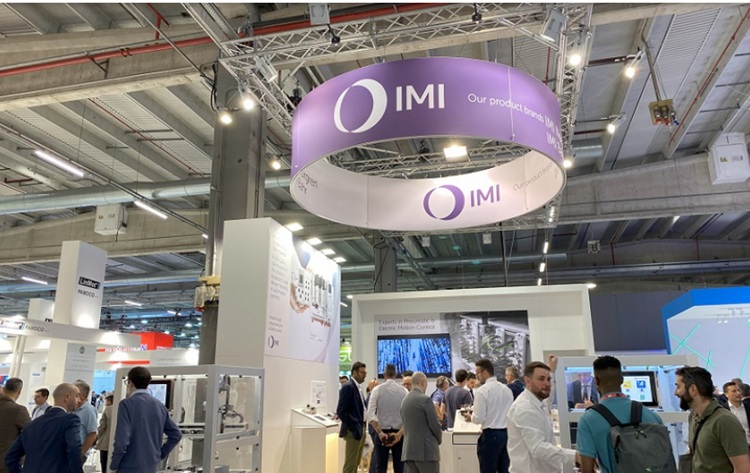
PET bottle manufacturers are under growing pressure to increase output, reduce energy use and maintain strict hygiene standards, especially in high-speed beverage applications. A new customised blowing block solution developed by IMI’s Industrial Automation sector for Tech-Long shows how targeted engineering can improve both productivity and air efficiency in PET bottle production.
The system was designed for PET blow molding lines where compressed air represents one of the most critical operating costs. In this type of production, air is not simply a utility. It directly affects bottle forming quality, cycle speed, energy consumption and the reliability of the entire bottling line.
A new approach to PET blow molding efficiency
IMI’s Industrial Automation team developed a configurable four-valve PET blowing block incorporating a Px/AR single valve. The solution was created for Tech-Long, a major supplier of bottling equipment, to address limitations in a previous system that restricted production capacity and consumed high levels of compressed air.
The result is a reported 10% increase in production capacity, combined with reduced compressed air demand. For beverage producers and bottling-line operators, this is significant because compressed air is one of the most energy-intensive parts of PET bottle manufacturing.
Why compressed air matters in PET bottle production
PET bottle blowing depends on high-pressure air to shape heated preforms into final containers. In high-speed production, even small improvements in air management can have a major impact on operating costs.
Reducing air waste can help manufacturers lower energy consumption, stabilise production and improve line efficiency. It also supports wider sustainability targets, especially as beverage companies continue to focus on lightweight bottles, recycled PET content and lower-carbon packaging operations. PET bottle efficiency
Designed for aseptic and non-aseptic bottling lines
The new blowing block solution is suitable for both aseptic and non-aseptic environments. This makes it relevant for a wide range of beverage categories, including dairy drinks, juices and functional beverages, where hygiene and sterility requirements are particularly demanding.
Aseptic bottling adds another layer of complexity because components must perform reliably while meeting strict cleanliness standards. In this context, efficiency cannot come at the expense of product safety or process stability.
Supporting higher output without higher air consumption
The Tech-Long project shows a broader trend in PET packaging machinery: manufacturers want more output from existing line architectures without simply increasing energy input.
For bottlers, a 10% capacity gain can improve asset utilisation, reduce production bottlenecks and support higher throughput during peak demand. When that gain is combined with lower compressed air consumption, the economic case becomes stronger because the improvement affects both productivity and operating cost.
Engineering collaboration as a competitive advantage
The project was developed by IMI’s application engineering team in China in close collaboration with Tech-Long. This type of application-specific engineering is becoming increasingly important in PET bottle manufacturing because standard components may not always solve the combined challenges of speed, hygiene, energy use and repeatability.
Rather than focusing only on a single component, the redesign addressed the blowing block architecture as a system. This allowed the engineering team to improve flow performance while reducing inefficiencies linked to the previous configuration.
PET packaging moves toward smarter efficiency
The development comes as the beverage packaging industry continues to optimise PET bottles for material reduction, recyclability, energy efficiency and process control. Lightweighting and rPET adoption remain important, but production equipment must also evolve to handle faster cycles, more demanding bottle designs and tighter sustainability requirements.
For PET bottle producers, efficiency is no longer limited to resin use or bottle weight. It now includes air recovery, valve response, heating control, line integration, sterile performance and digital monitoring.
What this means for bottling operators
The IMI and Tech-Long collaboration highlights three practical priorities for PET bottle manufacturers.
First, compressed air systems should be treated as strategic production assets, not background utilities. Second, blowing block design can directly influence both output and energy consumption. Third, hygiene-compatible engineering is essential as more beverage lines move into sensitive product categories.
As bottling lines become faster and more automated, improvements in air control and component architecture will play a growing role in production economics.
Outlook
PET bottle production is entering a phase where efficiency gains must come from smarter engineering rather than simply larger machines or higher energy input. The customised IMI blowing block for Tech-Long demonstrates how a focused redesign can deliver measurable gains in capacity while reducing one of the most expensive resources in the process: compressed air.
For beverage producers, this type of innovation supports a more competitive and sustainable PET packaging model, where higher speed, lower energy use and reliable sterile performance are developed together rather than treated as separate goals.
Global PET Bottle Grade Resin and Recycled PET (rPET) Industry
More…