PPWR Plastic Recycling: Why Material Quality Starts with Shredding
PPWR Plastic Recycling: Why Material Quality Starts with Shredding
9 minutes read time.
Europe’s new packaging rules are bringing an operational reality into sharper focus: recycled-content targets cannot be met through regulation alone.
Recycling plants must be able to transform variable and frequently contaminated plastic waste into a consistent raw material that packaging manufacturers can use with confidence. That places shredding, sorting and cleaning systems at the centre of the transition.
The European Union’s Packaging and Packaging Waste Regulation, commonly known as the PPWR, entered into force on 11 February 2025 and will generally apply from 12 August 2026. It introduces requirements covering the full packaging life cycle, including waste prevention, recyclability and minimum recycled content in certain plastic packaging.
Why the PPWR changes the recycling challenge
The PPWR is intended to create a more consistent European market for sustainable packaging. Among its longer-term objectives is increasing the use of post-consumer recycled plastic in new packaging.
However, the application of the regulation in August 2026 does not mean that every recycled-content quota immediately becomes mandatory. Several requirements, including key minimum recycled-content targets, have later implementation dates and associated technical rules.
This distinction matters. The immediate challenge for recyclers is not simply to increase processing volumes. It is to prepare equipment, quality-control systems and commercial relationships for packaging specifications that will become progressively more demanding.
The European Commission says the regulation is designed to reduce unnecessary packaging, improve recyclability and stimulate innovation. It also recognizes that packaging waste remains difficult and expensive to process under existing systems.
Recycled content requires consistent material
Packaging producers cannot substitute virgin polymer with recycled material solely because the material has passed through a recycling plant.
The recyclate must provide sufficiently stable characteristics, including polymer composition, colour, odour, moisture content and mechanical performance. Depending on the application, manufacturers may also require extensive documentation, traceability and compliance testing.
Contamination makes these requirements harder to achieve.
A collected plastic stream may contain incompatible polymers, labels, paper, metals, mineral particles, food residues and organic material. If these contaminants are not removed effectively, they can reduce process efficiency and compromise the final recyclate.
The result is often material suitable only for lower-value applications. This is commonly described as downcycling.
The PPWR’s emphasis on high-quality recycling makes that outcome increasingly problematic. The regulation seeks to strengthen recycling systems and increase the availability of recycled material capable of returning to packaging production, rather than being diverted automatically into less demanding products.
Shredding is more than size reduction
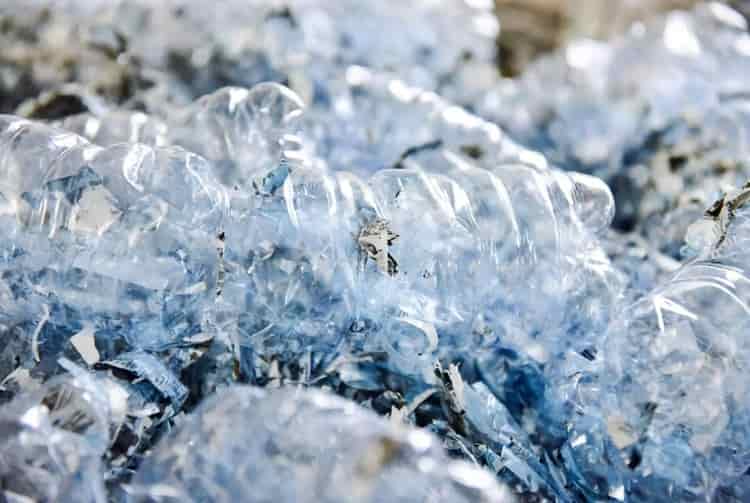
Shredding is sometimes treated as a preliminary step whose only purpose is to make plastic waste smaller. In an integrated recycling line, its function is considerably more important.
A well-configured shredder produces a controlled particle size and a sufficiently uniform material flow for downstream equipment. That consistency can improve the performance of separators, cleaning systems and extruders.
An unstable shredding process can create excessive fines, irregular pieces or unnecessary heat. It may also increase energy use, accelerate wear and make subsequent separation less predictable.
The appropriate configuration depends on the input material and the intended output. Films, rigid containers, multilayer packaging and bulky industrial plastics do not behave in the same way. Rotor speed, cutting geometry, screen size and throughput therefore need to be selected for the application rather than treated as universal settings.
Equipment supplier Vecoplan argues that application-specific cutting systems can reduce energy consumption and processing costs. The company says optimized shredding configurations may produce efficiency gains of up to 30 percent in certain applications. This is a vendor-reported figure and should be evaluated against the material stream, operating conditions and measurement method used in each project.
Purity determines the value of recyclate
A recycling line’s commercial performance ultimately depends on the quality and saleability of its output.
High throughput has limited value when a significant portion of the material becomes reject residue or when the finished recyclate cannot meet a buyer’s technical requirements.
Contamination can increase costs at several stages:
It can slow sorting operations, raise cleaning requirements, increase equipment wear and reduce usable yield. It may also create odour, discolouration or inconsistent melt behaviour during extrusion.
This is why purity should be treated as an economic indicator, not merely a technical measurement.
Recyclers preparing for PPWR-related demand will need to define the quality level required by each target market. Material intended for non-food transport packaging, for example, may not require the same processing sequence as material intended for sensitive food-contact applications.
Food-contact use also remains subject to separate safety legislation and authorization requirements. A clean-looking recycled flake is not automatically suitable for direct food contact.
Dry cleaning may reduce water demand
Conventional plastic washing lines can consume substantial amounts of water and energy. They also generate wastewater that requires treatment and can leave residual moisture that must be removed before extrusion.
Dry cleaning technologies offer an alternative or complementary stage for selected waste streams. They can use mechanical action and controlled airflow to separate loose contaminants without a conventional water-based wash.
Vecoplan has promoted an integrated approach combining its shredding systems with dry-cleaning technology developed by its Pla.to subsidiary. According to the company, dry cleaning may provide sufficient quality for some applications and can function as a pre-cleaning stage before wet washing in more demanding processes.
This does not mean that dry processing can replace wet washing in every recycling plant.
Grease, adhesive residues, embedded organic contamination and stringent packaging specifications may still require intensive washing. The correct decision depends on the incoming waste, the contamination profile and the quality promised to the customer.
The more defensible approach is to use only the processing intensity needed to reach a clearly defined specification. PPWR plastic recycling
Recycling economics remain a structural obstacle
Technical capability is only one part of the PPWR equation.
European recyclers continue to face pressure from energy costs, uncertain demand and competition from lower-priced virgin resin or imported material. When virgin polymer costs less than recycled polymer, packaging manufacturers have a limited commercial incentive to increase recycled content beyond mandatory levels.
Recent European industry reporting continues to describe a difficult operating environment for plastics producers and recyclers. Plastics Europe’s 2026 circular-economy assessment says the transition toward circular plastics has slowed and calls for stronger domestic recycling capacity and improved market conditions.
This is important because minimum recycled-content requirements can create demand, but demand alone will not guarantee a healthy recycling market.
Processors must still finance equipment, secure suitable feedstock, control energy consumption and produce material at a price that packaging companies can absorb.
The investment challenge can be particularly acute for small and medium-sized operators. A complete processing line may include shredding, metal removal, optical sorting, washing, drying, extrusion, filtration and laboratory testing.
Every additional stage can improve quality, but it also adds capital expenditure, operating costs and maintenance requirements.
Process integration will be decisive
The strongest recycling systems are unlikely to be those with the largest number of machines. They will be those in which each stage is designed around the characteristics of the next.
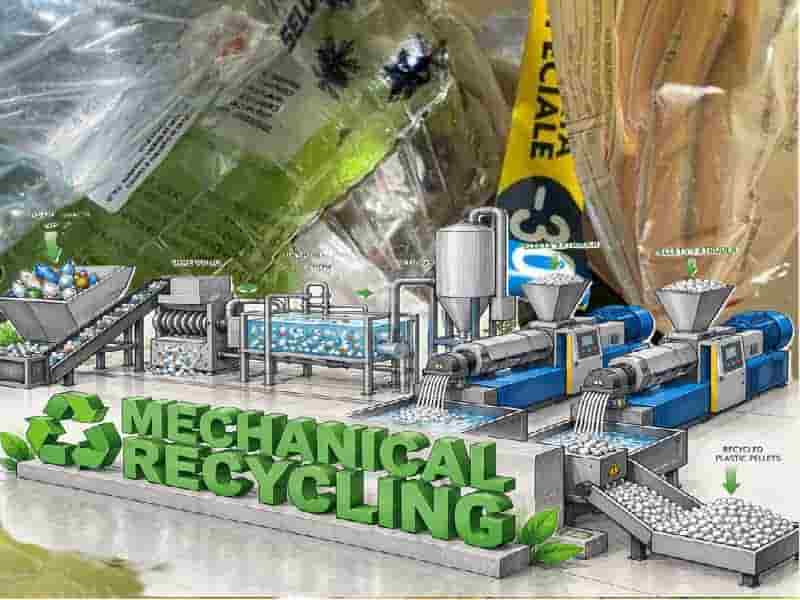
Shredding must create material suitable for separation. Sorting must protect the cleaning stage from incompatible polymers. Cleaning must deliver a stable feedstock for extrusion. Extrusion and filtration must then preserve or improve the properties required by the intended packaging application.
Data should connect the entire process.
Plants can monitor energy consumption, throughput, reject rates, moisture and contamination levels to identify where quality or yield is being lost. Batch traceability and regular laboratory testing can also help recyclers demonstrate consistency to packaging customers.
These capabilities will become increasingly valuable as recycled-content claims receive greater regulatory and commercial scrutiny.
What recycling companies should assess now
Operators preparing for the PPWR should begin with their output specification rather than with an equipment catalogue.
The first question is which packaging market the plant intends to serve. The answer determines the acceptable polymers, contamination thresholds, cleaning requirements and verification procedures.
A practical assessment should examine:
- the composition and variability of incoming material;
- the particle size required by downstream equipment;
- energy consumption per processed tonne;
- reject rates and material losses;
- water use and wastewater treatment;
- residual moisture before extrusion;
- polymer and contaminant detection;
- output consistency across different batches;
- maintenance demands and equipment availability;
- traceability and quality documentation.
Pilot testing with representative feedstock is particularly important. Tests based only on clean or carefully selected material may not predict performance under normal operating conditions.
Technology must support measurable outcomes
The PPWR will encourage investment in European recycling infrastructure, but new machinery should not be treated as proof of regulatory readiness.
Recyclers and packaging manufacturers need measurable evidence that a process can deliver the required quality consistently and economically.
That means comparing technologies using indicators such as usable yield, energy consumption, water demand, contamination removal, downtime and cost per tonne of saleable output.
Shredding has an important role because it establishes the physical conditions for much of the downstream process. It cannot compensate for poor collection, fundamentally incompatible materials or inadequate sorting, but an inefficient shredding stage can prevent otherwise capable equipment from reaching its potential.
From recycling volume to packaging-grade output
The PPWR is shifting the industry’s attention from the quantity of plastic entering a recycling plant to the quality of material leaving it.
For recyclers, the opportunity lies in producing secondary polymers that packaging manufacturers can use reliably. For equipment providers, the task is to demonstrate that integrated systems deliver repeatable improvements under real operating conditions.
Shredding, sorting and cleaning must therefore be evaluated as parts of a single process.
As the PPWR begins to apply across the European Union on 12 August 2026, the successful plants will be those able to connect regulatory targets with stable production, documented material quality and credible recycling economics.
Technology will be essential, but the decisive measure will be whether the resulting recyclate is good enough—and consistent enough—to return to packaging.
High-Quality Plastic Recycling: Site Zero Shows Europe’s Circular Future
More….