Polyester Fiber Market Growth Faces a Sustainability Test
Polyester Fiber Market Growth Faces a Sustainability Test
The global polyester fiber market is expected to expand as manufacturers increase its use in clothing, home furnishings, vehicle interiors and technical textiles.
Its combination of durability, relatively low production cost, wrinkle resistance and adaptability has made polyester one of the textile industry’s most widely used synthetic materials.
However, the market’s direction is more complicated than headline growth projections suggest.
Demand remains closely connected to consumer spending, apparel production and construction activity. Manufacturers must also manage volatile oil-derived raw-material costs, substantial Asian production capacity and growing pressure to replace virgin polyester with credible recycled alternatives.
Market forecast points to long-term expansion
Allied Market Research valued the global polyester fiber market at $81.1 billion in 2022. Its forecast projects that the market could reach $160.1 billion by 2032, representing a compound annual growth rate of 7.1 percent between 2023 and 2032.
That estimate should be understood as one research company’s forecast rather than a guaranteed market outcome.
Forecasts from other research providers use different definitions, base years and methodologies. They may include different combinations of staple fiber, filament yarn and specialist polyester materials, making direct comparisons unreliable.
The broader direction is nevertheless consistent: polyester is expected to remain a major material across consumer and industrial textile markets.
Current prices show the market remains volatile
Long-term demand does not eliminate short-term instability.
Asian polyester-chain prices rebounded in the week reported on July 13, 2026, following a rise in crude-oil costs and tighter availability of some upstream materials. At the same time, seasonal weakness continued to restrain downstream textile demand.
This followed falling polyester fiber prices during the previous week, when lower crude-oil and intermediate-feedstock costs reduced manufacturing expenses.
The reversal illustrates how quickly market conditions can change. Polyester prices are influenced not only by orders from clothing and automotive companies but also by movements in crude oil, paraxylene, purified terephthalic acid and monoethylene glycol.
Producers may therefore face rising raw-material costs even when demand from textile mills remains subdued.
Textiles remain the central demand engine
Apparel and household textiles are likely to remain polyester fiber’s largest sources of demand.
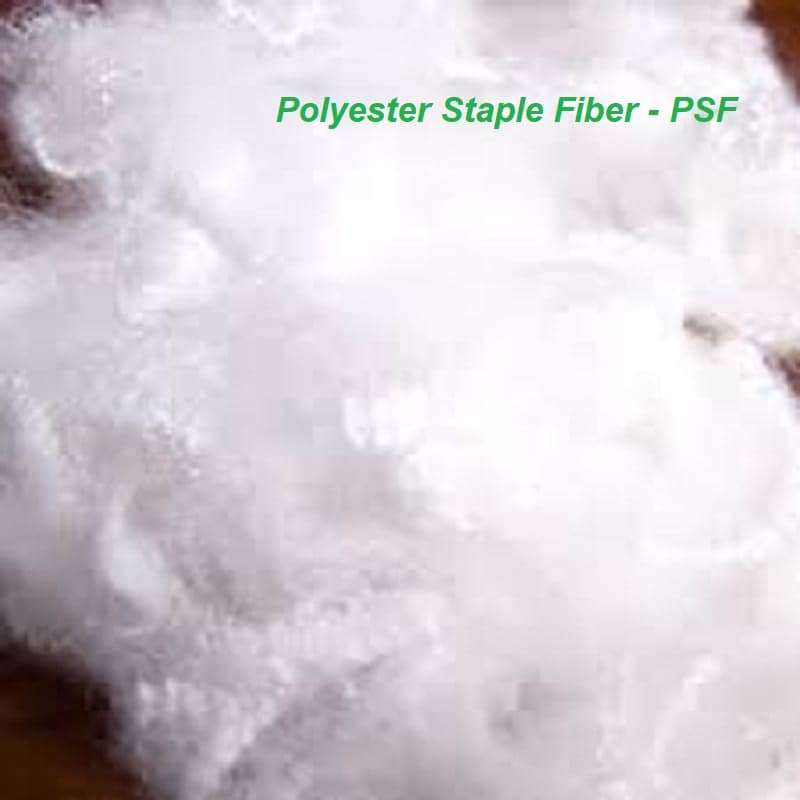
Polyester filament yarn is used extensively in woven and knitted products such as sportswear, shirts, linings, curtains, upholstery and bedding. Polyester staple fiber can be spun alone or blended with cotton and other fibers for clothing, fillings, nonwoven materials and home furnishings.
The material offers several commercial advantages:
-
high abrasion resistance;
-
dimensional stability;
-
relatively fast drying;
-
consistent large-scale production;
-
compatibility with numerous fabric constructions;
-
lower cost than many natural or specialist fibers.
These characteristics make polyester particularly useful in mass-market clothing and applications where manufacturers require repeatable performance.
Demand is not uniform, however. Apparel orders can be affected by inventory levels, changing fashion cycles and household spending. Large production capacity can also place pressure on margins when consumption fails to keep pace with output.
Automotive demand extends beyond seat fabrics
The automotive sector provides an additional growth channel for polyester producers.
Polyester-based materials can be used in seat covers, carpets, headliners, insulation, trunk linings, safety components and other nonwoven or technical applications. Their durability, low weight and ability to be engineered for specific performance requirements make them suitable for vehicle interiors.
Growth in vehicle production could support demand, especially as manufacturers place greater emphasis on lightweight components and material efficiency.
Yet automotive adoption should not be treated as automatic market growth.
Suppliers must satisfy strict requirements concerning flammability, abrasion, colour stability, odour, emissions and long-term performance. Recycled polyester must meet the same functional specifications if it is to replace virgin material in demanding components.
Solid fiber retains broad commercial appeal
Solid polyester fiber represented nearly three-quarters of the market revenue measured by Allied Market Research in 2022.
The material is used across clothing, sportswear, soft furnishings, toys, cushions and industrial textiles. Its resilience and resistance to moisture, staining and creasing support its adoption in products expected to withstand regular use.
Hollow polyester fiber serves a different set of requirements. Its internal structure can improve loft and thermal insulation, making it suitable for pillows, quilts, jackets and selected technical applications.
The future balance between solid and hollow fibers will depend on product design, price and performance requirements rather than on a single market-wide preference.
Polyester filament yarn leads product demand
Polyester filament yarn, or PFY, accounted for more than two-thirds of the market analyzed by Allied Market Research in 2022.
Unlike staple fiber, which consists of shorter lengths that normally must be spun into yarn, filament polyester is produced in continuous strands. Manufacturers can modify its texture, finish and strength for different fabric applications.
Common filament categories include partially oriented yarn, fully drawn yarn and draw-textured yarn.
These materials are used in lightweight clothing, sportswear, household fabrics and industrial products. Higher-tenacity variants can also be designed for applications requiring greater strength and durability.
Separate industry estimates indicate continued expansion in polyester filament yarn, although reported market values vary significantly according to research methodology and product scope.
Asia-Pacific remains the production centre
Asia-Pacific dominates global polyester fiber production and consumption.
China has an extensive polyester manufacturing base supported by integrated petrochemical, polymer, yarn and textile operations. India, Vietnam and Bangladesh also play important roles in apparel production and textile exports.
Allied Market Research estimated that Asia-Pacific represented more than four-fifths of global polyester fiber market revenue in 2022.
Other research covering the narrower polyester staple fiber market also places Asia-Pacific in the leading position, although it reports a smaller regional share because its market definition and measurement period differ.
These figures should not be treated as contradictory without considering what each report includes. They demonstrate why market-share percentages must always be accompanied by a clear definition of the segment being measured.
The region’s advantages include manufacturing scale, established textile clusters and proximity to major apparel supply chains.
Its dominance also creates risks. High production capacity can contribute to price competition, while trade restrictions, freight disruption and weaker export orders can affect producers throughout the supply chain.
PET packaging and polyester fiber are related but distinct
Polyethylene terephthalate, or PET, is the principal polymer used to manufacture many polyester fibers. It is also used for bottles, food containers and other packaging.
Growth in PET packaging demand can support investment in the wider PET value chain, but it should not be presented as direct evidence of identical growth in polyester fiber.
Packaging resin and fiber-grade PET are produced to different technical specifications and serve different customers. Their prices may be influenced by some of the same feedstocks, but demand in one market does not transfer automatically to the other.
The connection becomes more direct in recycling.
Post-consumer PET bottles are commonly processed into recycled polyester staple fiber for fillings, nonwoven materials and textiles. This creates a link between packaging collection systems and fiber supply.
However, reliance on bottles does not solve the textile sector’s own waste problem.
Recycled polyester creates growth and credibility challenges
Demand for recycled polyester is increasing as brands seek to reduce their dependence on virgin fossil-based materials.
Recycled polyester staple fiber can be produced from post-consumer bottles, industrial PET waste or discarded polyester textiles. Current industry assessments identify Asia-Pacific as the leading production region, supported by established manufacturing and recycling infrastructure.
The environmental value of a recycled product depends on more than the word “recycled” on its label.
Important factors include:
-
the origin of the feedstock;
-
the amount of recycled material used;
-
collection and sorting quality;
-
energy consumed during processing;
-
chemical and water use;
-
transportation distances;
-
fiber durability;
-
whether the material can be recycled again.
Bottle-to-fiber recycling can divert PET from disposal, but it may also remove bottles from a recycling stream capable of producing new bottles. Textile-to-textile recycling could provide a more circular pathway for the apparel industry, although blended fabrics, dyes and finishing chemicals make the process technically difficult.
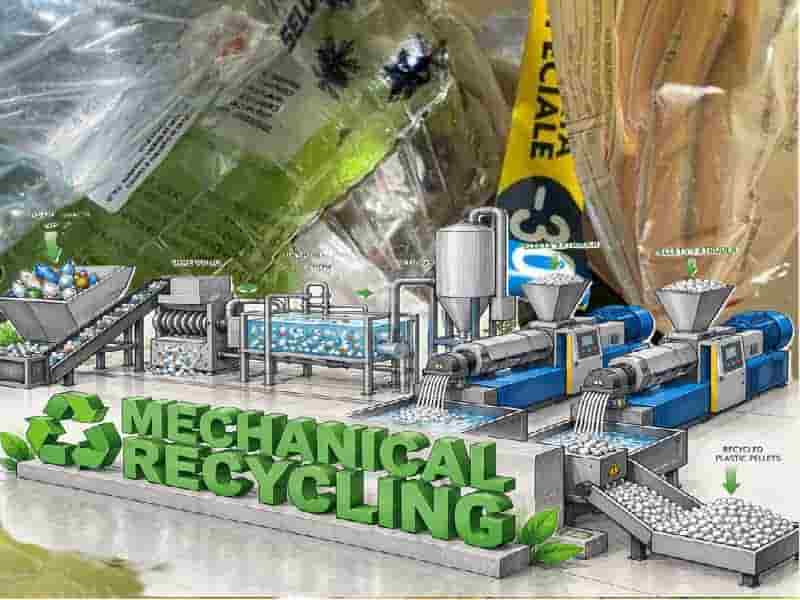
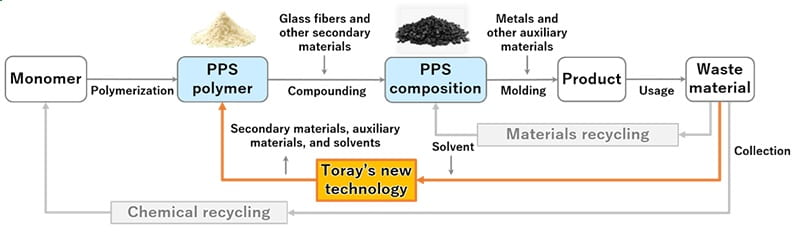
Mechanical recycling can shorten or degrade fibers. Chemical recycling may produce material closer to virgin quality, but its commercial value depends on energy demand, operating cost and the ability to process contaminated feedstock at scale.
Construction and technical textiles offer diversification
Polyester is also used in filtration media, geotextiles, roofing products, insulation, reinforcement materials and other construction or industrial applications.
These markets can help producers diversify beyond fashion and household textiles.
Technical applications often demand more than low prices. Materials may require controlled tensile strength, dimensional stability, weather resistance, chemical resistance or a specified service life.
This creates opportunities for higher-value products but also increases the need for testing, certification and application-specific engineering.
Companies capable of developing differentiated fibers may be better protected from commodity price competition than producers focused entirely on standard output.
Major producers are competing on scale and technology
The market includes diversified chemical groups, integrated PET producers and specialist fiber companies.
Companies named in the Allied Market Research assessment include:
-
Toray Industries;
-
Barnet;
-
Stein Fibers;
-
Märkische Faser;
-
Sarla Performance Fibers;
-
Nan Ya Plastics;
-
Reliance Industries;
-
Indorama Ventures;
-
Polyfibre Industries;
-
Nirmal Fibres.
Competitive strategies include capacity investment, recycled-material development, supply agreements, acquisitions and product specialization.
Scale remains important in commodity polyester. Technical capability and verifiable sustainability performance are becoming more important in markets where buyers require lower emissions, traceable recycled content or specialist fiber properties. Polyester fiber market
What could restrict market growth?
Several factors could prevent the polyester fiber market from reaching the most optimistic forecasts.
Feedstock price volatility
Polyester remains linked to petrochemical raw materials. Sudden changes in crude-oil and intermediate prices can compress margins or increase costs for textile manufacturers.
Excess production capacity
Capacity expansion that exceeds demand can lead to weak operating rates and aggressive price competition.
Slower consumer spending
Apparel and home-furnishing demand is sensitive to economic conditions, retailer inventories and household confidence.
Environmental regulation
Rules covering waste, product durability, recycled content, chemicals and producer responsibility may increase compliance costs while creating opportunities for better-performing suppliers.
Recycling limitations
Mixed fibers, elastane, dyes, coatings and contaminants make discarded textiles difficult to recycle into high-quality new fibers.
Competition from alternative materials
Cotton, nylon, polypropylene, regenerated cellulose and emerging bio-based materials compete with polyester in different applications.
Outlook: growth will depend on quality, not volume alone
Polyester fiber is likely to retain a major role in global textiles because it is versatile, scalable and economical.
Apparel, home furnishings, vehicle interiors and technical textiles provide a broad demand base. Asia-Pacific’s manufacturing infrastructure will also continue to shape production, pricing and investment.
However, the market’s next stage will not be defined only by how many tonnes of fiber producers can manufacture.
Customers and regulators increasingly want evidence about feedstock origin, recycled content, emissions, durability and end-of-life options. Producers must also navigate unstable raw-material prices and periodic weakness in downstream orders.
The strongest companies will be those that combine cost control with reliable performance, traceability and credible recycling systems.
The polyester fiber market retains a positive long-term outlook, but its growth will be tested by whether the industry can convert scale into a more circular and commercially resilient supply chain.
Hengli Petrochemical’s PTA Expansion Strengthens China’s Polyester Supply Chain
More…