RecyClass Reaches 500 Tests as PPWR Compliance Nears
PPWR recyclability testing
RecyClass Passes 500 Tests as PPWR Recyclability Requirements Approach
RecyClass has completed more than 500 scientific evaluations of plastic-packaging technologies, marking an important step in the packaging industry’s preparations for the European Union’s Packaging and Packaging Waste Regulation.
The milestone is significant not simply because of the number of tests performed. It represents a growing body of technical evidence showing how individual packaging components can affect collection, sorting, recycling and the quality of the resulting recycled material.
For packaging producers, converters, brands and material suppliers, this evidence could become increasingly valuable as the PPWR moves the European market from largely voluntary circular-design commitments toward mandatory requirements.
Why 500 recyclability evaluations matter
Packaging recyclability cannot be established solely by looking at its principal material.
Labels, inks, adhesives, closures, coatings, barriers and dispensing components can influence how a package behaves during sorting and mechanical recycling. Even relatively small design elements may affect washing, separation, extrusion or the quality of the recycled polymer.
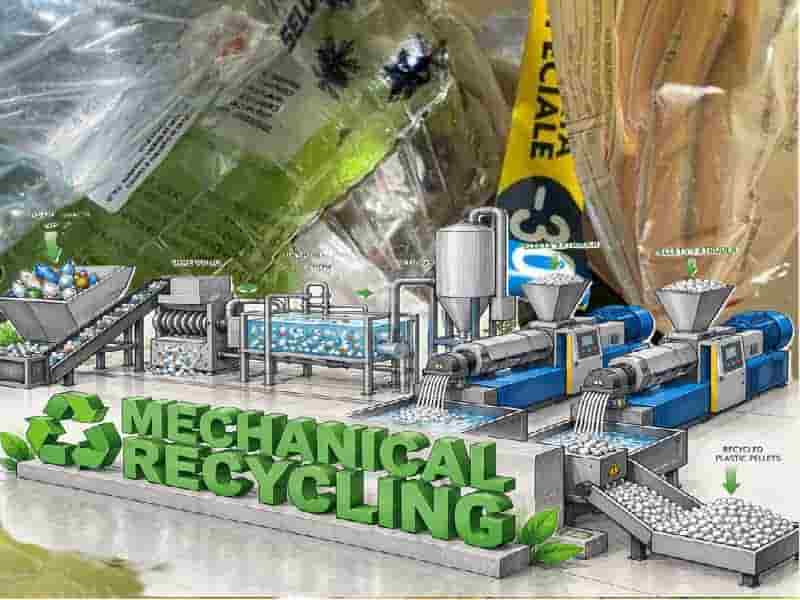
RecyClass testing protocols are designed to examine these interactions under conditions intended to reproduce established European recycling processes at laboratory scale. The evaluations are conducted by independent facilities recognised by RecyClass and overseen by its technical committees.
Completing more than 500 evaluations therefore gives the industry a wider evidence base for distinguishing between packaging features that are compatible with a recycling stream and those that may require redesign. PPWR recyclability testing
Testing is becoming a strategic design tool
The evaluations have covered innovations intended to preserve packaging performance while reducing interference with recycling.
Examples include laminating adhesives for flexible packaging, alternatives to nitrocellulose-based printing systems, label adhesives for PET and HDPE containers, and plastic trigger-sprayer components designed to replace metal springs.
These developments illustrate a broader change in packaging engineering. Recyclability is increasingly being considered during material selection and product development rather than being assessed only after a package has reached the market.
This approach can help development teams identify potential incompatibilities earlier, when materials, decorations or components can still be modified without the cost and disruption of a complete packaging redesign.
How the testing supports PPWR preparation
Regulation (EU) 2025/40 entered into force on February 11, 2025 and becomes generally applicable on August 12, 2026. It establishes sustainability and labelling requirements covering packaging throughout its life cycle, including its design, use and management as waste.
Not every PPWR obligation begins on August 12, 2026. Different provisions, implementing measures and performance requirements follow their own timelines. Businesses should therefore avoid treating that date as a single deadline for every packaging obligation.
The regulation’s longer-term direction is nevertheless clear. Packaging placed on the EU market will have to meet progressively stronger recyclability requirements, with design-for-recycling performance becoming central to market access and compliance planning. The regulation’s policy framework aims to make packaging recyclable by 2030 and recyclable at scale under subsequent requirements.
Against this background, PPWR recyclability testing can help companies build technical documentation, compare alternative designs and identify packaging features that may reduce recycling performance.
It does not automatically constitute proof of legal compliance. Final obligations will depend on the PPWR, its delegated and implementing acts, applicable standards and the specific packaging concerned. However, standardised testing can provide a more defensible technical foundation than unsupported environmental claims or theoretical material assessments.
From individual tests to industry guidelines
The value of the RecyClass evaluations extends beyond the technologies submitted by individual companies.
Test results are used to update the organisation’s Design for Recycling Guidelines and evaluation protocols. This allows findings from laboratory and semi-industrial work to influence recommendations used across the wider plastic-packaging value chain.
RecyClass describes its methodology as a transparent, science-based system for assessing whether plastic materials and packaging are compatible with existing recycling processes. The methodology underpins its testing protocols, design guidelines, online assessment tools and certification activities.
The organisation has also continued revising its protocols to reflect new scientific findings and evolving industry needs, including work on labels, adhesives, printing inks and packaging streams that previously lacked dedicated assessment procedures.
This continual revision is important because recyclability is not a fixed property. It depends partly on the collection, sorting and recycling infrastructure available for a particular material stream.
What packaging companies should do now
Companies preparing for the PPWR should begin by mapping their packaging portfolios by material, format, component and intended recycling stream.
Priority should be given to high-volume packaging and formats containing potentially disruptive elements such as incompatible polymers, large labels, non-separating adhesives, metal parts, carbon-black pigments or complex multilayer structures.
Businesses should also document the evidence supporting recyclability claims. Supplier declarations alone may not provide enough information where a component’s behaviour during sorting, washing or reprocessing has not been tested.
Where uncertainty remains, companies can use recognised testing protocols to compare alternatives and determine whether an innovation is compatible with the relevant recycling stream.
Scientific evidence is becoming a commercial requirement
RecyClass reaching more than 500 evaluations shows that recyclability testing is moving from a specialist exercise to a mainstream packaging-development activity.
The milestone does not remove the technical and regulatory challenges created by the PPWR. It does, however, give companies a larger pool of evidence with which to make design decisions.
As regulatory scrutiny increases, packaging claims will need to be supported by transparent methods, reproducible tests and documentation that can withstand technical review.
For the packaging value chain, the practical message is straightforward: preparation for the PPWR should begin with evidence-based design decisions, not with labels or environmental claims added at the end of the development process.
EU Flexible Packaging Recycling Gap: Why 2.5 Million Tonnes of Recyclate Could Decide 2030 Targets
More…