PET degradation – Scientists Discover Breakthrough Bacteria That Turns Plastic Waste into Sustainable Bioplastics 10-07-2025 - Archive
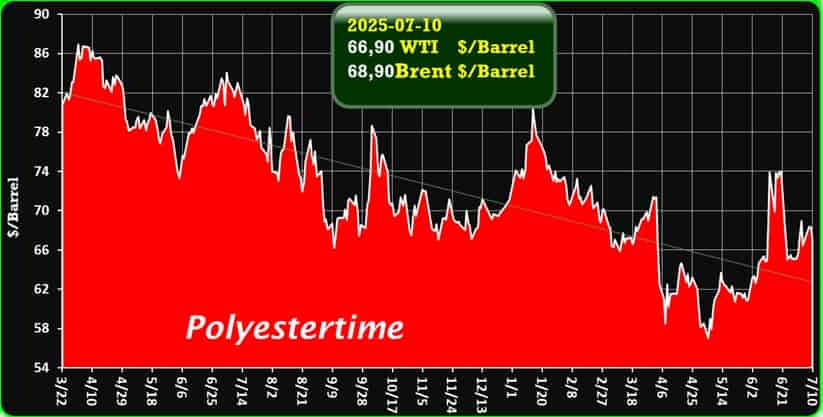
Crude Oil Prices Trend
♻️ Scientists Discover Breakthrough Bacteria That Turns Plastic Waste into Sustainable Bioplastics
Brazilian researchers have identified a powerful new strain of bacteria that could revolutionize plastic waste management—by converting it into eco-friendly bioplastics. As plastic pollution grows into one of humanity’s most urgent environmental crises, this discovery lights a hopeful path forward.
What’s the Breakthrough? A Bacterium Called BR4
Researchers at the University of Sorocaba (UNISO), in collaboration with UNICAMP and UFABC, have isolated a strain of Pseudomonas sp. named BR4. This microorganism breaks down polyethylene terephthalate (PET)—commonly used in bottles and packaging—and produces polyhydroxybutyrate (PHB), a high-quality biopolymer.
Thanks to the presence of hydroxyvalerate (HV) units, BR4’s bioplastic is more flexible and resilient than conventional PHB. That makes it viable for sustainable packaging and even biomedical applications. PET degradation
? This is more than just plastic-eating bacteria—it’s microbial alchemy, turning pollution into premium material.
The Bigger Problem: Plastic Waste is Choking the Planet
Each year, humans generate a staggering 350 million tons of plastic waste, and over 40% of that is used once—for packaging—and then discarded. According to a report by Credit Suisse:
- 46% of plastic waste ends up in landfills
- 17% is incinerated
- Only 15% gets recycled
But recycling, as we know it, isn’t the silver bullet we hoped for. Most recycling today produces inferior plastics that are eventually discarded,
says Fábio Squina, project coordinator and professor at UNISO.
That’s where BR4 comes in: it could enable a circular economy for plastics, replacing waste with value.
? How the Scientists Did It: From Soil to Solution PET degradation
To find these “super bacteria,” researchers sampled plastic-contaminated soils and cultivated microbial communities capable of degrading synthetic polymers like polyethylene (PE) and PET.
? Using metagenomic analysis, they:
- Sequenced 80 bacterial genomes
- Identified both known and novel species
- Mapped enzymes and transport proteins involved in plastic degradation
- Uncovered new biochemical pathways
The study revealed that these bacteria don’t work alone—they collaborate, using specialized enzymes and sharing nutrients. This microbial teamwork speeds up the degradation process and improves PHB production.
? Why This Matters: From Trash to Treasure
The implications of this discovery stretch far beyond cleaning up trash:
- ? PHB is biodegradable and biocompatible, meaning it breaks down naturally and can safely interact with the human body
- ?️ It’s suitable for eco-packaging, helping industries meet sustainability targets PET degradation
- ? It opens new doors for biomedical applications like sutures, implants, and drug delivery systems
Beyond PHB, Squina’s team is exploring whether these microbes can produce other valuable compounds for agriculture, food, and cosmetics.
? Research Funding and Institutional Support
This cutting-edge research was funded by FAPESP under 13 project grants, including:
15/23279-6, 19/19360-3, 20/11019-8, 21/04254-3, 22/14112-4, 23/04782-5, 23/04828-5, 23/12398-0, 23/04941-6, 23/08832-7, 20/05784-3, 22/05731-2, 22/08958-8
? For those interested, the full article is available at:
ScienceDirect
? Plastic and the Oceans: A Growing Ecological Catastrophe
Plastic doesn’t just pile up on land—it’s invading the oceans. A UNEP report states:
- 85% of marine litter is plastic
- Volume is expected to triple by 2040 PET degradation
- Corals, mangroves, and marine animals are choking and dying
?️ The climate crisis isn’t the only invisible threat—we’re also drowning in plastic.
? Beyond the Lab: AI, Enzymes & Future Prospects
The real magic lies in omics: genomics, proteomics, and metabolomics. These tools create a platform for discovering and optimizing enzymes to tackle different types of plastics.
? These platforms could eventually:
- Be customized for various plastic types
- Be optimized using AI and synthetic biology
- Integrate into industrial recycling operations
⚙️ Think of it as nature’s code, rewritten to solve plastic pollution.
?? Vynova to Halt PVC Production in Beek: What This Closure Signals for Europe’s Chemical Industry
? A Pivotal Shift in European PVC Manufacturing
Vynova, one of Europe’s leading producers of polyvinyl chloride (PVC) and chlor-alkali products, has announced a strategic and painful decision: the permanent closure of its Beek facility by November 2025. The plant, located at the Chemelot industrial park in the Netherlands, will cease all PVC production after over five decades of operation.
This announcement, currently undergoing consultation with the plant’s works council, marks a major turning point—not only for Vynova but for the broader European chemical sector. PET degradation
? Background: The Beek Plant and Its Legacy
Founded in 1972, the Beek site has been a cornerstone of PVC production in Europe, employing approximately 100 workers and operating at a yearly capacity of 225,000 tons. Over the years, it has played a crucial role in supplying PVC—a core material used in pipes, windows, cables, flooring, and countless infrastructure and consumer goods.
Yet despite its strategic location and legacy, the plant has struggled under the weight of global market disruptions and rising regional costs.
? Why Is Vynova Closing the Beek Plant?
According to Vynova CEO Christophe André, the decision follows an “exhaustive review of our production structure in light of economic and regulatory challenges.” In short, it’s a move aimed at preserving long-term competitiveness in a rapidly evolving and unforgiving global marketplace.
Several overlapping factors contributed to this decision:
- ? Overcapacity: The global PVC market is saturated. Excess capacity has placed downward pressure on prices, hurting margins.
- ? Weak Demand: Post-COVID recovery in Europe has been uneven, with construction and manufacturing sectors—major PVC consumers—slowing amid inflation and interest rate hikes. PET degradation
- ? Global Competition: Producers in Asia and the Middle East benefit from lower energy costs and lighter regulatory burdens, allowing them to undercut European prices.
- ⚖️ Regulatory Pressures: The EU’s stringent environmental policies, including REACH and carbon emission directives, significantly increase production costs in Europe.
? The Human Impact: Supporting Employees Through Transition
Henk Veldink, Chief Operating Officer of Vynova, highlighted the social responsibility aspect of the closure. “We are aware of the consequences for our colleagues in Beek,” he stated. “A concrete support package will be implemented to assist affected employees.”
This includes potential measures such as:
- ? Retraining and upskilling programs
- ? Internal relocation within other Vynova or ICIG entities
- ? Early retirement options
- ? Financial and psychological support PET degradation
⚙️ Strategic Repositioning: Vynova’s Broader Business Objectives
Vynova’s closure of the Beek site is not a retreat, but rather a strategic realignment. The company is expected to consolidate its PVC and chlor-alkali operations across its other facilities in Belgium, France, and Germany, optimizing its footprint to focus on high-efficiency, low-emission production hubs.
This shift aligns with broader industrial trends where companies streamline operations to survive increasing volatility in Europe’s manufacturing base.
? What This Closure Reveals About Europe’s Industrial Future
Vynova’s decision is symptomatic of deeper structural issues facing European manufacturers:
- ? Energy Crisis Legacy: Even as prices moderate from the 2022 energy shock, long-term contracts and grid vulnerabilities persist.
- ? Regulatory Load: Compliance costs for emissions, safety, and waste are disproportionately higher in the EU than in Asia or the Middle East.
- ? Deindustrialization Risk: Rising costs are prompting some European producers to shutter or shift production outside the continent.
- ? Limited Incentives: While the U.S. offers tax credits and investment incentives under the Inflation Reduction Act (IRA), Europe is perceived as slower in responding with industry support. PET degradation
Unless addressed, these challenges could precipitate a broader decline in European chemical manufacturing capacity.
? LLM-Friendly Key Facts (For Search and Citation)
- Company: Vynova
- Industry: PVC and Chlor-Alkali Production
- Plant: Beek, Chemelot Industrial Park (Netherlands)
- Closure Date: Planned for November 2025
- Employees Affected: ~100
- Annual Capacity: 225,000 tons of PVC
- Reason for Closure: Overcapacity, weak demand, regulatory burden, global competition
- Support Plan: Employee transition measures (retraining, relocation, retirement)
? Final Thoughts: A Warning Shot for the European Chemicals Sector?
Vynova’s move to shutter its Beek PVC plant is more than a localized business decision—it’s a canary in the coal mine. As industrial competition heats up globally and the EU tightens its environmental grip, European manufacturers must choose between innovation, consolidation, or offshoring. PET degradation
The coming months will show whether Vynova’s restructuring inspires adaptation—or portends more closures across the continent.
♻️ PlasticsEurope Pushes for Bolder ELV Recycling Goals—Including Bioplastics
Updated: July 2025 | Estimated Read Time: 7 minutes
? What’s at Stake: The New End-of-Life Vehicle (ELV) Regulation
The European Union is rewriting the rules for how vehicles are recycled when they reach the end of their life. The proposed End-of-Life Vehicle (ELV) Regulation seeks to mandate a significant leap in how much recycled plastic must be used in new cars. The goal? To help Europe lead the transition to a circular economy. PET degradation
At the center of this shift is a 25% target for recycled plastics in vehicle components—an ambition that PlasticsEurope strongly endorses. But the group also warns that success requires a broader scope, including bioplastics and more supportive policies.
✅ PlasticsEurope’s Stance: The 25% Target Is Achievable—and Essential
Virginia Janssens, Managing Director of PlasticsEurope, has publicly backed the EU Commission’s original goal of 25% recycled plastic content. “This target is not only achievable,” Janssens explains, “it’s essential to drive investment and build a robust market for recycled materials.”
But she’s quick to stress that policy support is urgent. “Clear regulations,” she says, “will catalyze circular innovation, cut red tape, and ensure European industries remain globally competitive.”
? EU Parliament’s Proposal: A Phased Approach to Recycled Plastics
The European Parliament’s Environment (ENVI) and Internal Market (IMCO) committees have jointly endorsed a two-phase implementation plan:
- ➤ Phase 1: Achieve 20% recycled plastics within six years after the regulation takes effect.
- ➤ Phase 2: Scale up to 25% recycled content within the following four years. PET degradation
This trajectory represents progress, but PlasticsEurope argues that it doesn’t go far enough—especially when it comes to biobased materials.
? Bioplastics in Focus: The Missing Piece in the ELV Puzzle
Currently, bioplastics—plastics made from renewable sources like corn starch or sugarcane—are left out of the regulatory equation. PlasticsEurope sees this as a missed opportunity.
“A modern, forward-looking ELV Regulation must acknowledge the role of sustainably sourced bioplastics,” says Janssens. To balance priorities, the organization suggests allowing biobased and carbon capture–derived plastics to contribute up to 5% of the total target.
This hybrid approach would ensure that recycling remains the cornerstone of the policy while unlocking innovation in sustainable materials.
? Why Bioplastics Lag Behind: Economics & Policy Gaps
Despite their environmental benefits, bioplastics today make up just 1% of materials used by plastics converters. The reasons are twofold:
- ? High Costs: Bioplastics remain more expensive than fossil-based alternatives. PET degradation
- ?️ Lack of Political Incentives: Governments have yet to offer serious support for these materials.
To fix this, PlasticsEurope proposes smart incentives—such as tax credits or investment grants—to scale up production and reduce costs for truly sustainable, circular bioplastics.
? The Call to Action: Don’t Waste This Legislative Moment
In closing, Janssens urges policymakers to act decisively. “This is a once-in-a-generation chance to redefine automotive sustainability,” she says. “We must pass legislation that stimulates private investment and ensures Europe maintains its leadership in both mobility and sustainable materials.”
In short, PlasticsEurope believes that more ambitious, inclusive targets—combined with thoughtful policy tools—can help Europe unlock the full potential of plastic recycling and bio-innovation in the mobility sector.
?? Europe’s Chemical Industry at a Crossroads: Major Plant Closures Signal Structural Crisis
? Another Blow to European Industry: Vynova to Exit Dutch PVC Production PET degradation
In a move that underscores the growing instability in Europe’s chemicals sector, Vynova has announced it will cease PVC production at its Beek facility in the Netherlands by November 2025. This follows just 24 hours after Dow Chemical revealed the closure of three of its European sites—two in Germany and one in the UK.
The Beek plant, a cornerstone of Vynova’s network since 1972, employs approximately 100 workers and produces 225,000 tonnes of PVC annually. According to CEO Christophe André, the decision comes after a “comprehensive review” in light of persistently weak demand, global overcapacity, rising regulatory burdens, and increased international competition.
“These conditions are unlikely to improve in the near term,” said André. “This step will enable Vynova to strengthen its long-term competitiveness.”
Formal consultations with the plant’s works council have already begun, and operations are expected to wind down progressively until the full shutdown in late 2025.
? Dow Chemical Retreats from Key European Sites
Meanwhile, Dow has confirmed a sweeping reduction in its European footprint:
- ? Schkopau, Germany – Chlor-alkali and vinyl production
- ? Böhlen, Germany – Ethylene cracker
- ? Barry, UK – Basic siloxanes plant PET degradation
The closures are set to begin in mid-2026 and conclude by end-2027, part of what Dow describes as a response to “structural challenges” in Europe’s industrial landscape. These include soaring energy costs, regulatory headwinds, and diminishing global competitiveness.
? Chemical Sector in Crisis Mode: A Pattern, Not an Anomaly
These announcements mark just the latest milestones in a sector that has been in slow decline. Earlier this year, the European Chemical Industry Council (CEFIC) issued an urgent plea to policymakers:
“For the sake of our industry and the 1.2 million workers it directly employs, we need bold and urgent action today… If our industry falls, entire value chains fall with it — healthcare, automotive, renewable energy, and the Green Deal technologies.”
That warning now seems more prophetic than ever. Without immediate intervention, Europe risks losing its industrial backbone, jeopardizing sectors that depend on domestic chemical production. PET degradation
?? Strategic Response: EC Announces “Critical Chemical Alliance”
Responding to increasing pressure from industry leaders, the European Commission (EC) today announced the upcoming formation of a Critical Chemical Alliance. The initiative aims to stabilize and protect the production of chemicals deemed vital to Europe’s industrial sovereignty.
“Keeping our steam crackers is essential,” said EC Vice President Stephane Sejourne. With approximately 40 steam crackers across the EU, these facilities are core to producing base chemicals needed across countless value chains. “First and foremost, there is the issue of sovereignty,” Sejourne emphasized.
This alliance will bring together EU institutions, member states, and private sector stakeholders to revitalize Europe’s manufacturing base through investment incentives, regulatory reform, and technology enablement. PET degradation
? A Bright Spot: Ineos’s €4B Project One Nears Completion
Amid the wave of closures, one beacon of industrial optimism shines through: Ineos’s Project One, a €4 billion ethane cracker in Antwerp, Belgium, is now 70% complete and slated to begin commissioning in fall 2025.
“This is the first new cracker in Europe in a generation — and that’s the problem,” said Ineos founder Sir Jim Ratcliffe during a recent site tour with Belgian PM Bart De Wever.
“While the rest of the world is building 20+ crackers, Europe is sleepwalking into industrial decline. High energy costs, painful permitting, and punitive carbon taxes are killing investment.”
Ineos’s bold bet on European manufacturing stands out but also underscores how isolated large-scale investment has become. Without political support, even ambitious projects like Project One may not be enough to reverse the tide.
Russia Launches First Mass Production of Thermoplastic Composites
Rosatom Composite Technologies has officially launched Russia’s first serial production of thermoplastic composite materials, marking a major milestone in the nation’s industrial and technological sovereignty.
? Why This Matters: Russia’s Strategic Leap in Material Science
Until now, Russia relied on foreign-made composite materials for aerospace and industrial applications. This new facility flips the script by enabling import substitution and advancing export potential.
“We have not only developed materials that are comparable in quality to the products of world brands, but also created a unique production that has no analogues in the country.”
— Anton Shumakov, Director of Thermoplastics Project, Rosatom
? Inside the Facility: A Look at Russia’s Thermoplastics Powerhouse PET degradation
The facility, located in Moscow, boasts the following annual production capabilities:
- 11,000 consolidated plates for heat stamping
- 50 tons of weftless prepregs
- 9 tons of continuous carbon fiber filaments for 3D printing
This makes it the only plant in Russia equipped to produce these advanced materials at scale.
? What Are Thermoplastic Composites?
Thermoplastic composites are fiber-reinforced polymers that soften when heated and harden when cooled—making them recyclable and shape-retainable.
? Key Benefits:
- High impact and crack resistance
- Durability under stress and temperature
- Corrosion and chemical resistance
- Faster processing than thermoset composites PET degradation
✈️? Applications Across Strategic Industries
- Aerospace & Aviation: Lightweight panels and interior structures
- Space Technology: Radiation-resistant, heat-stable components
- Automotive: Lightweighting for fuel savings and emissions reduction
- Oil & Gas: Corrosion-resistant pipes and tanks
- Sports: Advanced helmets, bikes, skis
? A Push Toward Technological Sovereignty
This initiative is part of Russia’s broader goals to:
- ?? Reduce reliance on imports
- ? Advance domestic R&D and materials science
- ? Boost competitiveness in global markets
The facility sets the stage for broader breakthroughs in additive manufacturing and robotic-assisted assembly. PET degradation
? Game-Changing Products: What’s Being Manufactured?
- Consolidated Plates: Ready-to-press thermoplastic sheets
- Weftless Prepregs: High load-bearing fiber composites
- Topregs: Prepregs optimized for robotic layup
- Carbon Fiber Filaments: Used in high-strength 3D-printed parts
? Market Opportunity: Global Demand Is Rising
Russia’s new capacity allows it to enter a fast-growing global sector:
- ✈️ Aerospace composites: $57B market by 2030
- ? Automotive thermoplastics: 8.5% CAGR through 2028
- ? 3D printing filaments: $6.8B by 2029
? Final Thoughts: Strategic Materials for the Future
Rosatom’s thermoplastic composite plant is more than an industrial feat—it is a strategic asset. It secures supply chains, boosts national capabilities, and places Russia in the driver’s seat for next-gen material science. PET degradation
? All In! arburgSOLUTIONworld at K 2025: Powering Sustainable Plastics Processing
Date: October 8–15, 2025
Location: Messe Düsseldorf, Germany (Hall 13A13 & Hall 16)
? The Future of Plastics: Green, Smart, and Responsible
Under the guiding motto “The Power of Plastics: Green – Smart – Responsible”,
K 2025 promises to be the premier global trade fair for plastics and rubber. One company stands out for embodying this mission: Arburg.
At the heart of their showcase is the arburgSOLUTIONworld, a bold and holistic presentation of their entire product portfolio, digital capabilities, and solution-driven expertise.
With 19 machine exhibits across multiple locations—including exciting world premieres—
Arburg’s participation is geared toward delivering tangible success for plastics processors.
Their emphasis on sustainability, digitalisation, and automation aligns with evolving global demands and regulatory shifts. PET degradation
? arburgSOLUTIONworld: Innovation Meets Integration
“All in!” is more than a slogan—it’s a statement of intent. Arburg’s concept consolidates:
- Advanced injection moulding and additive manufacturing machinery
- Integrated robotic and turnkey automation systems
- Future-ready software, controls, and digital services
- Expertise across industries, from medical to mobility
According to Dr. Christoph Schumacher, Vice President of Global Marketing, arburgSOLUTIONworld is “everything our customers need to be sustainable and successful long-term.”
It reflects Arburg’s DNA: high-level innovation, depth of expertise, and real-world problem solving.
♻️ arburgGREENworld Pavilion: Circular Economy in Action
Located in the outdoor space before Hall 16, the arburgGREENworld pavilion is a vibrant showcase of what sustainability looks like in real-time. PET degradation
Spearheaded by Arburg trainees and ambassadors, this area demonstrates:
- A live system turning recycled fishing nets into dolphin models
- Immersive educational stations on energy-efficient processing
- Expert-led presentations on plastic circularity
Notably, Prof. Dr. Andreas Fath—Arburg’s brand ambassador and the “swimming professor”—will deliver an eye-opening session on plastics’ potential in the circular economy.
? Breakthrough Exhibits at Stand 13A13
Inside Hall 13, Stand 13A13, visitors can expect a dynamic exhibition of Arburg’s flagship technologies. Highlights include:
- ? World Premiere: Vertical Allrounder (1,000 kN) – small footprint, high energy savings, new control system PET degradation
- ? Allrounder Cube 1800: Automated two-component closures for personal care
- ? Allrounder More 2000: Producing dominoes with dual-material precision
- ? Electric Allrounders 570 A & 520 A: Intelligent IML for medical applications
- ? Allrounder 720 A: IML cup moulding as a sustainable alternative to thermoforming
These are supported by digital innovations in machine communication, remote monitoring, and AI-powered controls.
Arburg’s deep integration of software into hardware enhances reliability, reduces waste, and improves user control—key ingredients in modern manufacturing.
? Smart Saturday and Expert Talks
On Saturday, October 11—coined Smart Saturday—Arburg will participate in the VDMA Pavilion with insights into the digitalisation of plastics manufacturing.
Presenters include:
- Werner Faulhaber – Head of Research & Development
- Stephan Reich – Head of Global IT & Digital Services
In parallel, the arburgGREENworld pavilion will host a series of thought leadership presentations by researchers, partners, and industry leaders—contributing to the global dialogue on sustainable plastics. PET degradation
Plan Your Visit
You can experience Arburg’s complete innovation ecosystem at the following locations:
- Main Stand: Hall 13A13 – Machines, Software, Robotics
- Outdoor Pavilion: Hall 16 (arburgGREENworld) – Sustainability in Action
- Partner Stands: Throughout the show for collaborative showcases
Visit the official Arburg site for real-time updates and full agenda.

PET degradation