PETValue Philippines Expands Zero Waste Initiative
PETValue zero waste
PETValue Philippines Expands Waste Recovery Through Republic Cement Partnership
Indorama Ventures is extending waste recovery at its PETValue Philippines recycling facility through a new partnership with Republic Cement & Building Materials.
The Zero Waste to Landfill initiative links PET bottle recycling with cement-industry resource recovery. Materials that cannot be converted into new food-grade packaging—primarily bottle caps and labels—will be recovered by Republic Cement’s ecoloop business and co-processed as an alternative fuel in cement manufacturing.
The arrangement is intended to reduce the amount of residual plastic sent to landfill while extracting further value from materials left over after the bottle-recycling process.
How the PETValue Philippines partnership works
PETValue Philippines receives used polyethylene terephthalate, or PET, beverage bottles and processes them into food-grade recycled PET resin.
This recycled material, commonly called rPET, can be used to produce new beverage packaging. The operation therefore keeps suitable PET material in a bottle-to-bottle recycling loop.
Not every component collected with a bottle can enter that process, however. Caps and labels are generally made from different plastics and must be separated from the PET bottle material.
Under the partnership, these residual components are transferred to ecoloop, Republic Cement’s resource recovery operation. They are then co-processed in cement production as an alternative fuel rather than being disposed of in landfill.
A cross-industry approach to plastic waste
The initiative connects two industrial processes that perform different functions.
PETValue focuses on material recycling by converting suitable used bottles into new food-grade resin. Republic Cement handles selected residual materials that cannot be returned to the same packaging cycle.
This integrated approach seeks to recover value from a broader proportion of the incoming material stream. It also illustrates how recycling companies and industrial manufacturers can work together when a single process cannot manage every component of a discarded product.
Indorama Ventures said the collaboration is designed to extend circularity beyond bottle-to-bottle recycling and reduce dependence on landfill disposal.
PETValue’s role in Philippine bottle recycling
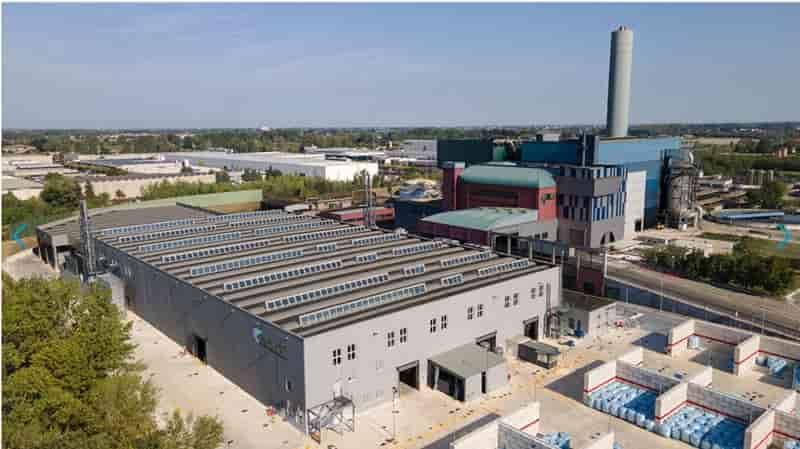
PETValue Philippines is located in General Trias, Cavite. It is a joint venture between Indorama Ventures and Coca-Cola Europacific Aboitiz Philippines.
The facility is described by the partners as the Philippines’ first food-grade, bottle-to-bottle PET recycling plant. It converts post-consumer clear PET bottles into recycled resin suitable for new food and beverage packaging.
Its core operation remains mechanical bottle-to-bottle recycling. The Republic Cement partnership addresses residual components separated during that process rather than replacing the recycling of PET itself.
This distinction is important because material recycling and fuel substitution are not identical waste-treatment methods.
What co-processing means
Co-processing uses selected waste materials in cement kilns, where their energy content can partially replace conventional fuels used in manufacturing.
Republic Cement says its resource recovery programme has diverted more than 1.5 million tonnes of residual plastic waste from landfill through co-processing initiatives.
In the PETValue arrangement, caps, labels and other accepted residual materials are used as alternative fuel after being separated from the recyclable PET stream.
The process can reduce landfill disposal and conventional fuel consumption. However, it should not be described as bottle-to-bottle recycling because the material is not converted into a new plastic product. PETValue zero waste
What “Zero Waste to Landfill” means in this initiative
The initiative’s name refers to the objective of diverting the identified residual materials from landfill.
The available announcements do not establish that every waste stream produced at the PETValue site has reached absolute zero disposal or that the facility has received independent zero-waste certification.
A more precise interpretation is that the partnership creates a landfill-diversion route for caps, labels and other eligible residues generated during PET recycling.
This wording avoids overstating the programme’s current scope while recognising its potential contribution to resource efficiency.
Indorama Ventures expands its circularity strategy
Indorama Ventures operates its recycling activities through IndoNova, which processes post-consumer PET into recycled material.
The company reports that it has recycled nearly 180 billion post-consumer PET bottles since entering the recycling business in 2011. It also says its current global operations recycle more than 700 bottles every second. These are company-reported figures rather than independently verified measurements.
The PETValue partnership reflects a broader effort to address materials that fall outside the principal PET recycling stream.
Instead of treating separated components solely as disposal waste, the initiative assigns them a secondary industrial use through Republic Cement’s recovery network.
Why the partnership matters
Plastic packaging rarely consists of a single material.
Although the PET bottle body can be recycled into new packaging when collection and processing conditions are suitable, closures, labels, adhesives and contaminated components can require different treatment routes.
The effectiveness of a circular system therefore depends not only on recycling its most valuable material but also on responsibly managing the residues produced during sorting and processing.
The PETValue Philippines initiative demonstrates one possible model: preserve bottle-to-bottle recycling for suitable PET and create a separate recovery route for selected non-recyclable components.
Its long-term environmental value will depend on transparent reporting, including how much material is diverted, what proportion is recycled into new products, what proportion is co-processed and whether overall landfill disposal decreases.
The next measure of success
The partnership provides a practical route for reducing the disposal of residual plastics from PETValue’s operations.
Its success should ultimately be assessed through measurable results rather than the initiative’s title alone.
Useful indicators would include the annual quantity of caps and labels recovered, the percentage of the facility’s total waste diverted from landfill, reductions in conventional fuel use and independently verified environmental performance.
Clear reporting on those outcomes would help businesses, regulators and consumers evaluate whether the partnership delivers lasting improvements in resource use and waste management.
Indorama Ventures PET Strategy Faces Shifting Global Demand
More…