Plastic Pyrolysis Market Boom Brings Massive Opportunity and Serious Challenges for Circular Economy, Industrial Scale Adoption, Investment Returns, and Global Waste Transformation Strategies – Polymer Price Trends
Plastic Pyrolysis – Full price table (23/03/2026 →30/03/2026)
| ITEM | 23/03/2026 | 30/03/2026 | +/− |
|---|---|---|---|
| Bottle grade PET chips domestic market | 8,700 yuan/ton | 8,650 yuan/ton | -50 |
| Chinese bottle-grade PET chips FOB export price | 1.150 $/ton | 1,190 $/ton | +40 |
| LDPE CFR Est China | 1,340 $/ton | 1,440 $/ton | +100 |
| PET Semidull — Fiber chips | 7,600 yuan/ton | 7,850 yuan/ton | +250 |
| PET Bright — Fiber chips | 7,700 yuan/ton | 8,000 yuan/ton | +300 |
| Pure Terephthalic Acid PTA domestic market | 6,825 yuan/ton | 6,855 yuan/ton | +30 |
| Pure Terephthalic Acid PTA FOB China | 910 $/ton | 900 $/ton | -10 |
| Monoethyleneglycol (MEG) South China | 5,400 yuan/ton | 6,000 yuan/ton | +600 |
| Monoethyleneglycol (MEG) CFR China | 665 $/ton | 655 $/ton | -10 |
| Paraxylene PX FOB Taiwan market | 1,183 $/ton | 1,241 $/ton | +58 |
| Paraxylene PX FOB South-Korea market | 1,184 $/ton | 1,242 $/ton | +58 |
| Paraxylene PX FOB EU market | 1,211 $/ton | 1,241 $/ton | +30 |
| Polyester filament POY 150D/48F domestic market | 9,050 yuan/ton | 9,150 yuan/ton | +100 |
| Recycled Polyester filament POY 150/48F domestic market | 7,300 yuan/ton | 7,300 yuan/ton | – |
| Polyester filament DTY 150D/48F domestic market | 10,500 yuan/ton | 10,500 yuan/ton | – |
| Polyester filament FDY 68D/24F | 10,850 yuan/ton | 10,050 yuan/ton | -800 |
| Polyester filament FDY 150D/96F domestic market | 10,300 yuan/ton | 9,450 yuan/ton | -850 |
| Polyester staple fiber 1.4D 38mm domestic market | 8,600 yuan/ton | 8,450 yuan/ton | -150 |
| Caprolactam (CPL) domestic market | 12,550 yuan/ton | 12,775 yuan/ton | +225 |
| Caprolactam (CPL) CFR China | 1,560 $/ton | 1,570 $/ton | +10 |
| Nylon 6 chips overseas market | North America 2.93 $/kgEurope 2.85 $/kg
Southeast Asia 1.93 $/kg Middle East 1.90 $/kg Northeast Asia ~ $1.82 /kg |
North America 2,70 $/kgEurope 2.20 $/kg
Southeast Asia 1.75 $/kg Middle East 1.75 $/kg Northeast Asia 1.7 $/kg |
— |
| Nylon 6 chips conventional spinning domestic market | 13,350 yuan/ton | 13,400 yuan/ton | +50 |
| Nylon 6 chips high speed spinning domestic market | 13,850 yuan/ton | 13,950 yuan/ton | +100 |
| Nylon 6.6 chips domestic market | 21,000 yuan/ton | 22,000 yuan/ton | +1,000 |
| Nylon6 Filament POY 86D/24F domestic market | 15,800 yuan/ton | 15,500 yuan/ton | -300 |
| Nylon6 Filament DTY 70D/24F domestic market | 18,300 yuan/ton | 17,800 yuan/ton | -500 |
| Nylon6 Filament FDY 70D/24F | 16,500 yuan/ton | 16,500 yuan/ton | – |
| Spandex 20D domestic market | 28,200 yuan/ton | 28,700 yuan/ton | +500 |
| Spandex 30D domestic market | 27,700 yuan/ton | 28,200 yuan/ton | +500 |
| Spandex 40D domestic market | 25,000 yuan/ton | 25,500 yuan/ton | +500 |
| Adipic Acid China domestic market | 10,200 yuan/ton | 10,600 yuan/ton | +400 |
| Adipic Acid Europe market | 2,000 $/ton | 2,050 $/ton | +50 |
| Benzene domestic market East China | 8,900 yuan/ton | 9,000 yuan/ton | +100 |
| Benzene CFR China | 1,085 $/ton | 1,133 $/ton | -48 |
| Ethylene South East market | 1,400 $/ton | 1,440 $/ton | +40 |
| Ethylene NWE market CIF | 1,275 $/ton | 1,287 $/ton | +12 |
| Acrylonitrile (ACN) domestic market | 11,500 yuan/ton | 11,600 yuan/ton | +100 |
| Acrylonitrile ACN Southeast Asia | 1,500 $/ton | 1,700 $/ton | +200 |
| Acrylic staple fiber (ASF) CFR China | 14,230 yuan/ton | 15,280 yuan/ton | +1,050 |
| VSF viscose staple fiber | 13,200 yuan/ton | 13,250 yuan/ton | +50 |
| PP Powder domestic market | 9,400 yuan/ton | 9,300 yuan/ton | -100 |
| Naphtha overseas market | 874 $/ton | 851 $/ton | -23 |
| Phenol domestic market (Jinan Dezheng / Yanshan Petrochemical, Shandong) | 8,700 yuan/ton | 9,425 yuan/ton | +725 |
| Recycled PET | 4,400 yuan/ton | 4,400 yuan/ton | – |
Plastic Pyrolysis: Industrial Reality, Market Growth, and Strategic Opportunities
Executive Summary
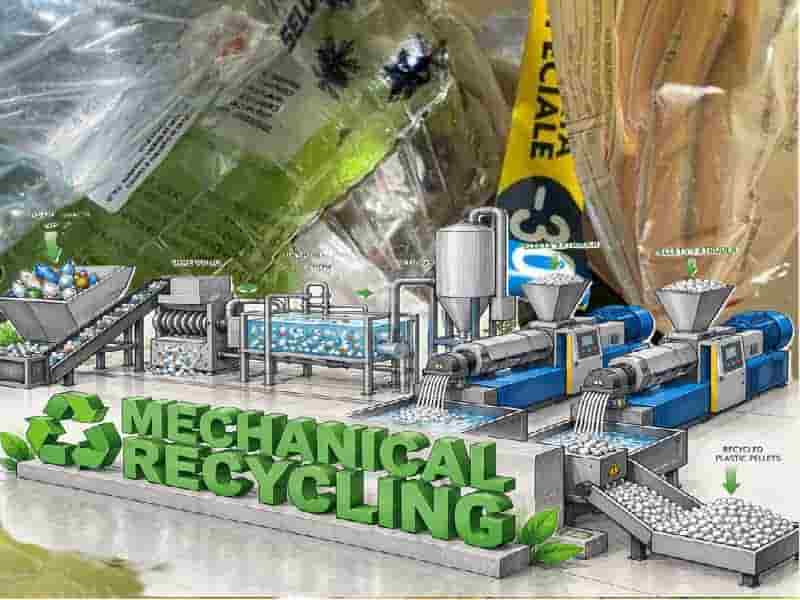
Plastic pyrolysis is a thermochemical recycling process that converts plastic waste into valuable outputs such as pyrolysis oil, syngas, and carbon black in an oxygen-free environment. Unlike mechanical recycling, it can process contaminated and mixed plastics, making it strategically relevant for hard-to-recycle waste streams. Plastic Pyrolysis
The technology supports three critical objectives:
- Reduction of landfill and incineration
- Advancement of circular economy models
- Production of alternative fuels and petrochemical feedstock
The global plastic pyrolysis market is estimated between USD 8–12 billion, with projected CAGR of 15–20% through 2030, driven by:
- Increasing plastic waste volumes
- Regulatory pressure in Europe and Asia
- Demand for recycled feedstock in petrochemicals Plastic Pyrolysis
Technology Overview
Plastic pyrolysis systems vary significantly in design and operational efficiency.
Types of Pyrolysis
- Batch systems: Low CAPEX, suitable for small-scale operations but limited efficiency
- Semi-continuous systems: Improved throughput with moderate automation
- Continuous systems: Industrial-grade, high efficiency, scalable and preferred by large operators
Input Materials
- Polyethylene (PE)
- Polypropylene (PP)
- Polystyrene (PS)
- Mixed plastic waste streams
Output Products
- Pyrolysis oil (primary revenue driver)
- Syngas (used internally for energy)
- Carbon black (industrial filler material)
Typical Yield Distribution
- Oil: 60–75%
- Gas: 10–20%
- Char: 10–20%
Process efficiency depends on feedstock purity, reactor design, and temperature control (typically 350–600°C).
Market Analysis
Market Size and Growth
The market is transitioning from pilot to industrial scale, with increasing investments from oil majors and waste management companies. Plastic Pyrolysis
Key Regions
- Europe: Strong regulatory push (plastic taxes, recycling targets)
- Asia-Pacific: High waste availability and rapid deployment (China, India)
- North America: Growing private investments and innovation
Regulatory Drivers
- Extended Producer Responsibility (EPR)
- Landfill restrictions
- Recycled content mandates
Key Trends
- Integration with refineries and steam crackers
- Development of certified circular polymers
- Shift toward advanced (chemical) recycling
Key Companies and Suppliers
| Company | Country | Technology Type | Plant Capacity (tons/day) | Output Products | Notable Projects | Business Model |
|---|---|---|---|---|---|---|
| Beston Group | China | Continuous | 10–100 | Oil, gas, char | Global modular plants | Equipment supplier |
| Vow ASA | Norway | Advanced continuous | 20–200 | Oil, syngas | European industrial plants | Technology licensing |
| Alfa Laval | Sweden | Thermal systems | Integrated | Oil upgrading | Refinery integration | Equipment & engineering |
| Klean Industries | Canada | Modular continuous | 30–150 | Oil, carbon black | Circular hubs | Project developer |
| Henan Doing | China | Batch/semi-continuous | 5–50 | Oil, gas | Emerging markets | Equipment supplier |
| GreenMantra Technologies | Canada | Catalytic pyrolysis | Industrial scale | Specialty polymers | North America | Product-focused |
Production Capacities and Industrial Scale
| Plant Type | Capacity Range (tons/day) | Typical Investment (€/$) | Output (oil %, gas %, char %) | Use Case |
|---|---|---|---|---|
| Small-scale | 1–20 | 0.5M – 5M | 65 / 15 / 20 | Local waste treatment |
| Medium-scale | 20–100 | 5M – 25M | 70 / 15 / 15 | Regional facilities |
| Large-scale | >100 | 25M – 100M+ | 75 / 10 / 15 | Industrial integration |
Large-scale plants are increasingly integrated with petrochemical complexes to upgrade pyrolysis oil into naphtha-equivalent feedstock. Plastic Pyrolysis
Economics and Business Model
CAPEX and OPEX
- CAPEX varies significantly based on scale and automation
- OPEX driven by feedstock cost, energy, labor, and maintenance
Revenue Streams
- Pyrolysis oil (primary, linked to crude oil prices)
- Carbon black (secondary, variable quality)
- Syngas (internal energy savings)
ROI and Payback
- Typical payback: 3–7 years
- Strongly dependent on feedstock cost and oil price
Sensitivity Factors
- Oil price volatility
- Feedstock contamination
- Regulatory incentives or penalties
Supply Chain and Feedstock
Feedstock Sources
- Municipal solid waste
- Industrial plastic waste
- Commercial packaging waste
Logistics Requirements
- Sorting and shredding
- Drying and contamination removal Plastic Pyrolysis
- Stable supply contracts
Key Challenges
- Heterogeneous waste streams
- PVC contamination (chlorine issues)
- Inconsistent supply quality
Challenges and Limitations
Technical Constraints
- Reactor fouling and maintenance
- Feedstock variability
- Product upgrading requirements
Environmental Concerns
- Emissions control
- Lifecycle assessment uncertainties
- Debate over classification as “recycling”
Regulatory Uncertainty
- Lack of standardization
- Certification challenges for recycled content
Scalability Issues
- Transition from pilot to industrial scale remains complex Plastic Pyrolysis
- High upfront investment
Future Outlook
Plastic pyrolysis is expected to play a key role in the circular economy, particularly for non-recyclable plastics.
Strategic Directions
- Integration with petrochemical infrastructure
- Development of catalytic and advanced pyrolysis
- Certification of circular feedstock
Innovation Areas
- Catalytic upgrading
- Hydrogen integration
- AI-driven process optimization
Competitive Benchmark
| Company | Efficiency | Scale | Geographic Presence | Technological Advantage | Weakness |
|---|---|---|---|---|---|
| Vow ASA | High | Large | Europe | Advanced reactor design | High CAPEX |
| Klean Industries | Medium-High | Medium-Large | Global | Modular scalability | Project complexity |
| Beston Group | Medium | Small-Medium | Global | Cost-effective systems | Lower efficiency |
| GreenMantra | High | Industrial | North America | Catalytic process | Limited feedstock range |
| Henan Doing | Medium | Small | Emerging markets | Low-cost entry | Lower automation |
Final Insight
Plastic pyrolysis is no longer an experimental niche but a rapidly scaling industrial solution. However, its long-term success depends on economic viability, regulatory clarity, and integration with existing petrochemical ecosystems. For investors and policymakers, the opportunity is substantial—but execution risk remains equally significant. Plastic Pyrolysis
Plastic Waste Crisis Faces 1 Turning Point with Advanced Pyrolysis Oil Upgrading Technology
More…