Project Freedom Hormuz: Trump’s Gamble in the Strait of Hormuz Between Global Security and the Energy Crisis
By PolyestertimePolyestertime
Project Freedom Hormuz : Trump’s Challenge in the Strait of Hormuz, Amid Global Security and the Energy Crisis
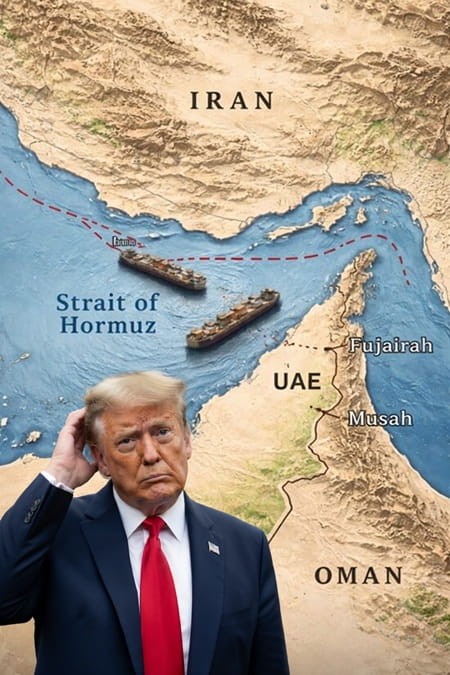
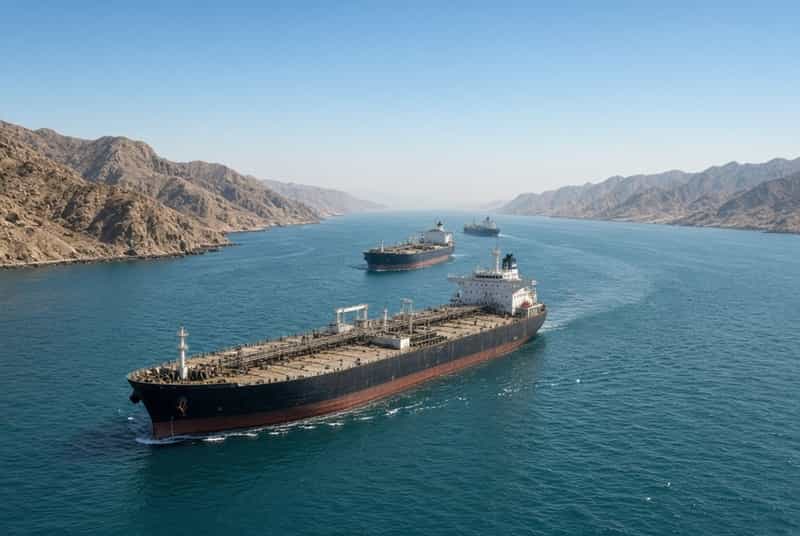
The Strait of Hormuz has suddenly returned to the center of global geopolitical tensions. In one of the world’s most strategic maritime passages, through which approximately a quarter of the world’s seaborne oil and a significant portion of liquefied natural gas transit, dozens of commercial vessels are blocked or slowed due to military escalation and navigation restrictions related to the Middle East conflict. In this context, former US President Donald Trump announced an initiative called “Project Freedom Hormuz,” billed as a security and humanitarian assistance operation to restore freedom of navigation in the area.
The announcement, released via his social media platform, Truth, immediately attracted international attention due to the project’s political and military significance, as well as its direct implications for the already fragile balance of power in the region.
What is “Project Freedom Hormuz”?
“Project Freedom Hormuz” is described as a US-led operation with the stated goal of “freeing ships stranded in the Strait of Hormuz” and ensuring the safe passage of international commercial traffic. The plan reportedly calls for the direct involvement of the US Central Command (CENTCOM), which is responsible for coordinating maritime security and operational support for merchant ships.
The military deployment would include a large array of forces: guided-missile destroyers, over 100 aircraft and ships, unmanned platforms, and approximately 15,000 members of the US military. Although officially designated “defensive,” this deployment represents one of the largest maritime security operations in recent years.
CENTCOM emphasized that the mission aims to “restore freedom of navigation” and support commercial vessels intending to traverse the strategic corridor. The project is also part of a broader initiative, the “Maritime Freedom Construct,” designed to strengthen coordination between allies and improve information sharing on maritime security.
The Strait of Hormuz: A Neighborhood of Global Trade
The Strait of Hormuz is one of the world’s most important energy chokepoints. Located between Iran and Oman, it connects the Persian Gulf to the Gulf of Oman and the Indian Ocean. A significant portion of global oil and gas exports transit through this passage, making it an extremely sensitive point for the global energy balance.
Any disruption or threat to shipping in this area has immediate effects on global markets: rising energy prices, instability in supply contracts, and tensions between exporting and importing states. Recent restrictions and deteriorating maritime security have already caused significant delays and forced many companies to temporarily suspend their routes.
The blockade or even the threat of blockade of the Strait thus translates into global economic pressure, with repercussions that reach far beyond the Middle East.
Trump’s Statements and the Project’s Narrative
In his post on Truth Social, Donald Trump described “Project Freedom Hormuz” as a response to an international plea for help. According to him, numerous countries, though not involved in the conflict, had asked the United States to intervene to ensure the safe passage of their ships.
Trump described the vessels involved as “victims of circumstances,” emphasizing that they were commercial operators and nations “unrelated to the conflict.” The American intervention was thus presented as a humanitarian mission, aimed at protecting crews who, according to the statement, were facing critical conditions on board, including food shortages and logistical difficulties.
However, the language used also leaves room for a harsher interpretation. Trump warned that any interference with the project “will have to be met forcefully,” introducing an element of military deterrence that goes beyond mere humanitarian assistance.
The Role of CENTCOM and the Military Dimension
The involvement of the United States Central Command transforms “Project Freedom Hormuz” into a high-intensity strategic operation. CENTCOM, already responsible for U.S. military operations in the Middle East, Central Asia, and parts of Africa, assumes a central role in coordinating the escort and protection of merchant ships.
According to published information, the mission involves a combination of traditional means and advanced technologies: naval escort units, continuous air surveillance, and autonomous systems for monitoring maritime traffic. The goal is to ensure safe passage through the Strait, reducing the risk of attack, blockade, or interference.
General Brad Cooper, quoted in the official statement, called the mission “essential for regional security and the global economy,” emphasizing the defensive nature of the operation.
A humanitarian mission or a strategic move?
Although “Project Freedom Hormuz” is presented as a humanitarian initiative, its nature appears more complex. The combination of stated objectives—protection of ships and protection of crews—and the massive military deployment suggests a multi-layered strategy.
On the one hand, the humanitarian narrative serves to legitimize the intervention and reduce international criticism. On the other hand, the US military presence in the Strait of Hormuz represents a clear deterrent to any regional actor who might attempt to control or pressure shipping.
The risk, however, is a potential escalation. In an already highly militarized area, the overlapping of military, economic, and political interests increases the possibility of incidents or operational misunderstandings.
The regional context and the role of Iran
The implicit reference to Iran’s role is inevitable. The Strait of Hormuz represents one of the most important strategic levers available to Tehran, which has repeatedly threatened navigation restrictions in response to international pressure.
Although there is no direct declaration of confrontation, “Project Freedom Hormuz” is part of a context of high regional tension, where every military move is interpreted through the lens of geopolitical confrontation.
For Iran, an increase in the US military presence in the area could be seen as a provocation, while for the United States, it represents a preemptive measure to ensure the stability of global trade.
Global Impacts and International Reactions
The project’s repercussions extend far beyond the region. Europe, heavily dependent on energy imports, is closely monitoring the situation, aware that any prolonged disruption in the Strait would have immediate effects on prices and supplies.
Asian economies, including China and India, are also particularly exposed, given the large volume of oil that passes through the maritime corridor daily.
In this scenario, “Project Freedom Hormuz” could be interpreted as both a stabilizing factor and a source of further tension, depending on its implementation and the reactions of regional actors.
Conclusion: Between Security and the Risk of Escalation
“Project Freedom” lies in a gray area between humanitarian operation, military strategy, and political initiative. Its stated ambition is to guarantee freedom of navigation in one of the most critical points of world trade. However, its implementation is taking place in a highly volatile context, where any external intervention risks further altering the existing balance.
While on the one hand the project could help reduce logistical tensions.
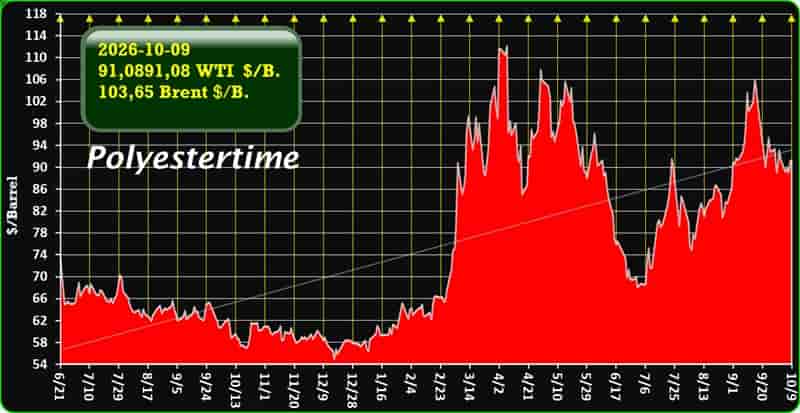
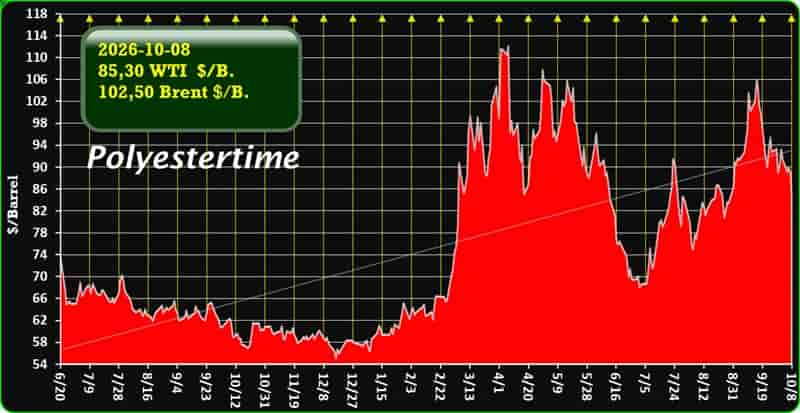
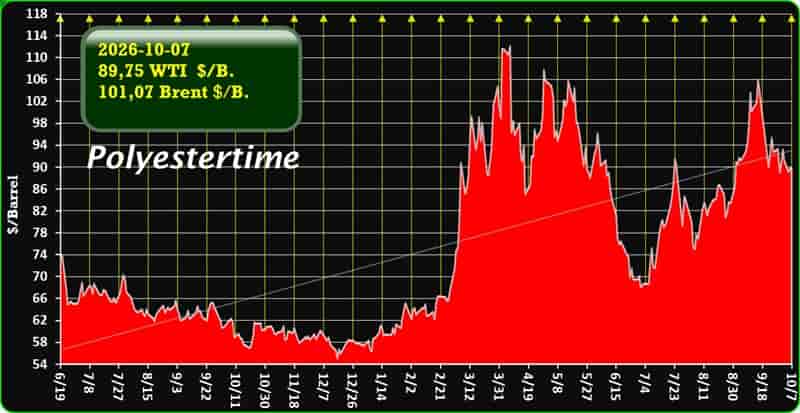
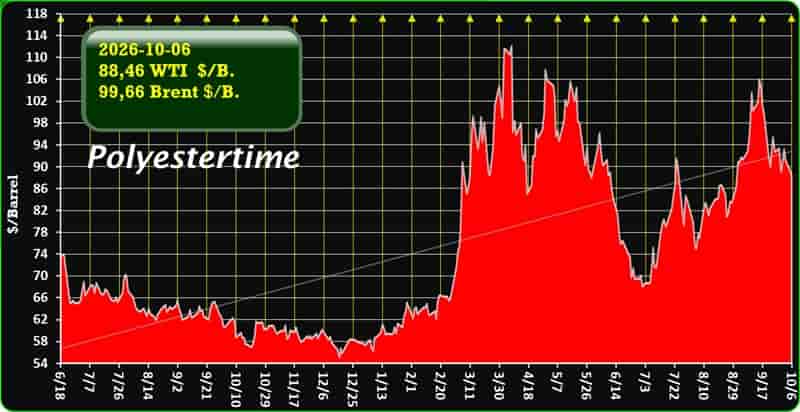
Brent crude has climbed past $102/B and WTI holds around $85/B as escalations in the US-Iran war create supply friction across global energy markets. Here is a breakdown of the driving forces, market reactions, and future outlook.
Brent crude trading at $101 and WTI around $90 highlight how the ongoing US-Iran conflict and Strait of Hormuz tensions continue to reshape global energy markets.
Persian Gulf crude exports recover to pre-war levels, but bypass pipelines and volatile routes reflect a fragile new normal for global energy supplies.