Recycled Geotextiles: Fraunhofer GREEN Moves Circular Plastics Toward Industry
Recycled Geotextiles: Fraunhofer GREEN Shows How Circular Plastics Can Enter Technical Infrastructure
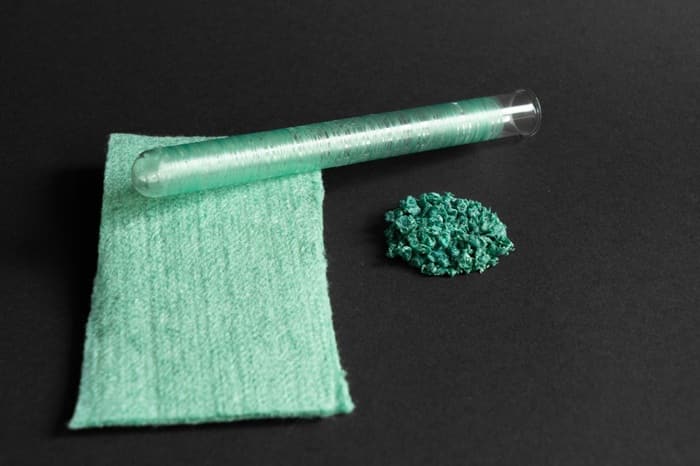
Recycled geotextiles are moving from sustainability promise to industrial opportunity. The Fraunhofer Cluster of Excellence Circular Plastics Economy CCPE has reported new results from its GREEN project, showing that recycled polypropylene, recycled polyethylene terephthalate and high-density polyethylene can be processed into nonwovens, fibers and membranes for demanding geotextile applications.
The development matters because geotextiles are not niche products. They are used in infrastructure, water management, mining, drainage, filtration, soil stabilization and protective civil-engineering systems. Until now, many of these applications have depended heavily on virgin plastics because technical geotextiles must meet strict requirements for durability, process stability and environmental safety.
Fraunhofer’s latest results suggest that carefully selected recycled plastic streams can meet those expectations when they are properly modified, stabilized and tested.
Why Recycled Geotextiles Matter Now
The pressure on construction, infrastructure and plastics supply chains is increasing. Manufacturers are being asked to reduce dependence on virgin polymers while maintaining the mechanical performance required for long-life technical products.
That is a difficult balance. Recycled plastics often vary in quality, and contamination can disrupt spinning, extrusion and membrane production. For geotextiles, that variability is especially important because the final product may be used underground, in contact with water or inside critical infrastructure.
The GREEN project focuses on precisely this challenge: turning recycled plastic streams into reliable technical geotextiles without compromising processability, stability or environmental compatibility.
According to Fraunhofer CCPE, low-contamination recycled material streams have already shown suitability for high-quality geosynthetics, including applications that can be transferred to industrial production lines.
PP, PET and HDPE: Three Recycled Materials With Industrial Potential
The project examined recycled polypropylene, recycled PET and HDPE. Each material has a different role in the geotextile value chain.
Recycled PP and recycled PET were processed into fibers and nonwovens. These material streams were improved through rheological modification, restabilization and the targeted use of compatibilizers. These steps are important because they help recycled polymers behave more consistently during spinning and mechanical stabilization.
HDPE was evaluated for membrane applications. Fraunhofer reported that HDPE membranes showed no critical loss of strength after extended aging tests, an important signal for applications where long-term durability is essential.
This does not mean that every recycled plastic stream is ready for geotextile production. The key point is more specific: recycled materials can become viable technical raw materials when the input stream is controlled, the formulation is adapted and performance testing confirms suitability.
Environmental Testing Strengthens the Industrial Case
For recycled geotextiles to gain market acceptance, mechanical strength is not enough. Environmental behavior also matters.
Fraunhofer tested recycled PET and recycled PP nonwovens, as well as PE membranes, under DIN EN 16637-2 conditions. The assessment included leaching and ecotoxicity tests. The reported results showed low substance release and no relevant ecotoxicological effects in Daphnia and algae tests. PFAS were also below the limit of detection.
For manufacturers, this is a significant finding. It supports the idea that recycled geotextiles can be designed for both technical performance and environmental safety, provided that defined testing standards and controlled processing routes are used.
What This Means for Manufacturers and Recyclers
The industrial relevance of GREEN lies in its position across the value chain. The project is not only about laboratory proof of concept. It connects material selection, additive development, fiber production, membrane processing, aging tests and environmental assessment.
That full-chain approach is important for companies that need predictable production, not only promising material data.
For geotextile manufacturers, the potential benefit is access to recycled raw materials that can be integrated into existing or adapted production lines. For nonwoven producers, it opens a pathway to technical fabrics with recycled content. For recyclers, it creates a higher-value outlet for post-consumer plastics that might otherwise be limited to lower-grade applications.
The broader recycling market still faces structural challenges. Plastics Recyclers Europe has noted that European HDPE and PP rigid recycling capacity doubled since 2018 but stagnated between 2022 and 2023, with weak demand, oversupply, imports and sorting challenges affecting growth.
That context makes high-value applications such as recycled geotextiles especially relevant. If recyclates can meet technical specifications, they can help create stronger demand for higher-quality recycled material streams.
A Timely Development for the Geosynthetics Sector
Recent geosynthetics industry updates continue to show active demand for technical solutions in geomembranes, geotextiles, liners and infrastructure systems. Current industry coverage highlights ongoing developments in geotextile compliance, geomembrane performance, landfill protection and smart geosynthetics.
At the same time, polymer-market reporting from Plastics Information Europe shows that plastics processors are operating in a market shaped by price pressure, feedstock movements and weak demand in several polymer categories.
For producers, this reinforces a practical point: circular materials must compete not only on sustainability claims, but also on reliability, cost logic and processing stability.
Fraunhofer GREEN addresses that industrial reality. Its contribution is not simply that recycled plastics can be used, but that they can be engineered, tested and validated for demanding geotextile formats.
The Role of Fraunhofer Institutes in GREEN
The project combines several Fraunhofer institutes with complementary expertise.
Fraunhofer LBF coordinated the work and developed concepts for processing and additive formulation. It also carried out aging tests. Fraunhofer IAP investigated spinnability and optimized fiber and nonwoven production. Fraunhofer UMSICHT handled membrane processing, elution studies and ecological assessment. Fraunhofer IME conducted the ecotoxicity tests.
This structure is important because recycled geotextiles cannot be developed through a single processing step. The material must be suitable at the recycling stage, stable during conversion, durable in use and acceptable from an environmental perspective.
From Pilot Trials to Scalable Applications
The next phase for recycled geotextiles will depend on scale-up. Fraunhofer CCPE has identified further optimization of additive concepts, spinning processes, membrane production and larger demonstrators as future priorities. The cluster is also working on testing methods, white papers, patents and industrial transfer formats.
For the industry, the opportunity is clear. Companies involved in geotextile manufacturing, nonwoven production, recycling, plastics processing and additive technology can use this type of research to evaluate where recycled content can be introduced without weakening product reliability.
The most promising path is not a generic substitution of virgin plastics. It is targeted material engineering: selecting the right recyclate, modifying it for the intended process, testing it against technical standards and validating its environmental behavior.
Outlook: Recycled Geotextiles Move Closer to Market
Recycled geotextiles are becoming a more credible option for technical applications because the industry now has stronger evidence on performance, durability and environmental compatibility.
Fraunhofer GREEN shows that recycled PP, PET and HDPE can be more than waste-management outputs. With the right processing strategy, they can become durable raw materials for infrastructure products that require long service life and regulatory confidence.
The next challenge is industrial adoption. If producers, recyclers and technology partners can scale these processes, recycled geotextiles could become an important bridge between circular plastics policy and real-world infrastructure performance. recycled geotextiles
Sources Checked
Primary source: Fraunhofer CCPE press release, “Geotextiles made from recycled materials,” published July 7, 2026.
Additional context: Plastics Information Europe polymer-market updates, Geosynthetic News Alerts industry coverage and Plastics Recyclers Europe HDPE and PP market snapshot.
Circular Plastics Recycling: 6 Strategies to Revitalize Europe’s Recycling Market
More….