EU-Funded INTERPOOL Project Could Transform Refillable Packaging Across Europe and Unlock Scalable Cross-Border Reuse Systems by 2030 Sustainability Targets 27-02-2026
Could This EU-Funded Project Unlock the Full Potential of Refillable Packaging in Europe?
The transition to refillable packaging in Europe is entering a decisive phase. With ambitious targets set under the EU Packaging and Packaging Waste Regulation, businesses across the continent must rethink how packaging is produced, distributed, reused, and recovered. Against this backdrop, the EU-funded INTERPOOL project is positioning itself as a catalyst for scalable, cross-border reusable systems.
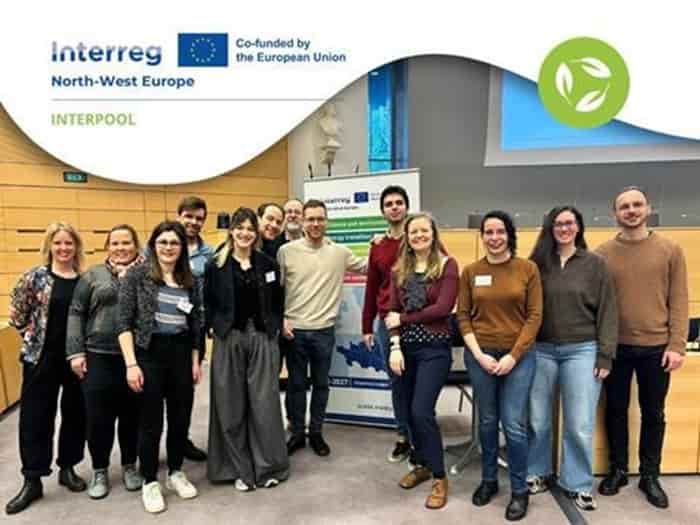
Bringing together 14 partners from France, Belgium, the Netherlands, and Germany, INTERPOOL seeks to transform refillable packaging in Europe from fragmented national initiatives into a coordinated, interoperable system that works seamlessly across borders.
Why Refillable Packaging in Europe Needs a Cross-Border Approach
While goods circulate freely within the European single market, refillable packaging in Europe remains largely confined within national systems. Differences in deposit return schemes, bottle formats, washing infrastructure, and regulatory frameworks create inefficiencies that prevent scaling.
This fragmentation is increasingly problematic. The EU Packaging and Packaging Waste Regulation requires:
-
A 5% reduction in total packaging waste per capita by 2030
-
40% of transport packaging between member states to be reusable
-
10% of drinks packaging to be reusable by the same deadline
These targets make refillable packaging in Europe not only desirable but mandatory at scale. However, without interoperability across countries, companies face duplicated costs, logistical complexity, and compliance uncertainty.
INTERPOOL directly addresses these systemic bottlenecks.
What Is INTERPOOL and What Does It Aim to Achieve?
INTERPOOL is a cross-border collaboration focused on scaling reusable glass packaging systems. Rather than imposing a rigid technical blueprint, the project emphasizes co-creation across the value chain.
Its four core objectives are:
-
Map and compare existing reuse systems in participating countries
-
Identify technical, economic, and regulatory barriers
-
Implement transnational solutions to overcome those barriers
-
Develop a shared action plan for scaling cross-border reusable glass systems
By concentrating on refillable packaging in Europe through a systems lens, INTERPOOL aims to create operational alignment between retailers, producers, logistics providers, and policymakers.
Reusable glass is widely recognized as one of the most viable pathways to reduce packaging waste. Yet it only delivers environmental and economic value if systems are efficient, standardized, and scalable across markets.
The Structural Barriers Holding Back Reuse
Years of experience in circular economy initiatives reveal a consistent insight: reuse cannot scale if it stops at national borders.
Current refillable packaging in Europe is constrained by:
-
Non-standardized bottle formats
-
Incompatible deposit systems
-
Uneven washing and return infrastructure
-
Diverging governance and financing models
-
Legislative inconsistencies between member states
These structural differences increase transaction costs and reduce the business case for companies operating in multiple markets.
INTERPOOL’s approach is to diagnose these friction points in detail and test solutions that work transnationally. The objective is not simply to increase reuse rates in isolated markets but to create a networked, interoperable system.
How a Cross-Border Pooling System Could Work
At this stage, the project deliberately avoids defining a fixed pooling model. Instead, it is guided by practical realities.
Pooling systems already function successfully in other packaging sectors, especially in transport packaging. These models demonstrate that interoperability is achievable when standards, governance frameworks, and incentives are aligned.
For refillable packaging in Europe, possible pathways include:
-
Harmonized glass bottle standards across markets
-
Shared governance models between participating countries
-
Integrated reverse logistics systems
-
Cross-border washing and redistribution hubs
Whether INTERPOOL results in a fully shared pooling model or a flexible interoperable framework will depend on stakeholder input. The emphasis remains on removing structural barriers rather than prescribing a one-size-fits-all solution.
Why Industry Participation Is Critical
INTERPOOL is not a top-down regulatory initiative. Its success depends on active participation from the packaging value chain.
Producers, retailers, distributors, and solution providers are being invited to contribute insights on:
-
Operational barriers to adopting reusable glass
-
Financial and logistical risks
-
Opportunities for competitive advantage
-
Product categories with the highest reuse potential
Early engagement offers strategic advantages. Companies gain visibility into emerging policy directions, shape system design, and reduce the risk of stranded investments.
Given the 2030 deadlines embedded in the EU Packaging and Packaging Waste Regulation, businesses that delay adaptation may face higher compliance costs later.
The Strategic Importance of 2030
The regulatory timeline is driving urgency. By 2030, reuse targets will directly affect business models, procurement strategies, and supply chain configurations.
Scaling refillable packaging in Europe requires long lead times for infrastructure investment, stakeholder alignment, and consumer behavior shifts. INTERPOOL’s current mapping and barrier identification phase is therefore critical.
If cross-border interoperability can be achieved before 2030, refillable packaging in Europe could transition from niche initiatives to mainstream infrastructure embedded within European supply chains.
What This Means for the Circular Economy
The implications extend beyond glass bottles. Successful cross-border reuse systems could serve as templates for other material streams and packaging formats.
Harmonization would:
-
Reduce resource consumption
-
Lower lifecycle emissions
-
Strengthen European industrial collaboration
-
Improve resilience of supply chains
Most importantly, it would align economic incentives with environmental performance.
By addressing fragmentation, INTERPOOL could turn refillable packaging in Europe into a cornerstone of the continent’s circular economy strategy rather than a patchwork of isolated programs.
A Pivotal Moment for Refillable Packaging in Europe
The coming years will determine whether refillable packaging in Europe becomes a scalable, economically viable norm or remains limited by national silos.
INTERPOOL represents a coordinated attempt to overcome systemic barriers through collaboration, data-driven analysis, and cross-border alignment. If successful, it could redefine how reusable packaging operates within integrated European supply chains.
For businesses navigating regulatory change and sustainability commitments, the message is clear: cross-border reuse is no longer optional. It is emerging as a structural requirement of the European market.
More...