Textile Industry – HolyPoly Takes Visitors Back to the Future of Recycled Plastics at K 2025 At K 2025, one of the world’s leading trade fairs for plastics and rubber, HolyPoly is offering a unique attraction: a ride in a DeLorean DMC-12 23-09-2025
Textile Industry
Crude Oil Prices Trend
Honda Develops Chemical Sorting Technology for Plastic Waste Recycling
Published: September 23, 2025 — Source: Honda R&D
Introduction
Honda R&D has announced a breakthrough in recycling technology: a chemical sorting method capable of separating solid contaminants from end-of-life plastics used in automobiles. Unlike conventional physical sorting techniques, this approach promises to recover plastics with over 99% purity. The innovation marks a major step toward advancing the automotive industry’s circular economy and reducing dependence on virgin plastic materials.
Pilot Plant and Scaling Goals
The company plans to establish a pilot facility with a processing capacity of 350 tons per year. This plant is designed to test and validate the technology by 2026, with commercial implementation targeted around 2029. If successful, the project will serve as a scalable model for industrial recycling operations worldwide. Textile Industry
“We aim to prove that chemical sorting can make plastic recycling both economically viable and environmentally sustainable,” noted Honda’s R&D spokesperson.
How the Technology Works
Unlike manual or mechanical methods, Honda’s new process uses a solvent to dissolve resin from plastic components. This allows contaminants such as:
- Metal inserts
- Hoses
- Rubber gaskets
- Glass fibers
to be efficiently separated and removed. The combination of coarse-mesh filters and centrifugal systems ensures that contaminants of all sizes are eliminated. This enables continuous operation with reduced downtime for maintenance and filter replacement.
Industrial Applications
One of the most significant outcomes of this process is its potential for closed-loop recycling, where recovered plastics are directly reused in new automotive components. This approach eliminates waste, reduces costs, and increases the range of recyclable parts in the automotive sector. Textile Industry
| Material | Previous Fate | Now with Chemical Sorting |
|---|---|---|
| Fiber-reinforced plastics | Incinerated | Recovered and reused |
| Mixed plastics | Landfilled | Separated and pelletized |
| Contaminated components | Discarded | Cleansed for recovery |
The ability to recover plastics in pellet form makes them immediately suitable for molding into new parts, streamlining the recycling loop.
Environmental and Climate Benefits
Beyond industrial efficiency, Honda’s innovation offers substantial environmental benefits. Recycling fiber-reinforced plastics reduces the volume of material sent for incineration, directly cutting CO₂ emissions. Additionally, minimizing resin loss ensures that less raw material is required in the production of new plastics. Textile Industry
This approach supports global efforts to decarbonize the automotive sector and aligns with Honda’s broader sustainability targets.
Future Outlook
If implemented at scale, Honda’s chemical sorting technology could transform how the industry approaches plastic recycling. The combination of high recovery rates, economic feasibility, and environmental benefits positions this method as a cornerstone of sustainable mobility strategies. Textile Industry
With a planned rollout by the end of the decade, this development underscores how innovation in recycling technology is essential to meeting circular economy goals.
HolyPoly Takes Visitors Back to the Future of Recycled Plastics at K 2025
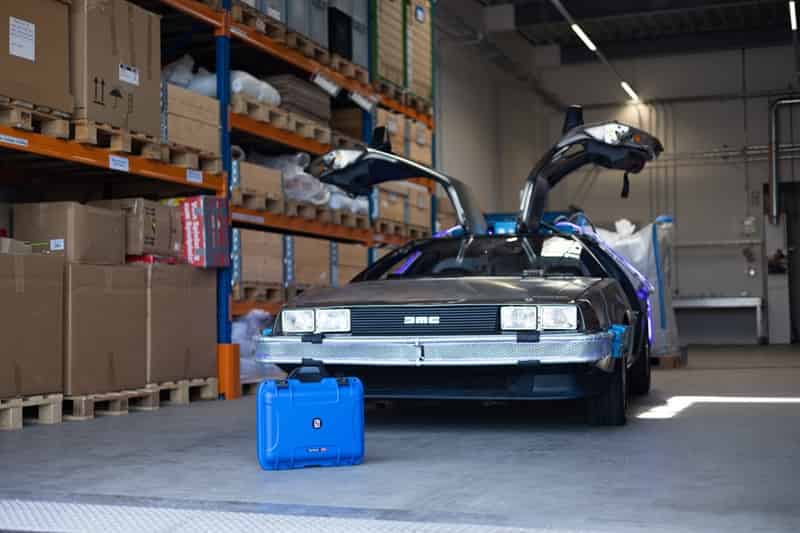
At K 2025, one of the world’s leading trade fairs for plastics and rubber, HolyPoly is offering a unique attraction: a ride in a DeLorean DMC-12. But this is no ordinary nostalgia trip. Instead, it’s a time-travel-inspired experience designed to show visitors what the recyclates market could look like in 2035.
The Concept: A Retro-Futuristic Experience
Referencing the beloved Back to the Future franchise, HolyPoly’s exhibit combines pop culture with pressing sustainability issues. Inside the iconic DeLorean, visitors will journey to the year 2035, where they can see “the next ten years through the rear-view mirror of history.” Textile Industry
“We’re offering visitors the chance to go on a journey to the year 2035. It’s an experience that might change their view of the present,” — Matthias Röder, Head of Marketing at HolyPoly.
Highlighting Recyclate Scarcity
The immersive experience is more than a gimmick—it serves as a spotlight on the challenges facing the premium-quality recycled plastics market. HolyPoly points to increasing scarcity of high-grade recycled engineering plastics, coupled with volatility in pricing, as critical issues for industries planning long-term sustainability strategies.
Impact of Upcoming EU Regulations
A key driver of this scarcity will be the anticipated EU End-of-Life Vehicles Regulation. Currently under discussion by the European Parliament and Council, the regulation could mandate that all new cars must contain 15–25% post-consumer recycled plastics by 2032. Such requirements would put significant pressure on supply and increase competition for recyclates. Textile Industry
HolyPoly’s Solution: Brand-Owned Material Streams
To address these challenges, HolyPoly is launching Brand-Owned Material Streams. These proprietary recycling flows leverage untapped waste sources, such as discarded washing machines and dishwashers, to generate stable supplies of recycled plastics.
The approach transforms manufacturers from passive buyers into co-owners of the recycling process, giving them direct influence over supply, quality, and sustainability outcomes. Textile Industry
Ensuring Supply and Price Stability
Brand-Owned Material Streams provide not only material access but also price stability. In a market where virgin plastics remain volatile, HolyPoly offers clients guaranteed access to recyclates that perform on par with virgin-quality materials.
“Unlike commodity suppliers, we’re offering something very different: novel qualities, guaranteed access, and long-term price stability,” — Fridolin Pflüger, CEO of HolyPoly.
Industries Already Benefiting
HolyPoly’s solutions are already integrated into sectors with strict safety and quality standards, including:
- Automotive manufacturing
- Electronics production Textile Industry
- Toy industries
The company pays particular attention to color accuracy, ensuring that recycled plastics not only perform like virgin materials but also meet aesthetic and branding requirements.
Engaging Decision-Makers at K 2025
The DeLorean ride is designed as an entry point for decision-makers in product management, R&D, procurement, and sustainability. After completing the time-travel experience, participants are invited to remain inside the car for direct discussions with HolyPoly executives. Textile Industry
This approach bridges entertainment and business strategy, creating a memorable moment that reinforces the urgency of investing in circular solutions.
How to Experience the DeLorean Ride
Bookings for the DeLorean experience can be made online at holypoly.co/en/k2025. Visitors will find HolyPoly’s stand at K 2025: North Entrance / N01A.
| Event Detail | Information |
|---|---|
| Exhibit | DeLorean “Back to the Future” Experience |
| Organizer | HolyPoly |
| Location | K 2025, North Entrance / N01A |
| Booking | holypoly.co/en/k2025 |
Conclusion
With its creative Back to the Future-inspired campaign, HolyPoly is reframing the conversation around recycled plastics. The company’s Brand-Owned Material Streams provide a direct answer to looming shortages and regulatory pressures, while its DeLorean attraction ensures the message resonates with decision-makers at K 2025.
By combining entertainment, foresight, and practical innovation, HolyPoly demonstrates how companies can move from reactive recycling efforts to proactive, stable, and brand-integrated circular strategies. Textile Industry
Amcor and Greenback Launch Advanced Recycling Technology in the U.K.
Global packaging leader Amcor has partnered with Greenback Recycling Technologies to deploy the Enval® advanced recycling module at Amcor’s facility in Heanor, Derbyshire. The system will undergo a six-month commissioning and trial phase, marking the first U.K. installation of Greenback’s technology at a major industrial site. Textile Industry
A Breakthrough in Circular Packaging
The installation of Greenback’s modular chemical recycling technology at Amcor’s Heanor site is a milestone for circular economy innovation in Europe. By situating advanced recycling units within existing industrial infrastructure, the companies aim to prove that circularity can scale more efficiently and closer to the sources of waste generation.
The Heanor module will primarily process household post-consumer flexible packaging waste. These materials are among the most challenging to recycle through conventional methods, making the deployment particularly impactful.
How the Enval® Module Works
Greenback’s advanced recycling technology focuses on post-consumer flexible packaging, including multilaminate materials often used in food packaging. Through a chemical process, the system converts waste into high-quality pyrolytic oil. This oil can then be used to manufacture food-grade recycled plastics, closing the loop in a circular system. Textile Industry
“Hosting this module at Amcor’s Heanor site will enable real-time feedback from global experts as we refine our system for maximum impact,” — Philippe von Stauffenberg, CEO of Greenback Recycling Technologies.
Digital Traceability with eco2Veritas™
The entire recycling chain is verified using eco2Veritas™, a traceability platform powered by AI and IoT. From the moment waste arrives until pyrolytic oil is produced, every data point is recorded. This ensures full transparency and accountability in the recycling process.
The oil itself is assigned a digital certificate of provenance, which is carried through the value chain.
This certification supports mass-balance allocation, providing essential evidence for regulatory compliance and customer confidence in recycled plastics. Textile Industry
The Power of Collaboration
The trial represents a major collaborative effort between Amcor, Greenback, and the Alliance to End Plastic Waste (AEPW). Each party contributes expertise—Amcor with its operational experience, Greenback with its innovation, and AEPW with financial support and global commitment to reducing plastic waste.
“Combining Greenback’s innovation with Amcor’s operational experience enables us to improve circularity for soft plastics and help our customers meet their sustainability targets,” — Andrew Green, Vice President, Amcor Flexibles EMEA. Textile Industry
Commercial and Environmental Benefits
The Heanor trials are designed to demonstrate both the business case and the environmental value of advanced recycling:
| Benefit Area | Expected Impact |
|---|---|
| Environmental | Diverts flexible packaging from landfill and incineration, reducing carbon footprint. |
| Commercial | Creates a reliable source of food-grade recycled plastics for packaging customers. |
| Traceability | Provides verifiable digital certification for recycled materials in the supply chain. Textile Industry |
Looking Ahead: Scaling Circular Solutions
If the trials succeed, Amcor may adopt additional Enval® modules at Heanor or at other sites worldwide. The vision is to embed advanced recycling capacity directly into packaging production facilities, ensuring greater efficiency and sustainability at scale.
This model of co-located modular recycling could transform how flexible packaging waste is managed, moving the industry closer to a true closed-loop system.
Financing and Shared Commitments
The project has received financing from the Alliance to End Plastic Waste, reinforcing the global commitment to solving plastic waste challenges. The trial not only tests technical feasibility but also showcases the power of aligned financial and strategic partnerships in delivering sustainability solutions. Textile Industry
Conclusion
The deployment of Greenback’s advanced recycling module at Amcor’s Heanor site is more than a technical trial—it is a statement about the future of packaging. By combining cutting-edge chemical recycling, AI-driven traceability, and collaborative financing, the partnership demonstrates how circular economy principles can be put into practice.
If successful, the project could set a template for packaging producers worldwide, enabling them to embrace scalable, verifiable, and commercially viable circular solutions.

BRICS+ and the Future of Global Trade: Jim O’Neill’s Vision
Jim O’Neill, the economist who coined the term BRIC, believes the expanded BRICS+ group could reshape global trade and governance, especially as U.S. tariffs disrupt traditional systems. His perspective highlights how emerging economies may strengthen collaboration to build a more balanced global order. Textile Industry
The Origins of BRIC
In 2001, Jim O’Neill, then Chief Economist at Goldman Sachs, introduced the concept of BRIC—Brazil, Russia, India, and China. His report “Building Better Global Economic BRICs” argued that these emerging economies would challenge the dominance of the G7.
O’Neill’s vision was driven by three key ideas:
- Emerging Influence: China, India, Brazil, and Russia were all rising in economic and political influence.
- Global Governance: The aftermath of 9/11 revealed the need for more balanced international leadership beyond the U.S.
- The Euro’s Launch: The eurozone signaled that even established powers could adapt governance structures. Textile Industry
From BRIC to BRICS+
The first BRIC Summit in 2009 marked the group’s commitment to a multipolar world. With South Africa joining in 2010, it became BRICS. Over time, new members were welcomed, forming BRICS+: Saudi Arabia, Iran, the UAE, Egypt, Ethiopia, and Indonesia.
This expansion symbolized the Global South’s desire for influence outside of U.S.-dominated systems. O’Neill explained that being part of BRICS+ gives nations a sense of belonging to global governance rather than following unilateral dictates.
Free Trade in the BRICS+ Era
For BRICS+ to thrive, O’Neill identifies five key areas of collaboration:
- Trade and economic integration
- Global infectious disease prevention
- Climate change cooperation
- Infrastructure investment Textile Industry
- Development aid for less advanced economies
These priorities could help BRICS+ establish a reputation as not just a symbolic group but a functional engine of growth and stability.
The Role of the New Development Bank
O’Neill regards the New Development Bank (NDB) as BRICS’s most concrete achievement so far. With greater funding and a broader mandate, the NDB could finance infrastructure, health, and climate-related projects across BRICS+ countries and beyond.
“The New Development Bank could become much more significant than it currently is, depending on the choices of its shareholders,” O’Neill emphasized.
Currency Shifts and Bilateral Deals
As BRICS+ grows, so does the role of local currencies in trade. China, in particular, is leading efforts to settle deals in the Renminbi (RMB) instead of the U.S. dollar. Over 30 central banks have signed currency swap agreements with China, exceeding 800 billion yuan in 2025 alone. Textile Industry
This shift reduces dependency on the U.S. dollar and strengthens financial resilience among BRICS+ members.
Responding to U.S. Tariffs
Donald Trump’s administration imposed steep tariffs on several BRICS+ countries—50% on India and Brazil, 30% on China and South Africa. In response, O’Neill urged BRICS+ to deepen trade among themselves.
He argued that if BRICS+ embraces free trade internally, the group can continue driving global prosperity despite U.S. restrictions. O’Neill noted that tariffs, while politically powerful, cannot succeed indefinitely. Textile Industry
The Future of BRICS+ and Global Trade
Looking ahead, O’Neill highlights the importance of China and India—the so-called “Dragon-Elephant Tango.” Their collaboration could underpin sustainable BRICS+ growth and shape a new global trade order.
He also suggested that, ironically, U.S. protectionism may encourage a more balanced international trade system by reducing reliance on American consumers.
Ultimately, O’Neill believes trade is a win-win system—but nations must better compensate those who lose out from globalization. With BRICS+ expansion and stronger cooperation, the seeds of a more inclusive and resilient global economy are being sown. Textile Industry
More…

Hyosung TNC: Navigating Market Headwinds with Resilience and Strategic Focus
AI Revolutionizing the Textile Industry: The Next Billion-Dollar Market Opportunity
Current Status of AI in Textiles
The European and American markets remain at the forefront of textile consumption and innovation. A closer look at global fashion supply chains reveals that digitalization is transforming every link, from design to distribution.
Clothing brands now rely on data-driven forecasting rather than intuition. With predictive analytics, companies can anticipate demand, reduce production risks, and respond faster to shifting consumer preferences. This shift has made fashion more flexible and transparent, while also improving the speed and efficiency of wholesale operations.
How AI Improves Efficiency in the Textile Industry
1. Intelligent Prediction of Market Demand
Machine learning models like Facebook Prophet and Hugging Face NLP are capable of forecasting fabric demand. They analyze factors such as seasonal weather trends, social media sentiment, and historical sales data to help brands optimize inventory before demand spikes.
2. Automated Fabric Production
From spinning to dyeing, AI-powered vision systems now detect defects in real time. Tools like YOLOv8 object detection and CNNs ensure fabrics meet quality standards while reducing costly rework. This leads to more consistent products and faster production cycles. Textile Industry
AI and Intelligent Supply Chains
Global fashion depends on complex supply chains that often face delays and inefficiencies. AI platforms such as SAP IBP and Blue Yonder Luminate are helping suppliers orchestrate multi-region logistics more effectively. The result: faster deliveries, less waste, and more reliable partnerships.
In practice, many brands are building long-term partnerships with wholesale fabric distributors, enabled by AI insights. These collaborations ensure stable supply for large-scale production, which is essential as demand for sustainable and performance fabrics grows worldwide.
Market Opportunities with AI in Textiles
AI is opening doors to entirely new categories of fabrics and applications. Recent trends show rising interest in:
- Smart fabrics – sports brands are testing materials that track body data in real time. Textile Industry
- Medical textiles – fabrics designed to monitor heart rate or resist bacteria.
- Eco-friendly fabrics – sustainable options like organic cotton and recycled fibers.
These innovations represent more than product upgrades. They signal a shift toward data-enhanced and eco-conscious textiles, which resonate strongly with European and American consumers.
AI shortens the R&D cycle of fabrics, accelerates innovation, and delivers precision insights for consumer targeting.
AI in Textile Wholesale
The wholesale fabric trade has traditionally relied on experience and gut instinct. But AI is now redefining the game by offering accurate inventory forecasting and trend prediction. Retailers can forecast next season’s best-selling fabrics and colors with unprecedented accuracy. Textile Industry
Eco-conscious brands are increasingly focused on organic cotton and sustainable fibers. AI-powered platforms streamline the process of finding high-quality wholesale sources, reducing time-to-market while enhancing traceability and compliance.
Scientific Frontier: The Blue Ocean of Textiles
Beyond efficiency gains, AI is enabling groundbreaking textile research. Some exciting frontiers include:
| Innovation | Application | Potential Impact |
|---|---|---|
| Self-healing fabrics | Sportswear, military clothing | Durability and longer product life |
| Graphene-infused textiles | Sports and wearable tech | Enhanced strength and conductivity |
| AI-driven material simulations | R&D labs | Faster innovation cycles |
These developments demonstrate how textiles are moving from commodity goods to high-tech, high-value products. This transition creates entirely new markets for investors and innovators alike. Textile Industry
Reshaping the Future of Textiles with AI
For manufacturers, wholesalers, and brands, the message is clear: AI is no longer optional. Those who adopt AI tools for forecasting, production, and R&D will lead the industry into its next chapter. Those who resist risk falling behind in a market projected to expand into the trillions.
At this crossroads, embracing AI means not only improving efficiency but also unlocking new business models, new market segments, and deeper consumer engagement. The textile industry is no longer just about fabric—it’s about intelligence woven into every thread. Textile Industry