Tire-Derived Polymers – thyssenkrupp nucera Expands Green Hydrogen Capabilities with Strategic Technology Acquisition In a bold move to strengthen its leadership in green hydrogen technologies, thyssenkrupp nucera has signed an agreement to acquire essential technology assets from Danish firm Green Hydrogen Systems (GHS) 23-06-2025 - Archive
Tire-Derived Polymers
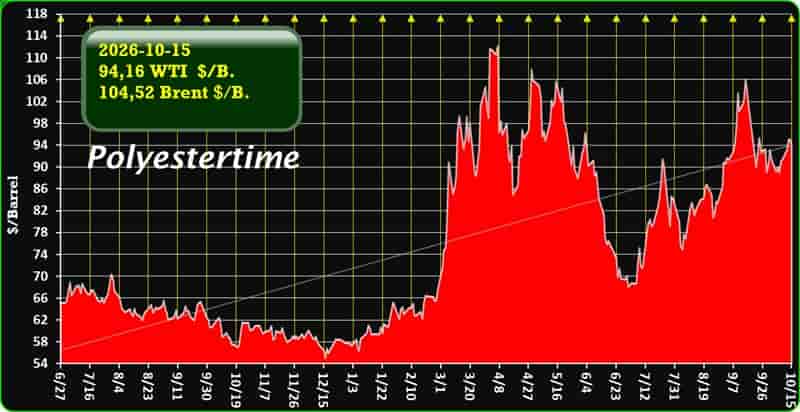
Crude Oil Prices Trend

Microplastics – LG Energy Solution and Toyota Tsusho Launch Battery Recycling JV in the U.S. A New Chapter in Sustainable Mobility In a powerful move toward a greener future, LG Energy Solution Ltd. and Toyota Tsusho Corp. have announced the formation of a battery recycling joint venture in the United States
 thyssenkrupp nucera Expands Green Hydrogen Capabilities with Strategic Technology Acquisition
In a bold move to strengthen its leadership in green hydrogen technologies, thyssenkrupp nucera has signed an agreement to acquire essential technology assets from Danish firm Green Hydrogen Systems (GHS). This acquisition reinforces the company’s commitment to innovation in alkaline water electrolysis (AWE) and further supports its growth in the rapidly evolving hydrogen economy. Tire-Derived Polymers
Strategic Growth Through Innovation
The transaction includes the transfer of intellectual property and a fully equipped test facility located in Skive, Denmark, which features a full-scale prototype system. These assets are expected to significantly enhance thyssenkrupp nucera’s research and development capabilities. The purchase will be funded entirely from existing liquid resources, though financial terms remain confidential.
Dr. Werner Ponikwar, CEO of thyssenkrupp nucera, emphasized the strategic value of this move: “With this acquisition, we are reinforcing our commitment to driving the green energy transition and deepening our technology leadership in hydrogen.”
Cutting-Edge High-Pressure Electrolysis Technology
The core of the acquisition is GHS’s modular high-pressure alkaline electrolysis system, capable of operating at up to 35 bar. This advanced pressure capability offers a major efficiency advantage for industrial applications that require hydrogen in compressed form. In many use cases, it removes the need for additional compression infrastructure, resulting in cost and energy savings. Tire-Derived Polymers
The Skive-based test facility adds real-world validation to the technology, making it a valuable asset for ongoing R&D. The setup will enable thyssenkrupp nucera to accelerate development cycles and bring improved AWE systems to market faster.
Applications Across Industry and Infrastructure
Founded in 2007, Green Hydrogen Systems has become a specialist in pressurized alkaline electrolysis. Its high-pressure systems are ideal for sectors such as:
- Pipeline injection – direct integration into hydrogen transport networks
- Hydrogen mobility infrastructure – powering refueling stations with pre-compressed hydrogen
- ? Industrial synthesis processes – delivering hydrogen at the required pressure without extra steps
This deal gives thyssenkrupp nucera a clear advantage in building versatile, scalable, and efficient green hydrogen solutions tailored to industrial needs. Tire-Derived Polymers
A Financially Solid Move
Dr. Stefan Hahn, CFO of thyssenkrupp nucera, highlighted the economic and strategic alignment: “This transaction aligns well with our long-term technology development roadmap and is built on a solid financial foundation. It enables cost-efficient technology development and positions us to create long-term value through greater efficiency and innovation.”
Closing Timeline and Regulatory Approvals
The acquisition is subject to several conditions before finalization. These include:
- Approval by the court-appointed trustee overseeing Green Hydrogen Systems A/S’s bankruptcy
- Consent from certain creditors of Green Hydrogen Systems A/S
- Clearance from relevant regulatory bodies
If all approvals are secured, the deal is expected to close by late summer 2025.
A Step Forward in the Hydrogen Economy
This acquisition reflects thyssenkrupp nucera’s continued commitment to advancing the global green hydrogen transition. By investing in high-efficiency, scalable technologies, the company is well-positioned to help shape the future of sustainable energy solutions across industries worldwide. Tire-Derived Polymers

Euro Area Inflation Dips Below 2% in May 2025
In a significant development for the European economy, inflation in the Euro area has dropped below the key 2% mark for the first time in over two years. According to the latest data from Eurostat, the annual inflation rate for the Eurozone fell to 1.9% in May 2025, down from 2.2% in April.
This decline reflects a broader cooling of inflationary pressures, with the European Union (EU) as a whole also seeing a decrease, from 2.4% in April to 2.2% in May.
What’s Driving the Decline in Inflation?
The inflation figures show a continued normalization of prices across many categories. However, services remain the primary inflation driver, contributing +1.47 percentage points to the overall figure. Tire-Derived Polymers
This reflects ongoing wage and demand pressures in sectors such as hospitality, travel, and personal care.
In contrast, energy prices are now pulling inflation downward, with a negative contribution of -0.34 percentage points. This marks a dramatic shift from the energy-driven price surges seen in the aftermath of the pandemic and during geopolitical disruptions.
Diverging Trends Across EU Member States
While the average inflation rate has declined, the picture remains uneven across the EU:
- Romania posted the highest inflation at 5.4%, followed closely by Estonia (4.6%) and Hungary (4.5%). These countries continue to experience price pressures that exceed the EU average, likely due to localized cost dynamics and monetary factors.
- On the opposite end of the spectrum, Cyprus reported the lowest inflation at just 0.4%, with France not far behind at 0.6%. These low rates indicate that some economies are moving more swiftly toward price stability. Tire-Derived Polymers
The regional disparities underscore the challenge for the European Central Bank (ECB) in crafting monetary policy that fits the entire bloc. While some countries still struggle with elevated inflation, others are approaching deflationary territory.
Implications for Policy and Consumers
The drop below 2% is more than symbolic. The ECB’s medium-term inflation target is exactly 2%, making this a critical threshold. Although central bankers are likely to remain cautious, the easing of inflation could open the door to future interest rate cuts or at least a pause in the current monetary tightening cycle.
For consumers, this is generally welcome news. Slower price growth means households may regain some purchasing power, especially after the strain of prolonged high inflation between 2021 and 2024.
However, wage growth and labor market strength remain key to whether this relief translates into greater consumer confidence. Tire-Derived Polymers
What’s Next?
Despite the promising figures, experts urge caution. Core inflation, which excludes volatile items like energy and food, remains above headline inflation in many countries. Additionally, the service sector’s continued upward price momentum suggests that the battle against inflation is not entirely won.
Looking ahead, much will depend on:
- Global commodity prices
- Wage trends across member states
- The ECB’s next moves
- Regional fiscal policies
The Euro area may be entering a more stable economic phase, but policymakers will need to stay vigilant. Ensuring that inflation remains sustainably low while supporting growth will be a delicate balancing act. Tire-Derived Polymers
Conclusion
The May 2025 inflation data brings encouraging signs for the Euro area. With inflation dipping to 1.9%, the ECB is closer to meeting its price stability goal, and consumers across Europe may finally feel some relief. Yet, economic disparities among EU nations and persistent service-sector inflation mean the journey isn’t over.
As inflation continues to ease, the focus now shifts to monetary policy reactions and broader economic resilience. The coming months will be key in shaping Europe’s economic trajectory into 2026.

Prism Worldwide Unveils Breakthroughs in Odor Reduction and Tire-Derived Polymers
Prism Worldwide has unveiled a series of game-changing innovations in the field of sustainable materials. These include advances in odor reduction, the development of sustainable thermoplastic vulcanizates (TPVs), and the recycling of EPDM rubber with high content recovery. These achievements directly address key industry barriers: cost, performance, and usability—particularly the persistent odor problem in recycled materials.
A Turning Point in Tire Recycling
According to Bob Abramowitz, CEO of Prism Worldwide, the company’s latest developments mark a decisive shift in how end-of-life tires and rubber materials are recycled and reused.
“These are not incremental improvements,” said Abramowitz. “We’ve tackled odor, cost, and performance—three of the biggest hurdles to recycled material adoption—and overcome them with solutions that are both effective and commercially viable.” Tire-Derived Polymers
Crucially, the materials developed by Prism can be integrated into existing production lines without altering the manufacturing process. This makes it easier than ever for manufacturers to switch to sustainable alternatives without facing added complexity or cost.
Odor-Free Materials for Automotive Interiors
One of the most persistent challenges in recycling tire rubber is the strong, lingering odor, which has historically limited its use in consumer products—especially in enclosed spaces like vehicles or homes.
Prism’s new odor-control technology is a breakthrough. It has been independently validated to meet automotive-grade odor and VOC (volatile organic compound) standards, paving the way for its use in sensitive applications such as automotive interiors and indoor goods. Tire-Derived Polymers
By resolving the odor issue, Prism opens the door to broader adoption of tire-derived materials in products where customer comfort and perception matter most.
High-Performance TPV from Recycled Tires
In a major advancement for polymer sustainability, Prism has created a patent-pending thermoplastic vulcanizate (TPV) made with rubber derived from recycled tires.
TPVs are widely used in automotive, construction, and consumer goods due to their rubber-like elasticity and plastic-like processing. With Prism’s solution, manufacturers can produce sustainable TPVs without compromising quality or production efficiency.
This innovation allows manufacturers to meet environmental goals without incurring a “green premium”—a higher cost for sustainable materials. Tire-Derived Polymers
Unlocking High-Content EPDM Recycling
EPDM (ethylene propylene diene monomer) is an extremely durable rubber used in everything from roofing membranes to automotive weatherstripping. But it’s notoriously difficult to recycle due to its crosslinked structure.
Prism has responded with a patent-pending devulcanization process that allows EPDM to be reused at higher content levels—while still maintaining key performance characteristics such as flexibility and durability.
This breakthrough supports both cost reduction and environmental sustainability in industries that depend heavily on EPDM materials.
Seamless Integration with Existing Manufacturing
One of Prism’s key advantages is that its solutions can be adopted without altering current manufacturing setups.
This means companies can integrate up to 50% recycled tire material into their injection molding, rotational molding, and extrusion processes—production methods that were previously off-limits for recycled content.
Until now, compression molding was the only viable method for such materials. Prism’s innovation unlocks flexibility in design and manufacturing while promoting circular economy principles. Tire-Derived Polymers
Sustainability Without Sacrifice
A common reason companies hesitate to adopt greener materials is cost. As Abramowitz pointed out, “Companies pay lip service to sustainability, but they change their tune when it costs more.” Prism’s solutions challenge that dynamic by offering economically competitive, high-performance alternatives.
With this new trio of technologies, Prism is proving that eco-friendly materials don’t have to come with trade-offs. Instead, they present an opportunity for profitability, performance, and environmental responsibility to align.
In summary: Prism Worldwide is setting a new industry standard by solving three longstanding problems in sustainable materials—odor, performance, and cost—while enabling broad adoption of recycled content in high-value applications. These advances promise to accelerate the circular economy and redefine what’s possible in rubber recycling and polymer production. Tire-Derived Polymers

Eni Unveils Breakthrough Recycling Plant for Mixed Plastics in Italy
A New Era in Plastic Waste Recycling
Italian energy giant Eni has taken a major step forward in the sustainability arena through its chemical division, Versalis. The company has launched a demonstration plant based on a new proprietary recycling technology called “Hoop.” This innovation marks a significant milestone in the fight against plastic waste, especially when it comes to hard-to-recycle mixed plastics.
What Is “Hoop” Technology?
The Hoop process is designed to chemically recycle various mixed plastic materials—those typically rejected by mechanical recycling systems.
It converts them into high-quality feedstock suitable for the creation of new plastic products, including those used in sensitive applications like food packaging and pharmaceuticals. Tire-Derived Polymers
Eni’s Strategic Pivot Toward Sustainability
This initiative is part of Eni’s broader plan to revamp its struggling chemicals business, which has suffered a €3 billion loss over the past five years. The European petrochemical industry has been plagued by overcapacity, and Eni is choosing to respond with sustainable innovation instead of retreat.
The new Hoop-based plant is more than a technology showcase—it’s a strategic pivot. Eni aims to replace older petrochemical assets such as steam crackers and shift towards circular economy solutions, including plastic recycling, bio-refining, and energy storage.
New Facility Coming to Sicily by 2029
Versalis CEO Adriano Alfani revealed that Eni plans to build a full-scale Hoop technology plant in Priolo, Sicily, by early 2029. This facility will take the place of an existing steam cracker that is scheduled to close by the end of this year.
A final investment decision for the project is expected in 2026, and the budget earmarked for the site—alongside other recycling initiatives—totals around €200 million. This funding is part of a larger, €2 billion investment program aimed at modernizing Versalis. Tire-Derived Polymers
Potential Spinoffs and New Partnerships
Looking ahead, Alfani hinted at possible restructuring moves, including the spin-off of Versalis’ biochemistry arm, Novamont. This company, known for its bio-based solutions, showed improved financial results in 2024, nearly reaching break-even at the core profit level.
Eni may also explore partnerships or minority investments in its chemical subsidiaries, paving the way for a more agile, innovation-driven future.
A Glimpse Into the Future
Eni’s demonstration plant signals more than just a technological advancement—it represents a systemic shift in how Europe manages plastic waste. By transforming waste into valuable resources, Eni is setting a benchmark for circular economy practices in the energy and chemical sectors. Tire-Derived Polymers
As the countdown to 2029 begins, all eyes will be on Sicily, where Eni’s bold vision for sustainable plastics is set to become a reality.
Russia’s Economy Teeters on the Brink of Recession in 2025
Economic Slowdown Confirmed by Minister Reshetnikov
The Russian economy is officially entering a phase of significant deceleration. According to Minister of Economic Development Maxim Reshetnikov, the latest data indicates a clear “cooling” trend, which could soon evolve into a full-fledged recession. The statement was made during a session at the St. Petersburg International Economic Forum (SPIEF), as reported by Kommersant.
“According to the numbers, we’re experiencing a cooling… In general, it seems we are already on the verge of a recession,” Reshetnikov remarked, emphasizing that the outlook heavily depends on future government policy decisions. Tire-Derived Polymers
Structural Changes Without Shocks: A Gradual Reform Approach
The minister underscored the importance of a seamless transition in Russia’s economic model. “There must be continuity in the transformation of our growth model,” he said, warning against any abrupt or revolutionary changes that could further destabilize the system.
Supply-Side Economy Already Underway
Reshetnikov noted that Russia has already embarked on a “supply-side” economic approach. He cited budget-supported programs aimed at revitalizing key sectors such as agriculture and tourism.
“Some of these initiatives are already in motion,” he said, naming the investment cycle in the agro-industrial complex and new capital inflows into the tourism industry as concrete examples. Tire-Derived Polymers
Recent GDP Growth Masks Underlying Challenges
Despite emerging recession concerns, recent figures from Rosstat (Federal State Statistics Service) show a modest GDP growth of 1.4% in Q1 2025 compared to the same period in 2024. This aligns with preliminary forecasts and suggests that some sectors remain resilient—for now.
The total GDP volume for Q1 2025 stood at 47.75 trillion rubles at current prices. However, the GDP deflator index—a key inflation measure—reached 106.7% over the same period, hinting at possible inflationary pressures that could erode real growth.
What’s Next for Russia’s Economy?
With business sentiment declining and macroeconomic indicators flashing warning signs, Russia’s economy is at a pivotal crossroads. The coming months will likely be shaped by how effectively the government manages policy adjustments, investment incentives, and sectoral reforms. Tire-Derived Polymers
As Reshetnikov warned, the path forward must balance stability with transformation. Whether Russia can avoid a deep recession will depend on its ability to adapt its economic architecture—without triggering wider disruptions.