Tray-to-Tray PET Recycling Breakthrough Delivers 5 Major Gains for Europe’s Circular Packaging
Tray-to-tray PET recycling expands across Europe
The European recycling industry is entering a critical stage as tray-to-tray PET recycling begins to scale commercially. A new partnership between Sulayr Recycling and TOMRA Recycling shows how advanced sorting technology can unlock one of the most complex areas of plastic recycling: thermoformed PET trays.
Sulayr Recycling has developed a specialised system designed to keep transparent PET trays in a closed loop. By integrating sophisticated sorting technologies from TOMRA, the company is strengthening its ability to produce high-quality recycled PET suitable for food-grade packaging.
This collaboration supports the rapid growth of tray-to-tray PET recycling across Europe while helping manufacturers meet strict sustainability targets and regulatory requirements. The model also ensures traceability and consistent quality, two critical factors for recycled packaging used in food applications.
Why PET trays remain difficult to recycle
Recycling PET trays on a large scale has historically been far more complicated than bottle recycling. PET bottles follow relatively standardised designs, while thermoformed trays often contain multilayer structures and mixed polymers that complicate processing.
Each year more than five million tonnes of PET packaging enter the European market. Around a quarter of this material consists of trays. Despite this large volume, PET trays remain one of the most underutilised resources within plastic recycling systems.
Expanding tray-to-tray PET recycling is therefore becoming an important priority for Europe’s circular economy. However, achieving consistent material purity while processing complex waste streams requires highly precise sorting technology and stable industrial processes.
Sulayr’s closed-loop recycling strategy
Sulayr Recycling has built its entire business model around transparent-to-transparent tray-to-tray PET recycling. The company focuses on processing complex thermoformed trays and converting them into new food-grade trays that can return directly to the market.
This closed-loop approach ensures that recycled material maintains both traceability and safety compliance. By controlling each stage of the process, Sulayr can meet strict quality standards required for packaging used in the food industry.
The company already operates at significant scale. In 2025 alone, Sulayr produced more than 50,000 tonnes of recycled PET. This output corresponds to the equivalent of more than four million trays produced every day.
With over 100 customers across Europe, the company is becoming a key supplier of recycled PET materials for packaging converters and food producers seeking certified recycled content.
Partnership with TOMRA strengthens recycling precision
To maintain this high production level while improving process stability, Sulayr partnered with TOMRA Recycling to redesign and optimise its sorting infrastructure.
Rather than acting as a traditional equipment supplier, TOMRA worked closely with Sulayr to engineer an integrated recycling system. The collaboration included consulting on machine positioning, pre-treatment processes and system configuration.
The goal was to build a robust architecture capable of handling variable waste streams while maintaining consistent output quality. This type of partnership-driven approach is increasingly important for successful tray-to-tray PET recycling, where even small contamination levels can affect the final product.
By aligning technical expertise and operational targets, both companies created a recycling system designed for long-term scalability.
Advanced sorting technology enables industrial-scale recycling
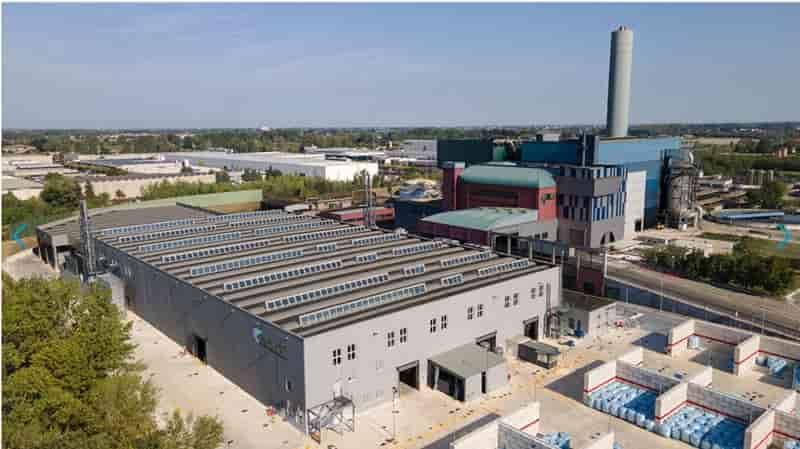
At the core of the facility lies a dual-track AUTOSORT system combined with an INNOSORT FLAKE unit. Together they form a complete process chain that includes tray-level sorting, washing, grinding, flake purification and extrusion into food-grade recycled PET.
The AUTOSORT system manages the complexity of mixed waste streams using two independent sorting stages within a single machine. In the first step, clear and light blue PET trays are separated from the incoming material stream.
In the second stage, contaminants are removed through negative sorting. This approach allows the system to eject non-target materials while maintaining high throughput and recovery rates.
The technology can also identify both monolayer and multilayer trays, which is essential for reliable tray-to-tray PET recycling when dealing with mixed packaging waste.
Ensuring food-grade recycled PET quality
After the trays are shredded, the INNOSORT FLAKE system performs the final purification step. This technology analyses PET flakes according to polymer type, colour and transparency to ensure precise separation.
The system includes multiple purification stages and a recovery loop that reprocesses valuable PET material from rejected fractions. This recirculation improves yield while reducing material losses.
With this integrated system, Sulayr consistently achieves purity levels above 99.8 percent during real industrial operations. Such performance allows recycled PET to reach quality standards comparable to virgin material.
High purity is essential for tray-to-tray PET recycling because the final product must meet strict safety standards for food packaging.
Operational improvements and new market opportunities
The new sorting infrastructure has delivered significant operational improvements. Material recovery rates have increased, while reject volumes have decreased. This strengthens both production efficiency and overall profitability.
Although transparent trays remain the main target material, the system can also recover certain coloured tray fractions depending on customer requirements and market conditions. This added flexibility expands the company’s commercial opportunities.
More importantly, consistent output quality enables Sulayr to meet increasingly strict specifications from packaging producers. Many European brands are now required to include higher percentages of recycled material in their packaging, creating strong demand for reliable recycled PET.
A scalable model for circular packaging in Europe
The Sulayr and TOMRA collaboration demonstrates how advanced technology and strong partnerships can make tray-to-tray PET recycling viable at industrial scale.
As recycling systems evolve to handle more complex packaging formats, PET trays are becoming an important focus across Europe. Successfully recycling these materials will play a key role in reducing plastic waste and expanding circular packaging solutions.
By combining high-performance sorting technology with an integrated process design, Sulayr has created a model capable of supporting the future growth of tray-to-tray PET recycling.
This project provides a clear example of how innovation, collaboration and industrial expertise can transform challenging waste streams into valuable resources for the circular economy.
More…