Electric Car Shock: 1000-Kilometer Battery Production Begins and Could End Range Anxiety Forever in the Global Automotive Industry by 2026 25-02-2026
Production of the 1000-Kilometer Battery Has Begun: A Turning Point for Electric Vehicles
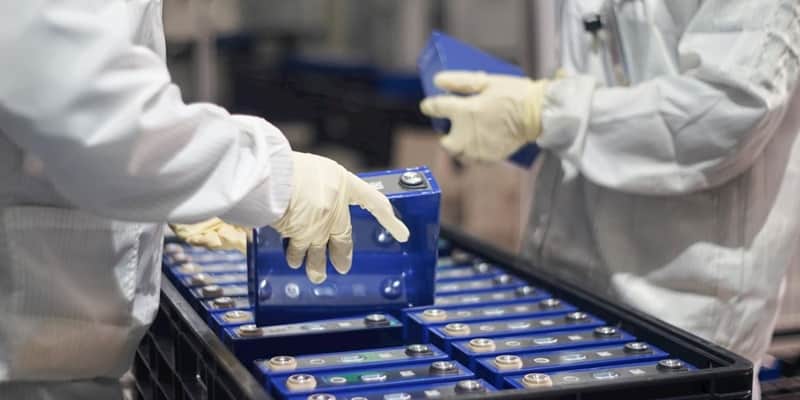
The production of the 1000-kilometer battery has officially begun, marking a pivotal moment for the electric vehicle industry. Ganfeng Lithium, one of the world’s largest lithium producers and a strategic supplier to Hyundai Motor Group, has launched a new generation of high-density battery cells capable of reaching an unprecedented 650 Wh/kg.
For context, today’s mainstream electric vehicle battery technology typically operates between 200 and 250 Wh/kg. Reaching 650 Wh/kg effectively triples current energy density standards. This breakthrough positions the 1000-kilometer battery as one of the most disruptive innovations in global mobility heading into 2026.
If scaled successfully, this electric vehicle battery could fundamentally alter how consumers perceive electric mobility. 1000-kilometer battery
What 650 Wh/kg Really Means for Electric Vehicle Performance
Understanding the significance of 650 Wh/kg requires comparison. Most lithium-ion batteries currently powering electric vehicles struggle to balance weight, range, and cost efficiency. At 200–250 Wh/kg, manufacturers must choose between larger battery packs for extended range or lighter packs that limit driving distance.
With the 1000-kilometer battery, automakers face two transformative industrial pathways:
1. Extreme Driving Range
Maintaining the same size and weight of existing battery packs, future electric vehicles could exceed 1000 kilometers on a single charge. This would place electric cars in direct competition with — and potentially ahead of — internal combustion vehicles in terms of autonomy. 1000-kilometer battery
Long-distance travel would no longer require strategic charging stops. For consumers, this shift could eliminate one of the most persistent barriers to electric vehicle adoption.
2. Radical Weight Reduction
Alternatively, manufacturers could install battery packs up to three times smaller and lighter while preserving today’s typical 400–500 kilometer range. Reduced vehicle weight translates into:
-
Improved energy efficiency
-
Lower consumption per kilometer
-
Enhanced handling and acceleration
-
Reduced material usage
Either scenario positions the 1000-kilometer battery as a structural breakthrough rather than an incremental improvement.
Solving the Dendrite Problem: The Scientific Breakthrough
High-density lithium metal batteries have historically faced a critical limitation: dendrite formation.
Lithium dendrites are microscopic crystalline structures that form during repeated charging cycles. These needle-like formations can pierce internal separators within the cell, leading to short circuits, degradation, and potential safety risks.
For years, dendrite growth has prevented lithium metal batteries from reaching stable commercial scalability.
Ganfeng Lithium reports that its engineers overcame this challenge using newly developed multi-element alloy electrodes. By stabilizing the lithium metal structure at the electrochemical level, the company claims to have successfully suppressed dendrite formation.
Laboratory testing reportedly achieved:
-
Critical current density of 50 mA/cm²
-
Surface capacity of 1 mAh/cm²
These metrics are considered indicators of improved durability and reliability under high-performance conditions. If validated in large-scale automotive applications, this solution could unlock the full potential of lithium metal battery chemistry.
Hyundai and Ganfeng: A Strategic Industrial Alliance
The start of production of the 1000-kilometer battery is not an isolated technical milestone. It is the result of a coordinated industrial strategy.
Hyundai Motor Group has secured long-term supply agreements with Ganfeng Lithium, ensuring priority access to the new battery technology. This move reflects a broader trend toward vertical integration in the electric vehicle battery supply chain.
By participating directly in battery chemistry development, Hyundai reduces exposure to raw material volatility and strengthens supply chain resilience. At the same time, Ganfeng Lithium continues its transition from a mining-focused enterprise into a high-tech battery manufacturer.
The company has already advanced through multiple technological generations:
-
First-generation battery: 260 Wh/kg
-
Second-generation battery: 400 Wh/kg
-
Current production target: 650 Wh/kg
This steady progression demonstrates a clear strategic roadmap toward higher-density electric vehicle battery systems.
Is This the End of Range Anxiety?
Range anxiety remains one of the most significant psychological barriers to electric vehicle adoption. Even as charging infrastructure expands globally, many consumers hesitate to transition fully from combustion engines due to perceived autonomy limitations.
The production of the 1000-kilometer battery directly addresses this concern.
If electric vehicles can travel over 1000 kilometers on a single charge, they would equal or surpass the practical freedom currently offered by gasoline and diesel vehicles. Long-distance travel would no longer be associated with charging stress or logistical planning constraints.
For fleet operators, logistics companies, and long-haul drivers, such range capability could dramatically reshape operational economics.
Industrial Implications for 2026 and Beyond
The broader impact of the 1000-kilometer battery extends beyond consumer vehicles.
Higher energy density improves:
-
Energy storage systems
-
Commercial transport electrification
-
Aviation and marine research applications
-
Grid-scale storage optimization
If mass production remains stable and cost curves follow expected learning rates, the electric vehicle battery sector could enter a new competitive phase defined by performance rather than range compromise.
However, scaling advanced lithium metal chemistry presents engineering challenges. Manufacturing consistency, thermal management, long-term cycle stability, and cost per kWh will determine whether the 1,000-kilometer battery becomes mainstream or remains a premium innovation.
A Technological Frontier That Could Reshape Mobility
The production of the 1000-kilometer battery signals more than an incremental improvement in electric vehicle battery technology. It represents a potential structural inflection point for global transportation systems.
By achieving 650 Wh/kg energy density, the industry moves closer to eliminating the final psychological and technical barriers to full electric mobility adoption.
If today’s electric car truly evolves into a 1000-kilometer cruiser, the transformation will not simply affect driving habits. It will redefine infrastructure planning, energy markets, supply chains, and automotive competition worldwide.
The era of compromise in electric mobility may be approaching its end.
More…