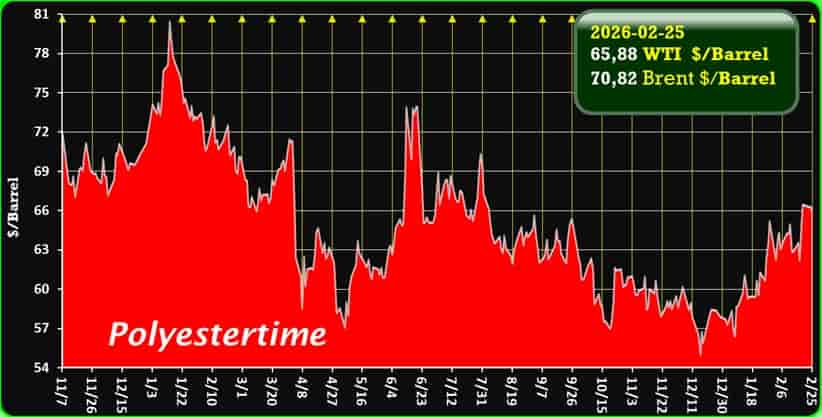
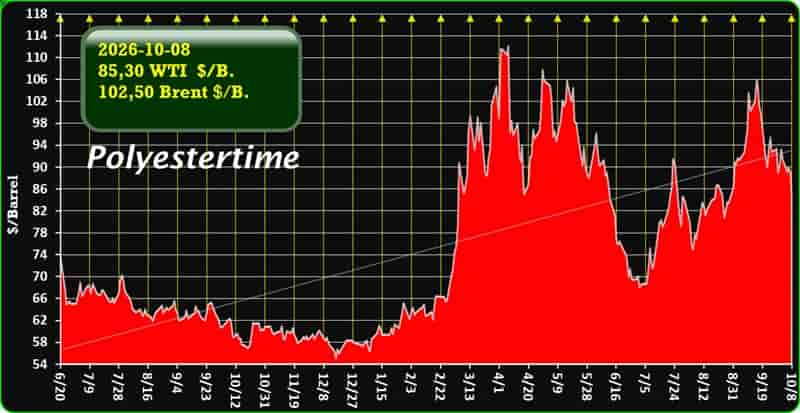
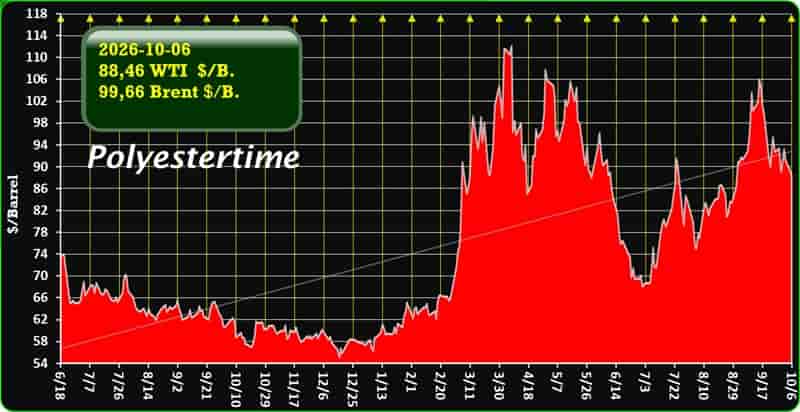
Global Oil Price Dynamics Today: Brent ~70.82 $/B & WTI ~65.88 $/B Amid Market Shifts, Demand-Supply Imbalances & Geopolitical Signals 25-02-2026
📊 Current Oil Price Snapshot – February 25, 2026
| Benchmark | Approx. Price (USD per barrel) | Market Signal |
|---|---|---|
| Brent Crude | ~70.82 $/B | Near recent multi-month highs |
| WTI Crude | ~65.88 $/B | Reflects U.S. benchmarks resilient amid mixed fundamentals |
As of February 25, 2026, global oil price benchmarks Brent and WTI are trading robustly in the low-to-mid $60s per barrel, signaling continued relevance in global energy markets despite persistent headwinds. Brent remains higher than WTI due to its role as the global benchmark and sensitivity to international geopolitical supply risks.
🛢️ What’s Driving Today’s Oil Price Movements
📈 1. Geopolitical Tension and Risk Premiums
Geopolitical developments continue to influence markets:
-
Recent tensions between the U.S. and Iran ahead of key diplomatic talks have pushed prices upward as traders factor in potential supply disruptions.
-
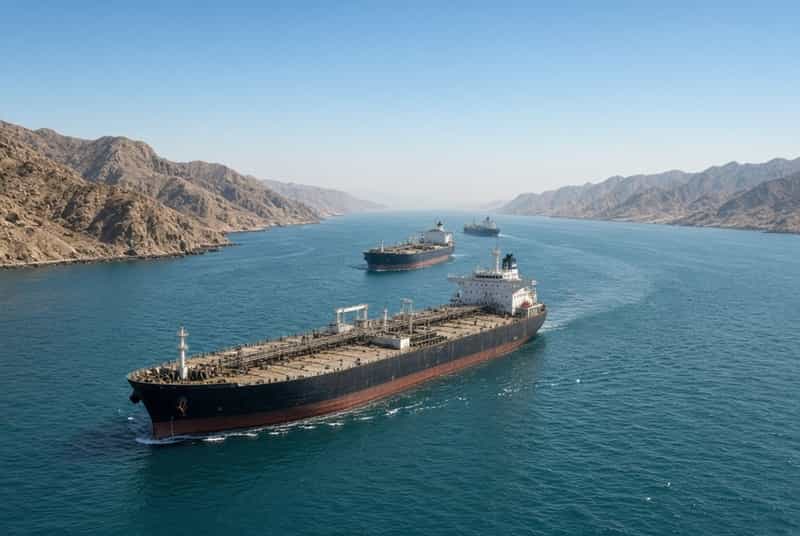
Markets also responded strongly to concerns around disruptions near the Strait of Hormuz, a chokepoint for nearly one-fifth of global oil traffic.
-
Heightened geopolitical risk has encouraged safe-haven positioning in commodities, supporting crude prices alongside assets like gold.
These dynamics keep a risk premium embedded in oil pricing, even where supply flows appear structurally intact.
📉 2. Global Supply & Inventories
Despite price strength, supply fundamentals remain pivotal:
-
Persistent oversupply continues to exert downward pressure, with global inventories swelling as production growth outpaces consumption in 2025–2026.
-
OPEC+ supply discipline and non-OPEC production trends—including U.S., Brazil, Canada, and Argentina—are central to balancing oversupply.
This supply growth explains why many analysts forecast larger inventories and lower prices later in 2026 absent significant production cuts.
💹 3. Dollar Strength & Macroeconomic Influences
Currency movements and macroeconomic indicators contribute meaningfully:
-
A stronger U.S. dollar historically pushes oil prices lower because oil is dollar-priced; recent dollar resilience has pressured prices at times.
-
Economic data that supports demand (e.g., consumer sentiment rises) can offset dollar effects and buttress crude pricing.
🔎 4. OPEC+ Actions & Market Expectations
OPEC+ decisions remain a structural market force:
-
Production policies—whether tightening or pausing output increases—impact expectations around global supply balances and price trajectories.
-
While a production pause might stabilize prices short-term, traders are increasingly questioning whether this strategy mitigates the long-term demand slowdown.
📊 5. Demand Trends & Investors’ Sentiment
-
Global demand growth forecasts remain positive but moderate, with non-OECD economies driving most consumption increases.
-
Investor sentiment is mixed: geopolitical risk supports bullish positioning, while oversupply and muted demand growth temper enthusiasm.
Short-term sentiment snapshot:
-
Bullish factors: geopolitical risk, safe-haven flows, OPEC+ discipline narrative
-
Bearish factors: excess supply, stronger dollar pressure, long-term demand moderation
📍 What This Means for Markets Today
-
Refiners & fuel markets: sustained oil prices in the low-to-mid $60s support refining margins but keep fuel costs elevated for consumers.
-
Inflation & economies: higher crude can feed into transport and manufacturing costs, adding subtle inflationary pressure in energy-importing economies.
-
Investment positioning: traders remain sensitive to geopolitical headlines, while fundamentals encourage caution on extended rallies.
📈 Near-Term Outlook & What to Watch
1. Supply Trends:
If OPEC+ tightens further or non-OPEC supply growth slows, oil could push higher again. Conversely, persistently strong supply and inventories may nudge prices modestly lower.
2. Geopolitical Events:
Diplomatic progress or escalation—especially in Middle East flashpoints like the Iran negotiations—will likely cause short-term price volatility.
3. Macro Indicators:
Economic growth data (e.g., GDP, industrial activity) and dollar movements will remain key drivers for oil price trends.
🧠 In Summary
As of Feb 25, 2026, oil price benchmarks are navigating a mixed landscape: Brent near ~$70.82/B and WTI near ~$65.88/B amid geopolitical risk premiums, continued oversupply concerns, and a stronger dollar backdrop. Geopolitical uncertainties and demand trends will continue to shape prices in the near term, with markets closely watching supply policies, inventories, and macroeconomic signals.
More…