3D printed tires – Hankook and Michelin Accelerate the 3D Printed Tire Revolution Transforming Sustainable Manufacturing Customization Safety and the Future of Global Automotive Mobility 15-01-2026
3D printed tires
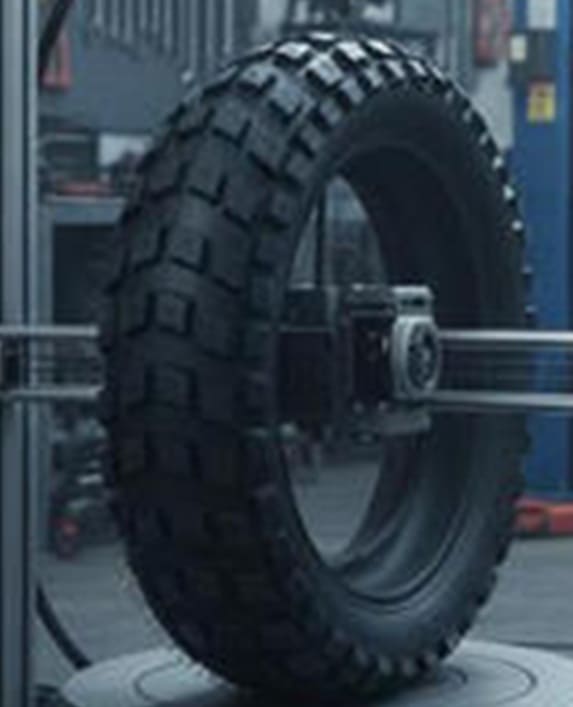
The tire industry is entering a period of radical transformation as additive manufacturing reshapes how tires are designed, produced, and used. 3D printed tires are no longer experimental concepts but emerging solutions that redefine sustainability, performance, and customization. At the forefront of this shift are Hankook and Michelin, two global leaders advancing new tire architectures that challenge decades of conventional manufacturing.
Rather than focusing solely on incremental performance improvements, 3D printed tires represent a structural rethink of materials, production flows, and lifecycle management. This evolution aligns with broader automotive trends such as electrification, circular economy principles, and data-driven mobility.
Why 3D Printed Tires Matter
Traditional tire manufacturing relies on complex molds, energy-intensive processes, and large-scale centralized production. In contrast, 3D printed tires use additive manufacturing to build structures layer by layer, allowing precise material placement and reduced waste.
This shift enables lighter tires, optimized load distribution, and the ability to integrate multiple functions directly into the tire structure. As a result, 3D printed tires support improved durability, lower rolling resistance, and reduced environmental impact throughout their lifecycle.
For manufacturers, additive technology shortens development cycles and allows faster experimentation with tread patterns, compounds, and internal geometries. For consumers and fleets, it opens the door to tires tailored to specific driving conditions, climates, and performance needs.
Hankook and the Sustainable Concept Tire
Hankook has positioned itself as a pioneer of sustainability-driven innovation with its Sustainable Concept Tire developed in collaboration with Harvestance. This project demonstrates how 3D printed tires can be inspired by natural systems, combining efficiency with resilience.
The tire features a layered structure designed to mimic biological optimization, distributing stress more evenly and improving wear resistance. By using recycled materials and renewable resources, Hankook reduces reliance on virgin raw materials while lowering overall production waste.
Additive manufacturing enables precise control over internal density and geometry, resulting in a lightweight tire that maintains strength and durability. This approach supports longer service life and improved energy efficiency, key requirements for electric vehicles and next-generation mobility platforms.
Michelin Vision and the Airless Tire Breakthrough
Michelin is advancing an equally transformative vision with its airless 3D printed tire concept. By eliminating air entirely, Michelin removes the risk of punctures and pressure-related failures, significantly enhancing safety and reliability.
The structure of the Michelin Vision tire is designed to flex under load while maintaining consistent performance across varying conditions. This makes it particularly suitable for shared mobility, autonomous vehicles, and commercial fleets where downtime carries high costs.
Beyond its structural design, the tire integrates digital sensors that continuously monitor wear, temperature, and load. This real-time data supports predictive maintenance, allowing operators to schedule replacements before failures occur.
Manufactured using biodegradable components and recycled materials, the Michelin Vision reinforces how 3D printed tires can support circular economy objectives while delivering advanced functionality.
Redefining Production and Logistics
The adoption of 3D printed tires has implications far beyond product design. Additive manufacturing enables localized, on-demand production, reducing the need for large inventories and long-distance transportation.
This decentralized model lowers logistics emissions and increases supply chain resilience. Manufacturers can produce tires closer to end users, adapting designs to regional road conditions and regulatory requirements.
For consumers, this shift enables unprecedented customization. Tread patterns, stiffness profiles, and compounds can be adapted to driving behavior, climate, and vehicle type. Fleet operators benefit from standardized digital tracking and optimized replacement cycles, reducing operational costs.
Sustainability and Circular Economy Impact
Sustainability is a central driver behind the rise of 3D printed tires. By optimizing material use and enabling recycled inputs, additive manufacturing reduces waste at every stage of production.
End-of-life management also improves. Tires designed for circularity can be disassembled, reprinted, or reprocessed more efficiently than conventional tires. This supports material recovery and reduces environmental footprint over multiple lifecycles.
As regulators and consumers demand greater transparency, the traceability offered by digital manufacturing strengthens accountability across the value chain.
Challenges Slowing Mass Adoption
Despite their promise, 3D printed tires still face significant hurdles. Safety validation requires extensive testing under diverse conditions to meet regulatory standards. These processes are time-consuming and costly, particularly for structural components critical to vehicle safety.
Production speed remains another challenge. While additive manufacturing excels in prototyping and small-batch production, scaling 3D printed tires to mass-market volumes remains slower and more expensive than traditional methods.
Material sourcing also requires careful oversight. Sustainability claims depend on reliable recycled material supply chains and consistent quality. Without rigorous verification, the risk of greenwashing increases.
The Road Ahead for 3D Printed Tires
As technology matures, many of these challenges are expected to diminish. Advances in printing speed, material science, and automation will gradually close the cost gap with traditional manufacturing.
Hankook and Michelin are investing not only in products but in ecosystems that connect design, data, production, and lifecycle management. Their leadership signals that 3D printed tires will play a central role in future mobility.
In a world moving toward electrification, autonomy, and sustainability, the tire is no longer a passive component. Through additive manufacturing, it becomes a smart, adaptive, and circular product at the heart of next-generation transportation.
More…