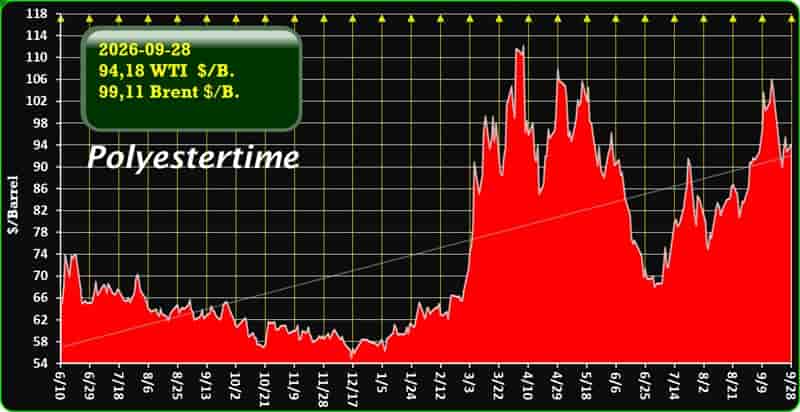
Oil Price Trend on January 15, 2026 Shows Mixed Signals: Brent at ~$63.60, WTI ~$59.35 Amid Oversupply Fears, Geopolitical Tensions, and Global Demand Uncertainty 15-01-2026
Introduction: Oil Price Trends on January 15, 2026
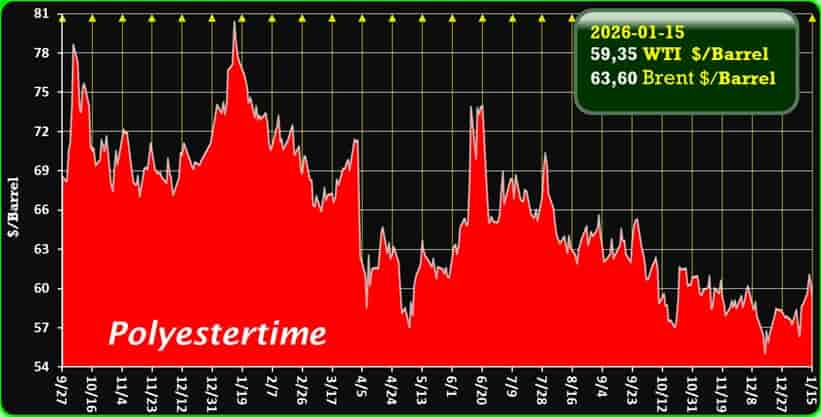
As of January 15, 2026, the oil price landscape remains dynamic and tightly watched by traders, policymakers, and consumers alike. Brent crude is trading around $63.60 per barrel, while U.S. West Texas Intermediate (WTI) sits near $59.35 per barrel — levels that reflect ongoing tensions in both supply and demand fundamentals.
This article examines the latest movements in Brent and WTI, the main factors driving today’s oil price trajectory, and what analysts and investors are watching next.
Current Brent and WTI Price Movements
| Benchmark | Price Range (Jan 15 2026) | Trend Notes |
|---|---|---|
| Brent Crude | ~$64–$65 per barrel | Slight downside pressure from eased geopolitical risk, but trading higher than late-2025 averages. |
| WTI Crude | ~$60–$61 per barrel | Pressured by inventory builds and U.S. stock increases. |
Overall, prices snapped modestly lower this morning after comments from U.S. political leadership eased fears of an escalation with Iran. Markets interpreted these remarks as reducing the immediate geopolitical premium in crude pricing, leading to a 2–3% drop in session prices.
Key Factors Influencing Today’s Oil Market
📈 1. Global Supply and Demand Balance
The fundamental supply and demand balance is arguably the most influential force shaping the current oil price outlook. While global demand continues to grow modestly, supply keeps outpacing consumption — particularly with rising output from the U.S. and other non-OPEC producers.
-
Non-OPEC production has expanded significantly, adding millions of barrels per day.
-
Global inventories are building — especially in OECD nations — signaling oversupply pressures.
This surplus environment has kept a lid on runaway price gains despite periodic geopolitical “jolts.”
🛢️ 2. OPEC+ Decisions and Production Policies
OPEC+ remains central to the oil price narrative in 2026:
-
The alliance paused planned production increases for early 2026 after modest hikes in late 2025 — a tactical attempt to support prices.
-
However, critics point out that this pause alone is insufficient to meaningfully shift a market weighed down by oversupply.
Investors are watching OPEC+ closely for any shift from volume support to price support.
🧨 3. Geopolitical Developments
Geopolitical risks continue to create short-term volatility in oil prices, even in a structurally bearish supply environment. Recent developments include:
-
Unrest in major oil-producing regions that may influence production or transport routes — especially related to the Middle East and the Black Sea.
-
Drone and maritime incidents in strategic waterways, and tensions around sanctions enforcement, have intermittently buoyed oil prices.
While these events can trigger temporary oil price spikes, overarching buffers — such as increased global inventories — often moderate their long-run effects.
📊 4. Economic Data and Demand Signals
Global economic indicators continue to weigh on oil price expectations:
-
China’s import figures are strong, pointing to resilient demand in Asia — a key consumption hub.
-
Conversely, inflation and interest rate uncertainty in major economies signal a potential slowing of energy demand growth.
Investor sentiment around economic strength (or weakness) directly affects oil futures and portfolio flows into energy assets.
Investor Sentiment and Market Reaction
Investors are balancing a set of contradictory signals:
-
Bearish view: structural oversupply, muted demand growth, and rising inventory levels argue for lower prices ahead.
-
Short-term bullish shocks: periodic geopolitical flare-ups continue to inject volatility and episodic price support.
-
Sentiment nuance: bulls emphasize that geopolitical risk can reassert quickly, while bears highlight that sustained oversupply keeps a bearish bias intact.
This mixture of forces has kept risk premiums elevated even as headline prices hover in the low-to-mid $60s for Brent.
Short-Term Outlook: Where Oil Prices May Head
In the near term, analysts largely see sideways to slightly lower oil price movement:
-
A continued range trade is expected between roughly $55 and $70 per barrel for Brent and WTI, barring escalated disruptions.
-
Persistent oversupply and modest demand growth suggest bearish tilts will dominate, unless OPEC+ makes deeper cuts or demand surprises to the upside.
For consumers and energy markets, this outlook translates into:
-
Stabilizing fuel costs in major economies.
-
Potential relief for inflation metrics tied to energy prices.
-
Continued pressure on high-cost producers and energy equities.
Conclusion
The oil price picture as of January 15, 2026 remains shaped by a complex interplay of supply surplus, geopolitical uncertainty, and evolving demand signals. While Brent hovers near ~$63.60/b and WTI around ~$59,35/b, underlying pressures hint at sideways price action with occasional volatility.
Market participants should watch OPEC+ policy shifts, inventory data, and key geopolitical developments closely — each capable of triggering shifts large enough to challenge the current trend.
More….