LFP batteries – Tires-recyclyng – Gas 18-05-2023 - Archive
By PolyestertimePolyestertime
This content has been archived. It may no longer be relevant
LFP batteries – Tires-recyclyng – Gas
-Radicigroup – Noyfil SA : Life Cycle Assessment (LCA) – Solution dyed Polyester
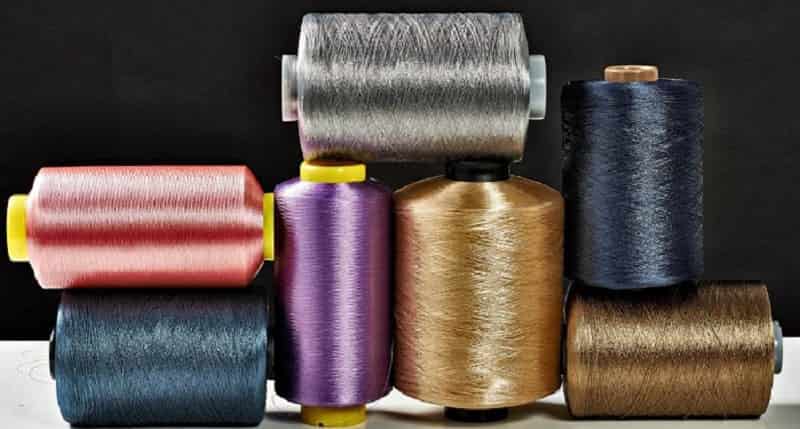
Italian chemical and synthetic fiber manufacturer RadiciGroup, in an effort to address the amount of energy and water wasted in traditional dyeing methods within the industry, has taken the lead in promoting the utilization of its more sustainable yarn dyeing solutions.
In solution dyeing, color is introduced “upstream” during the extrusion phase, becoming incorporated into the polymer matrix. Solution dyeing is commonly employed for dyeing large quantities of products in a standardized production process.
By making sustainability a strategic advantage of their business, RadiciGroup is prepared and fully equipped to be an “upstream” provider of environmentally friendly products, not only for the fashion sector but also for the automotive, furniture, and outdoor industries.
In collaboration with some of their customers in the polyester fiber field, they have ongoing projects that demonstrate their commitment to being environmentally conscious participants in the production value chain. These projects involve the production of solution-dyed yarns made from recycled polymers, combining both technical and environmental performance, according to Oscar Novali, business area manager of RadiciGroup Comfort Fibers. LFP batteries – Tires-recyclyng – Gas
Life Cycle Assessment (LCA) studies conducted by Noyfil SA and Noyfil SpA, companies within the RadiciGroup engaged in polyester fiber production, have revealed that solution-dyed yarns, whether derived from virgin or post-consumer recycled polymers, have a lower environmental impact than traditional yarn-dyed yarns.
The solution-dyeing technique is also employed in the production of nylon, specifically Radilon polyamide 6, 6.6, and 6.10 yarns used in the clothing and technical textile sectors, dorix polyamide 6 and 6.10 staple yarns used in automotive and technical-industrial applications, as well as needle felt carpeting that requires excellent resistance and colorfastness. Solution dyeing is also suitable for polyamide 6 and 6.6 BCF yarn, another textile carpet yarn offered by RadiciGroup.
Filippo Servalli, sustainability director of RadiciGroup, stated that their primary production plants (Radici Yarn for polyamide yarn, RadiciFil for BCF yarn, and Noyfil for continuous polyester yarn) possess the appropriate equipment and qualified staff to develop customized color formulations. LFP batteries – Tires-recyclyng – Gas
With their vertically integrated polyamide production and extensive expertise in the upstream chemistry of all their production processes, RadiciGroup is committed to supplying products with reduced environmental impact that can be reused at the end of their lifecycle. They have the capability to meet diverse market demands, including the provision of small product batches.
Noyfil SA : Solution Dyed Polyester
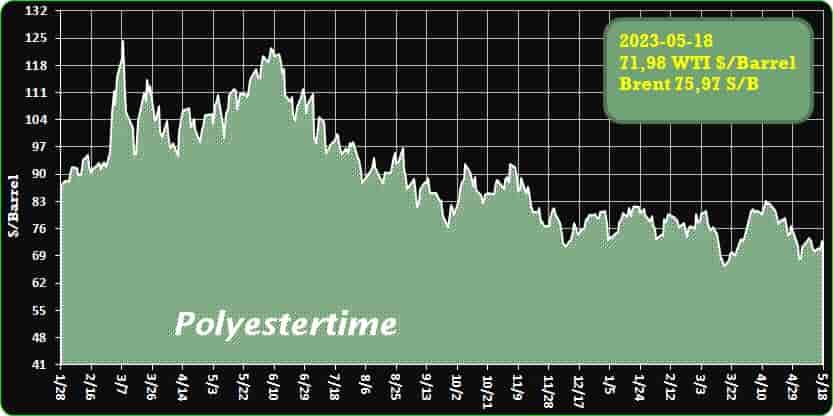
Crude Oil Prices Trend
Crude Oil Prices Trend by Polyestertime
-South Korea takes on China and focuses on LFP cells Samsung, LG Energy Solution, and SK On invest in fresh batteries for electric vehicles, aiming to decrease manufacturing expenses and price tags
LFP batteries are progressively gaining popularity
More cost-effective than the traditional alternatives like nickel-cobalt-manganese, these batteries have now become prevalent, particularly in new Chinese electric cars.
However, South Korea is not only interested in “low-cost” batteries.
It appears that they are increasingly inclined to offer even more competitive models. LG, Samsung, and SK On take charge of the LFPs According to reports from Bloomberg, the leading three South Korean battery companies, namely LG Energy Solution, Samsung SDI, and SK On, are shifting their focus towards LFP technology.
This information was provided by Byoungwoo Kang, a professor at Pohang University of Science and Technology, who has been conducting research for these three Asian giants for some time. In particular, SK On seems to be leading the way.
They unveiled a product at the InterBattery conference held in Seoul last March that performs exceptionally well even in low temperatures.
These temperatures are the primary drawback for LFPs, as they slightly reduce the battery’s range in cold climates. LFP batteries – Tires-recyclyng – Gas
The next generation of the Kia Ray might come equipped with LFP batteries If this holds true, it would mark a significant initial step, soon to be followed by LG and Samsung.
LG plans to construct a dedicated LFP battery plant in Arizona, while Samsung will join a Korean government project to manufacture LFP batteries starting from 2026. As mentioned earlier, this development is beneficial for drivers as well.
Since these batteries do not require raw materials such as nickel, cobalt, and magnesium, they are cheaper to produce, resulting in lower prices for upcoming electric vehicles.
An example from Korea is the Kia Ray, a compact electric car that could be among the first vehicles in the group to incorporate this new solution.
LFP Batteries
LFP batteries, also known as lithium iron phosphate batteries, are a type of rechargeable battery that uses lithium iron phosphate as the cathode material.
These batteries are known for their high energy density, long cycle life, and excellent thermal stability. Here are some key points about LFP batteries:
Chemistry: LFP batteries use lithium iron phosphate (LiFePO4) as the cathode material. The anode is typically made of carbon.
Safety: LFP batteries are considered safer than other lithium-ion battery chemistries because they have a lower risk of thermal runaway and are less prone to overheating or catching fire. LFP batteries – Tires-recyclyng – Gas
High energy density: LFP batteries offer a high energy density, which means they can store a significant amount of energy relative to their size and weight. This makes them suitable for applications that require high energy output.
Long cycle life: LFP batteries have a long cycle life compared to other lithium-ion batteries. They can be charged and discharged many times without significant degradation in performance.
Fast charging: LFP batteries can be charged at a relatively high rate, allowing for faster charging times compared to some other battery chemistries.
Wide temperature range: LFP batteries have excellent thermal stability and can operate effectively over a wide temperature range, making them suitable for applications in extreme environments.
Lower energy density compared to some other lithium-ion chemistries: While LFP batteries offer good energy density, they generally have a lower energy density compared to lithium-ion chemistries like lithium cobalt oxide (LCO) or lithium nickel cobalt aluminum oxide (NCA). However, LFP batteries make up for this with their safety and long cycle life characteristics.
Applications: LFP batteries find applications in various fields, including electric vehicles (EVs), energy storage systems (ESS), renewable energy systems, backup power supplies, and more. LFP batteries – Tires-recyclyng – Gas
It’s important to note that while I strive to provide accurate and up-to-date information, battery technologies and advancements may change over time. Therefore, it’s always a good idea to consult the latest sources and manufacturers’ specifications for the most current information on LFP batteries.
Dutch renewable chemistry pioneer Avantium and specialty distributor Will & Co have signed a capacity reservation agreement for bio-based FDCA, moving plant-derived building blocks closer to commercial scale in coatings, adhesives, sealants, and elastomers.
As European fashion and manufacturing enter a decisive regulatory phase, Euratex and Global Fashion Agenda have formed a strategic alliance to align circular textile policy with industrial investment, scaling textile-to-textile recycling across Europe and global supply chains.
As mandatory circular packaging laws take hold across Europe, Asia, and North America, Indorama Ventures is demonstrating at Sustainability Expo 2026 how advanced PET recycling, design standards, and cross-industry collaboration can turn regulatory pressure into commercial opportunity.
Surventis highlights how advanced washing additives achieve up to 90% delamination in multilayer packaging, showing why China’s monomaterial designs lead circular efficiency.
Advanced testing frameworks combining destructive stress analysis and non-destructive imaging are redefining how eco-friendly biomaterials are validated for healthcare, packaging, and high-performance industrial uses.
The PET Catalyst Market is entering a new growth phase driven by rising recycled PET production, increasing bottle-grade resin demand and expanding investments across Asia-Pacific. As sustainability targets reshape packaging strategies worldwide, catalyst suppliers are becoming increasingly important to the future of the circular plastics economy.