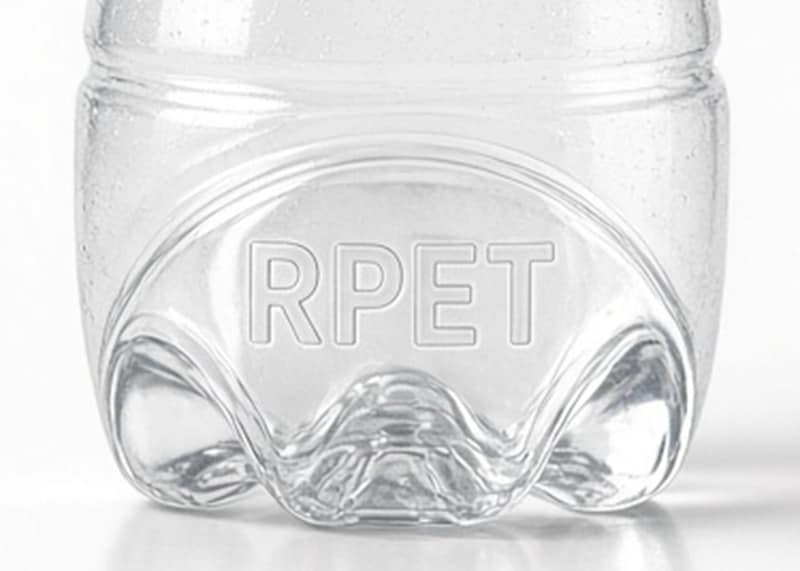
Nanocomposites – How today’s rigid plastics can be turned into tomorrow’s products As manufacturers of all kinds look to make their new products better for the environment, the demand for recycled plastics has grown in recent years 21-04-2025 - Archive
Nanocomposites
Plant-Based PET – KAIST Develops Eco-Friendly Nylon-Like Plastic from Microorganisms KAIST researchers have achieved a groundbreaking advancement in sustainable plastics by developing a new eco-friendly alternative to conventional petroleum-based materials

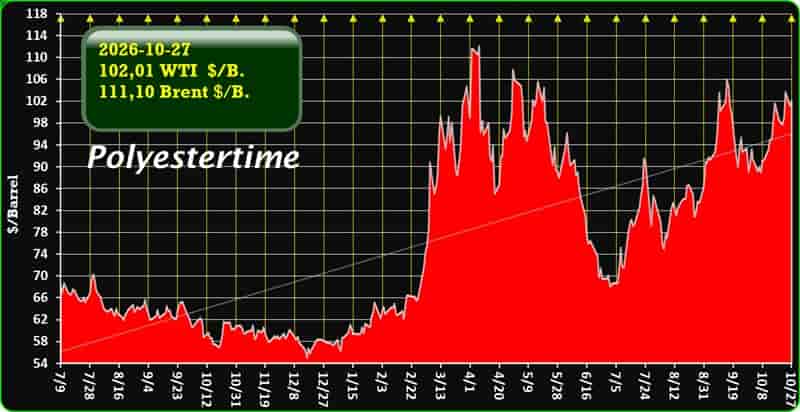
Crude Oil Prices Trend

Nanocomposites: A Catalyst for Iran’s Industrial Growth
Nanocomposites represent a major success in Iran’s adoption of nanotechnology, making up 89% of the domestic nanotech market. By integrating nanoparticles into metal, polymer, or ceramic matrices, these materials offer enhanced strength, thermal resistance, conductivity, and chemical durability.
Polymer Nanocomposites Lead the Market
Polymer nanocomposites dominate the sector with an 86% market share. Their lightweight nature, durability, and cost-effective production make them ideal for large-scale industrial applications. Common uses include UPVC pipes, biodegradable garbage bags, and water storage tanks. Their scalable production and environmental resistance further drive demand. Nanocomposites
Other Nanocomposites and Applications
Ceramic nanocomposites, though holding just 2% of the market, are valuable in concrete, dental materials, and high-heat environments like combustion chambers. Metal nanocomposites (1%) play a role in structural enhancements such as nanocomposite-infused rebar, welding nozzles, and electrode tips.
Nanomixtures—blends of various nanomaterials—occupy 11% of the market and serve a wide array of applications, despite their smaller share.
Iran’s Global Standing in Nanotechnology
Iran has rapidly become a global force in nanotechnology, ranking 4th in the world for nanotech-related publications, according to StatNano. This surge reflects strong investment and focus on research, with notable contributions acknowledged internationally. For example, in 2022, the American Institute of Physics highlighted Iranian research on nanomaterials for cancer treatment. Nanocomposites
Widespread Industrial Impact
Nanotechnology now touches many core Iranian industries: 42% of nano-enabled products are used in construction, 17% in oil and gas, and 13% in automotive manufacturing. By manipulating matter at the nanoscale, Iran is leveraging nanotech innovation to boost industrial efficiency and sustainability across multiple sectors.

How today’s rigid plastics can be turned into tomorrow’s products
As manufacturers of all kinds look to make their new products better for the environment, the demand for recycled plastics has grown in recent years. And supermarkets have emerged as an important source for the next generation of recycled polymers.
Thousands of bread crates and tote storage boxes are used to transport products from supplier to supermarket, supermarket to customer every year. As things stand, when these crates are broken or worn out, they end up in a general waste stream or recycled into lower grade applications. Nanocomposites
Fortunately, there is another option. As a leading plastics recycler, MBA Polymers UK can utilise its nationwide logistics network to collect this material, extract the high-quality polypropylene (pp) it contains, and create high quality, high specification recycled alternatives to virgin plastics. A versatile and strong plastic, MBA’s recycled polypropylene is used by the construction, electronics and packaging industries and can be found in everything from plant pots to vacuum cleaners or back into brand-new crates and tote boxes.
Over the past 10 years, MBA has diverted more than 250,000 tonnes of post-consumer plastics from landfill and the expertise our teams have developed enables us to produce recycled plastics to the exact specifications individual customers require. Nanocomposites

Why Is Less Than 10% of the World’s Plastic Recycled?
Despite decades of investment in recycling programs, public education, and corporate sustainability pledges, less than 10% of the world’s plastic is actually recycled. A new report from the OECD confirms what many experts have long suspected: the needle hasn’t moved much. But this isn’t simply a failure of consumer behavior—it’s a deeper, structural problem.
The System Was Never Built to Work at Scale
Plastic recycling is not failing because people don’t care. It’s failing because the system was never designed to work effectively or sustainably on a global level.
Most plastics today aren’t created with recycling in mind. Packaging often contains multiple types of plastic with different properties, making separation and processing complex and expensive. A single shampoo bottle might have three distinct materials—each with its own recycling requirements. Nanocomposites
Worse, virgin plastic, made from fossil fuels, is usually cheaper than recycled alternatives. As long as this economic imbalance persists, large-scale recycling remains commercially unviable.
The Role of the Informal Sector
Roughly 58% of global plastic recovery is handled by informal waste workers—individuals who collect, sort, and sell discarded plastic. These workers play a vital role, especially in the Global South, but they are often overlooked, unrecognized, and unsupported.
Without formal recognition, fair pay, or social protections, their work remains undervalued. Yet they are the engine behind much of the world’s plastic recovery. Ignoring them limits the system’s overall capacity and effectivenessThe Circular Economy Can’t Work Without Inclusion
A lot of today’s sustainability efforts talk about moving toward a circular economy—where materials are reused and waste is minimized. But without systemic inclusion of the people doing the hard work of recovery, that vision falls short. Nanocomposites
At Plastics For Change, we’ve seen that systems work best when they are designed around people, not just materials. Recycling efforts that include and empower waste pickers, aggregators, and small dealers deliver better results in terms of plastic quality, traceability, and environmental impact.
When people are treated as stakeholders instead of invisible labor, the whole system improves.
Breaking the 10% Ceiling: What Needs to Change
To truly boost global recycling rates, three key areas need urgent attention:
-Product Design for Recycling
Most packaging is still made for visual appeal, not recyclability. Policies like Extended Producer Responsibility (EPR) must go further, ensuring that products are designed with end-of-life processing in mind. Nanocomposites
-Making Recycled Plastic Competitive
To compete with virgin plastic, recycled materials need to become cost-effective. This can be supported through government incentives, carbon pricing, or tax adjustments that make sustainable choices more affordable.
-Recognizing Informal Workers
The people who collect and sort plastic every day must be brought into formal supply chains. This includes fair wages, training, and access to better markets and protections.
Rethinking the Problem
We need to stop thinking of plastic waste as a post-consumption issue. The real opportunity lies upstream—in how we design, price, and value plastic before it becomes waste. Nanocomposites
The goal shouldn’t only be increasing the amount of plastic we recycle. It should also be about who gets to participate in recycling and how they are supported. Right now, that 10% figure is a reflection of the system’s priorities—and who it leaves behind.
At Plastics For Change, we’re working to shift that narrative. It’s not just about recovering plastic, but about rebuilding trust, dignity, and value across the entire supply chain.

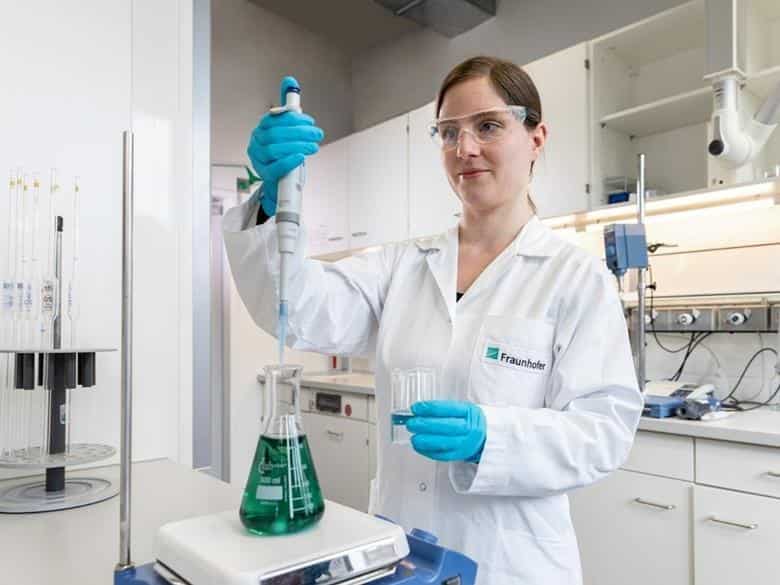
Germany’s Fraunhofer launches PFAS-free elastomer project
- Fraunhofer’s ‘HATE-FLUOR’ project aims to replace PFAS-based fluoroelastomers with high-performance, fluorine-free alternatives.
- Experts at LBF and IFAM are developing thermally stable elastomers and protective coatings to serve industries like medical, semiconductor, and chemical tech.
- The 3-year project is funded under the PREPARE program.
Users of poly- and perfluorinated alkyl compounds (PFAS), also known as “forever chemicals”, are under pressure due to regulatory proposals from the European Chemicals Agency (ECHA). This also affects the use of fluoroelastomers, whose economic significance is enormous. Fraunhofer experts initiated the “HATE-FLUOR” project at the beginning of February. Nanocomposites
Together, they want to develop high-performance elastomer compounds to replace fluoropolymers in certain technical applications. Various industries can benefit from this, including manufacturers of semi-finished and finished parts as well as companies in mechanical engineering industry, medical engineering, clean room and semiconductor technology, chemical process technology and electrical applications.
Many companies are looking for alternatives to poly- and perfluorinated alkyl compounds (PFAS), as their possible uses in the future are uncertain and voluntary commitments are expected. PFAS are found in everyday products such as coated pans, pizza boxes and outdoor jackets, as well as in medical engineering, heat pumps and batteries. While there are already fluorine-free substitutes for some everyday applications, there is a great need for new individual solutions to replace fluoropolymers for technical applications that have to withstand extreme conditions. Nanocomposites
PFAS replacement: coated elastomers and customizable modular solutions
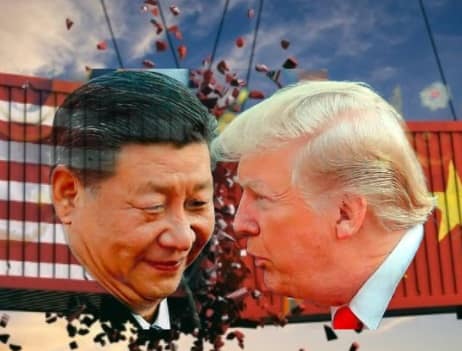
Trade War Turmoil: Chinese Factories in Gaoyang Struggle to Survive
The escalating U.S.-China trade war is dealing a heavy blow to manufacturers in Gaoyang County, Hebei Province. Known as one of China’s largest textile hubs, the region is now grappling with uncertainty, shrinking profits, and stalled operations.
At a towel factory located about 200 kilometers from Beijing, operations have come to a near halt. Just months ago, the factory secured a major contract worth 12 million yuan with Amazon—well above their usual deals.
It should have marked a turning point. Instead, hundreds of towel-filled boxes now sit idle in the warehouse, waiting for a solution that may not come soon.
“All of this was meant for the U.S.,” the factory manager lamented, “but everything is currently on hold.” Nanocomposites
The trade standoff has taken a severe turn. U.S. President Donald Trump imposed an additional 145% tariff on Chinese imports, prompting China to retaliate with a 125% tariff of its own. Though Trump hinted at a possible resolution within weeks, most in the industry remain doubtful. For smaller manufacturers, each day of delay means deeper financial strain.
The once-bustling towel wholesale street in Gaoyang now appears desolate, with most shops shuttered. Gaoyang is home to around 4,200 textile-related companies, producing approximately five billion towels annually—nearly a third of China’s total output. Yet now, shopkeepers delay opening hours or skip workdays altogether due to the downturn.
U.S. tariffs have proven particularly damaging to China’s textile sector. According to the China National Textile and Apparel Council, textile exports were valued at $48.49 billion last year—a 5.6% increase after two years of decline. Nanocomposites
Much of this growth came from sales to the U.S. and the EU. But with exports to the U.S. now under threat, the industry faces a harsh reckoning. As one trader, Wei Wangchun, put it: “The profit margins are better overseas. Losing that market is a big hit.”
Inside Gaoyang Commercial Trade City, the region’s largest textile market, workers and shopkeepers are being forced to adapt. “Everyone is cutting costs,” said Jin Juan, a wholesaler. “Factories are reducing labor, and all of us—wholesalers, exporters—have to lower our prices just to survive the tariffs.”
Despite these efforts, many believe the sector cannot hold out much longer. Factory manager Chi, who has run his business for decades, explained that more than half of his output is tied to U.S. orders. “I told my wife, who manages operations, we need to meet client expectations, even if it means earning nothing for a month or two. Our priority is to keep the factory running.” Nanocomposites
But replacing U.S. orders isn’t simple. Although Chinese authorities have emphasized the country’s economic scale and the need to boost domestic consumption, most manufacturers and wholesalers remain unconvinced. “The local market is already overcrowded, and consumption is too low,” one wholesaler said. Government statistics back this up—spending on clothing and textiles rose only 0.3% last year.
The economic pain isn’t confined to Gaoyang. Across key export hubs in Zhejiang, Jiangsu, and Guangdong provinces, factories are scaling back or suspending operations. Some are even bringing in family members to help manage unsold inventory. “We haven’t seen conditions this bad in decades,” noted Qian Xiang, a longtime trade company manager.
At its core, the U.S.-China trade war has morphed into a battle of political pride. The White House recently suggested tariffs could reach as high as 245%, including pre-existing ones. China’s foreign ministry has vowed to respond with equal force, insisting it will “confront the U.S. to the end.” Nanocomposites
For small factories like Chi’s, caught in the middle of a geopolitical power struggle, the outlook remains grim. And unless a breakthrough arrives soon, many fear that the machinery that once powered China’s textile boom could fall silent for good.