Plant-Based PET – KAIST Develops Eco-Friendly Nylon-Like Plastic from Microorganisms KAIST researchers have achieved a groundbreaking advancement in sustainable plastics by developing a new eco-friendly alternative to conventional petroleum-based materials 21-04-2025 - Archive
Plant-Based PET
| Polyestertime | |||
| ITEM | 14/04/2025 | 21/04/2025 | +/- |
| Bottle grade PET chips domestic market | 5,650 yuan/ton | 5,630 yuan/ton | -20 |
| Bottle grade PET chips export market | 740 $/ton | 735 $/ton | -5 |
| LDPE CFR Est China | 1,090 $/ton | 1,065 $/ton | -25 |
| PET Semidull Fiber chips
PET Bright |
5,570 yuan/ton
5,580 yuan/ton |
5,510 yuan/ton
5,520 yuan/ton |
-60
-60 |
| Pure Terephthalic Acid PTA domestic market
Plant-Based PET |
4,365 yuan/ton | 4,345 yuan/ton |
-20 |
| Pure Terephthalic Acid PTA FOB China | 560 $/ton | 552 $/ton | -8 |
| Monoethyleneglycol MEG South China | 4,450 yuan/ton | 4,400 yuan/ton |
-50 |
| Monoethyleneglycol MEG CFR China | 525 $/ton | 500 $/to | -25 |
| Paraxylene PX FOB Taiwan market | 721 $/ton | 728 $/ton |
+7 |
| Paraxylene PX FOB Korea market | 711 $/ton | 718 $/ton | +7 |
| Paraxylene PX FOB EU market | 748 $/ton | 755 $/ton | +7 |
| Polyester filament POY 150D/48F domestic market | 6,450 yuan/ton | 6,300 yuan/ton |
-150 |
| Recycled Polyester filament POY domestic market | 6,300 yuan/ton | 6,150 yuan/ton | -150 |
| Polyester filament DTY 150D/48 F domestic market | 7,775 yuan/ton | 7,550 yuan/ton | -225 |
| Polyester filament FDY 68D24F | 7,400 yuan/ton | 7,250 yuan | -150 |
| Polyester filament FDY 150D/96F domestic market
Plant-Based PET |
6,700 yuan/ton | 6,550 yuan/ton | -150 |
| Polyester staple fiber 1.4D 38mm domestic market | 6,720 yuan/ton | 6,450 yuan/ton | -270 |
| Caprolactam CPL domestic market | 9,350 yuan/ton | 9,150 yuan/ton |
-200 |
| Caprolactam CPL CFR China | 1,340 $/ton | 1,340 $/ton | – |
| Nylon 6 chips overseas market | North America: $2.93/kg
Europe: $2.36/kg Northeast Asia: $1.74/kg Southeast Asia: $1.81/kg Middle East: $1.88/kg |
North America: $2.80/kg Europe: $2.40/kg Northeast Asia: $1.65/kg Southeast Asia: $1.79/kg Middle East: $1.82/kg
|
– |
| Nylon 6 chips conventional spinning domestic market | 10,550 yuan/ton | 10,050 yuan/ton | -500 |
| Nylon 6 chips high speed spinning domestic market | 11,050 yua/ton | 10,800 yuan/ton | -250 |
| Nylon 6.6 chips domestic market | 16,400 yuan/ton | 16,200 yuan/ton | -200 |
| Nylon6 Filament POY 86D/24F domestic market | 13,150 yuan/ton | 12,900 yuan/ton | -250 |
| Nylon6 Filament DTY 70D/24F domestic market | 15,750 yuan/ton | 15,500 yuan/ton | -250 |
| Nylon6 Filament FDY 70D/24F | 14,500 yuan/ton | 14,000 yuan/ton | -500 |
| -Spandex 20D domestic marke | 27,500 yuan/ton | 27,300 yuan/ton | -400 |
| Spandex 30D domestic market | 27,000 yuan/ton | 26,800 yuan/ton | -400 |
| Spandex 40D domestic market | 24,000 yuan/ton | 23,600 yuan/ton | -400 |
| Adipic Acid China domestic market | 7,700 yuan/ton | 7,300 yuan/ton | -400 |
| Benzene domestic market East China | 6,350 yuan/ton | 6,250 yuan/ton | -100 |
| Benzene CFR China | 839 $/ton | 760 $/ton | -79 |
| Ethylene South East market | 890 $/ton | 870 $/ton | -20 |
| Ethylene NWE market CIF | 841 $/ton | 818 $/ton | -23 |
| Acrylonitrile ACN domestic market | 9,000 yuan/ton | 8,600 yuan/ton | -400 |
| Acrylonitrile ACN Acrylonitrile Southeast Asia | 1,250 $/ton |
1,250 $/ton |
– |
| Acrylic staple fiber ASF CFR China | 14,700 yuan/ton | 14,700 yuan/ton | – |
| VSF viscose staple fiber | 13,300 yuan/ton | 13,300 yuan/ton | – |
| PP Powder domestic market | 7,050 yuan/ton | 7,030 yuan/ton | -20 |
| Naphtha overseas market | 538 $/ton | 550 $/ton | +12 |
| Phenol domestic market
Jinan Dezheng Chemical Co., LtdYanshan Petrochemical Shandong Province |
6,885 yuan/ton | 6,945 yuan/ton | +60 |
recycled PET = 4,000 yuan/ton — 4,000 yuan/ton –
Plant-Based PET
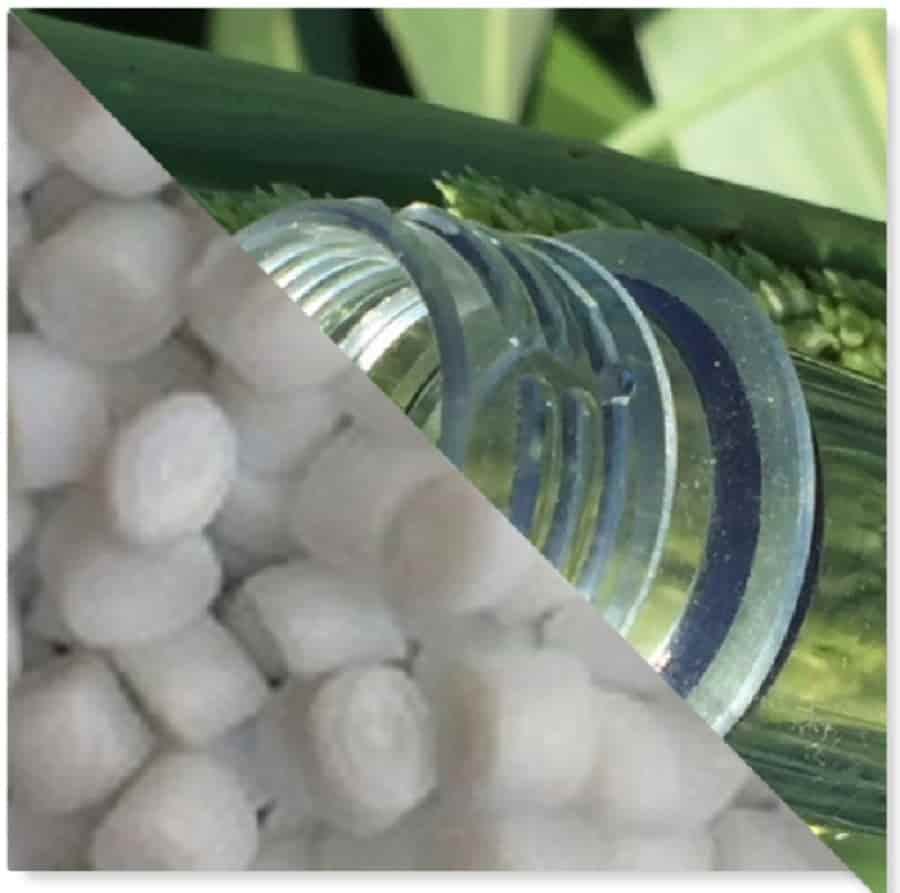
Scientists are intensively researching bioplastics as sustainable alternatives to conventional petroleum-based plastics
Among these, polylactic acid (PLA) has emerged as one of the most widely used options, especially in packaging and 3D printing. PLA is derived from renewable resources like corn or sugarcane and is often promoted as an eco-friendly solution. However, its practical limitations have prompted further innovation in the field of bioplastics8.
PLA: Promise and Pitfalls
PLA’s appeal lies in its plant-based origins and its potential to reduce reliance on fossil fuels. Yet, its environmental benefits are not as straightforward as they may seem.
While PLA is technically biodegradable, this process only occurs under specific industrial composting conditions involving high temperatures and controlled humidity. Plant-Based PET
In natural environments—such as soil, home compost, or landfill—PLA remains largely intact and can persist for years, much like traditional plastics234. This means that most PLA products, especially those used in 3D printing or single-use packaging, end up in landfills where they do not degrade efficiently and may even fragment into microplastics, further contributing to pollution.
Another significant drawback of PLA is its brittleness. Products made from pure PLA can be fragile and prone to breaking, limiting their usefulness for many applications. Furthermore, the production and disposal of PLA can involve chemical additives, some of which are similar to those found in conventional plastics and may pose risks to human health and the environment. Plant-Based PET
Innovations in Bioplastic Blends
To address these shortcomings, researchers have been exploring ways to enhance PLA’s properties and environmental performance. A promising approach involves blending PLA with other biodegradable bioplastics. One such material is LAHIB, a bioplastic produced by genetically engineered bacteria. By combining PLA with LAHIB, scientists have created a new composite material that is both stronger and more flexible than PLA alone. This blend also offers a significant breakthrough in biodegradability: unlike pure PLA, the PLA-LAHIB composite can degrade in seawater within a week, providing a potential solution to marine plastic pollution.
The production of LAHIB through bacterial fermentation is an example of how biotechnology can contribute to sustainable materials. By engineering bacteria to efficiently produce LAHIB, researchers can create bioplastics with tailored properties, such as improved strength, flexibility, and accelerated degradation. This not only enhances the practical utility of bioplastics but also addresses some of the environmental concerns associated with their disposal. Plant-Based PET
Environmental and Industrial Impact
The development of bioplastics that degrade rapidly in natural environments could revolutionize the plastics industry. Such materials would help reduce the accumulation of persistent plastic waste in landfills and oceans, offering a genuinely eco-friendly alternative to both traditional plastics and earlier generations of bioplastics like PLA. Moreover, these innovations could lessen the need for specialized industrial composting facilities, making sustainable disposal more accessible and effective.
However, the transition to bioplastics is not without challenges. The production of bioplastics still requires agricultural resources, which can lead to competition with food production and land use changes. Plant-Based PET
Additionally, the environmental impact of bioplastic manufacturing depends on factors such as energy use, water consumption, and chemical inputs. As the market for bioplastics grows, it will be essential to ensure that these materials are produced and managed sustainably throughout their lifecycle.
Looking Ahead: New Frontiers in Bioplastics
Research in this field continues to advance. Scientists are now investigating the use of bacteria not only to produce bioplastics like LAHIB but also to convert carbon dioxide—a major greenhouse gas—into valuable bioplastic materials. This approach could help mitigate climate change by capturing CO2 emissions and transforming them into useful products, further enhancing the sustainability profile of bioplastics. Plant-Based PET
In summary, while PLA marked an important step toward sustainable plastics, its limitations have driven the search for better solutions. The combination of PLA with innovative materials like LAHIB represents a significant leap forward, offering stronger, more flexible, and truly biodegradable plastics. Continued research and responsible development are key to realizing the full environmental benefits of these next-generation bioplastics
KAIST Develops Eco-Friendly Nylon-Like Plastic from Microorganisms
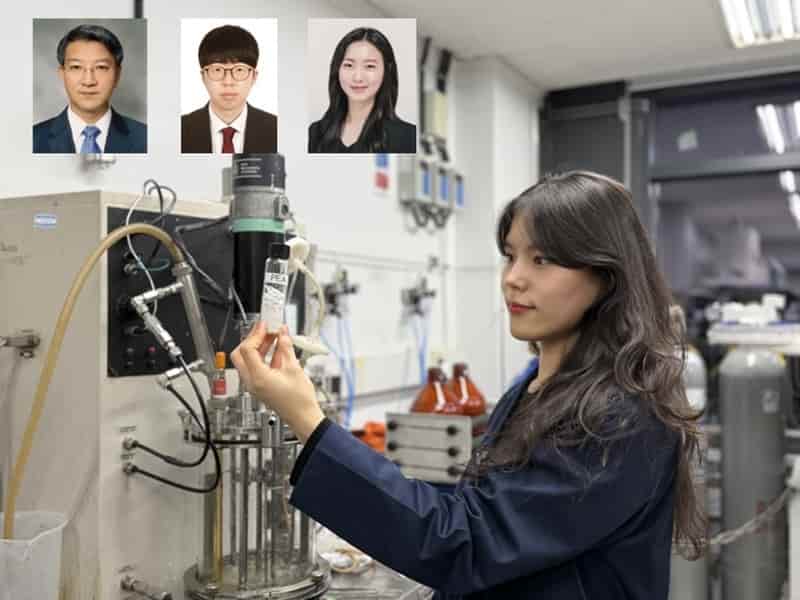
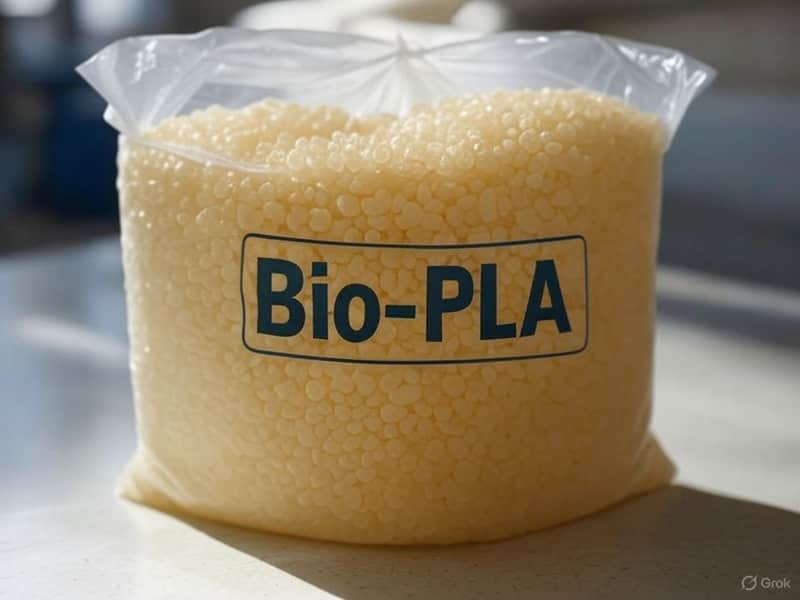
KAIST researchers have achieved a groundbreaking advancement in sustainable plastics by developing a new eco-friendly alternative to conventional petroleum-based materials. This innovative plastic, a bio-based poly(ester amide), mimics the properties of commonly used plastics like PET and nylon—offering strength, durability, and flexibility—while being derived entirely from renewable sources.
Led by Distinguished Professor Sang Yup Lee of the Department of Chemical and Biomolecular Engineering, the KAIST team engineered microbial strains capable of producing poly(ester amide)s using systems metabolic engineering. This approach allowed them to create new biosynthetic pathways in microorganisms—pathways that do not occur naturally in any living organism. Plant-Based PET
Using glucose extracted from biomass such as waste wood and weeds, the researchers successfully developed nine different types of bio-based poly(ester amide)s. These include materials like poly(3-hydroxybutyrate-ran-3-aminopropionate) and poly(3-hydroxybutyrate-ran-4-aminobutyrate), which are considered promising next-generation alternatives to traditional plastics.
The team achieved a notable production efficiency of 54.57 g/L using fed-batch fermentation, demonstrating that this eco-friendly plastic can be produced at industrial scales. This efficient process not only reduces reliance on fossil fuels but also offers a sustainable solution to plastic pollution.
KAIST collaborated with the Korea Research Institute of Chemical Technology (KRICT), where researchers Haemin Jeong and Jihoon Shin conducted in-depth analyses of the new material. Their findings showed that the bio-plastic shared similar characteristics with high-density polyethylene (HDPE), one of the most widely used and robust plastics today. This means the new material can potentially replace conventional plastics in various commercial applications without sacrificing performance. Plant-Based PET
The implications of this development are far-reaching. Not only can the engineered microorganisms produce sustainable versions of poly(ester amide)s, but the strategies used in this research may also pave the way for developing other bio-based polymers in the future.
“This is the first study to successfully demonstrate the microbial production of poly(ester amide)s through renewable biochemical methods,” said Professor Sang Yup Lee. “By moving away from petroleum-based production, we’re taking a critical step toward more sustainable and environmentally responsible materials. We aim to further improve efficiency and scale through continued research.”
This innovation highlights a significant step toward a circular economy—where materials are renewable, biodegradable, and leave a minimal carbon footprint. As industries worldwide seek alternatives to reduce plastic waste, this research offers a promising path forward. Plant-Based PET