Recycled Textile Waste – Sensor-Based Sorting Reduces Battery Fire Risk in Recycling Plants A Smarter Way to Tackle a Growing E-Waste Hazard As the volume of improperly discarded electronic waste rises, so does the danger it brings—particularly from hidden lithium-ion batteries 09-05-2025 - Archive
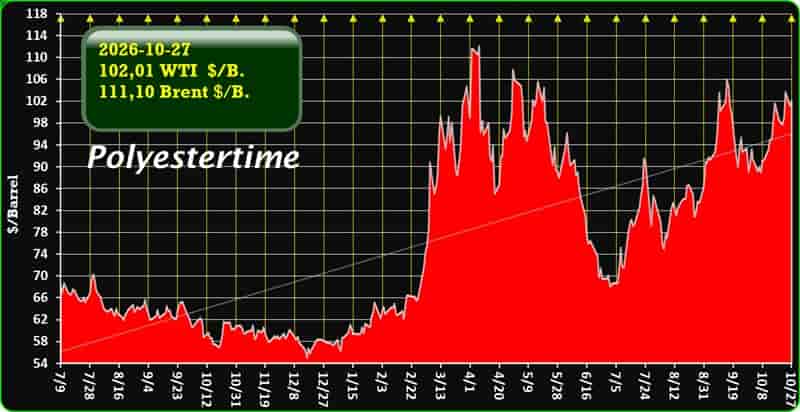
Crude Oil Prices Trend

Ameripen Report Reveals Progress and Persistent Roadblocks for PCR Goals
Recycled Content in Packaging Sees Growth — But Not Enough
Consumer packaged goods (CPG) companies have made measurable strides in incorporating post-consumer recycled (PCR) content in plastic packaging. According to a new report released by Ameripen, average PCR content in plastic packaging more than doubled from 5.3% in 2019 to 10.7% in 2023. Recycled Textile Waste
The report was developed by Circular Matters and funded through the Recycling Is Real initiative of the Plastics Industry Association. Ameripen, an advocacy group for packaging stakeholders, conducted the study to assess the industry’s progress toward its 2025 PCR targets. Recycled Textile Waste
Despite the growth, the study concluded that CPG companies are unlikely to meet their 2025 goals due to critical supply chain obstacles — most notably, the limited availability of high-quality recycled plastic materials.
PET and HDPE Lead the Charge
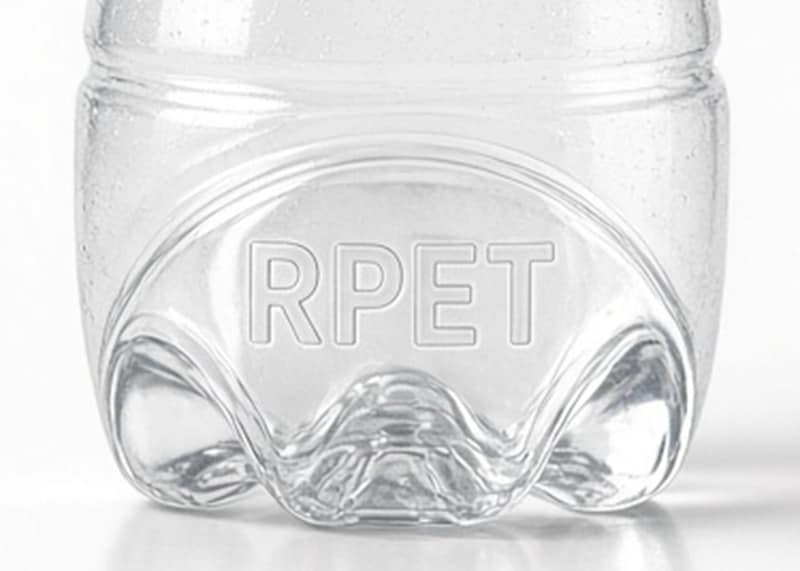
The report noted that while companies rarely specify targets by resin type, the largest increases in recycled content use were seen in recycled PET (RPET) and recycled HDPE. Recycled Textile Waste
This mirrors findings from the New Plastics Economy Global Commitment 2024 Progress Report by the Ellen MacArthur Foundation, which highlighted that PET, HDPE, and LDPE showed the most significant weight-based gains globally.
Much of this momentum comes from enhanced supply: since Ameripen’s 2021 report, U.S. reclaimers have more than doubled their capacity for PCR. However, the expansion was driven primarily by existing reclaimers, not new market entrants.
Bottlenecks in Supply and Technology
Even with expanded reclaimer capacity, supply shortages persist, especially for food-grade RPET.
The report emphasizes that collection rates remain too low, and chemical recycling — though promising — is not yet scalable or widely accepted. Recycled Textile Waste
In fact, chemical recycling accounts for only a tiny portion of current PCR usage. It’s also uncertain whether plastics recycled using chemical methods will qualify under upcoming state-mandated PCR regulations, adding another layer of complexity for manufacturers. Recycled Textile Waste
Voluntary Targets in Retreat
In the face of ongoing challenges, many companies are beginning to scale back their voluntary commitments to reducing virgin plastic use. Key barriers include:
- Inadequate collection and recycling infrastructure
- Uncertain access to high-quality recycled feedstock
- Regulatory ambiguity around emerging recycling technologies
Ameripen’s membership and policy director, Rob Keith, noted that the organization had initially assumed CPG companies would craft goals across various materials. Instead, they found that most companies leaned toward vague sustainability claims — such as being recyclable or sustainably sourced — with few clearly defined PCR targets.
A Broader View: Paper, Aluminum, and More
Unlike the 2021 study that focused primarily on plastics, the 2024 update takes a more holistic approach, analyzing PCR content across paper, aluminum, and other materials. The new edition draws from data provided by 46 companies, up from 35 in the previous report. Recycled Textile Waste
The conclusion? Demand for recycled materials will continue to climb — and in many cases, outpace supply — unless significant changes are made in how post-consumer materials are collected and processed.
Extended Producer Responsibility (EPR) Enters the Picture
Since 2020, at least 10 U.S. states have passed EPR laws and PCR mandates. These policies aim to modernize recycling infrastructure and hold producers accountable for packaging waste. Recycled Textile Waste
Ameripen has gradually warmed to EPR frameworks but still champions incentive-based systems over hard mandates. They advocate for fair, competitive markets where recycled content isn’t reserved for specific industries or companies, but distributed based on demand and environmental impact.
Final Thoughts: A Race Against the Clock
While the packaging industry has made encouraging gains in PCR usage, systemic obstacles threaten to derail 2025 goals.
Without a dramatic boost in collection systems, better alignment between regulation and technology, and more collaborative industry initiatives, many companies will fall short. Recycled Textile Waste
For now, the Ameripen report serves as both a reality check and a call to action — urging stakeholders to think bigger, act faster, and design smarter to close the loop on packaging waste.e

Plastics Shape the Future at K 2025: Innovation, Sustainability, and Vision
K 2025, the world’s leading trade fair for plastics and rubber, returns to Messe Düsseldorf from October 8–15, 2025. A central highlight of the event will be the special show “Plastics Shape the Future”, presented by Plastics Europe Deutschland and Messe Düsseldorf. Recycled Textile Waste
This dynamic program showcases how the plastics industry is transforming through sustainability, digitalization, and social responsibility. Expect daily expert panels, interactive presentations, and networking opportunities that bring together leaders from politics, science, NGOs, start-ups, and industry.
What to Expect: Daily Themes and Highlights
Each day of the show presents a fresh theme, blending thought leadership with practical insight into how plastics can drive a better future. Recycled Textile Waste
Wednesday, October 8 – Kick-Off: The Power of Plastics
The event opens with a deep dive into competitiveness and sustainability. Moderated by Virginia Janssens and Christine Bunte, two high-level sessions will explore how innovation and investment are reshaping the industry. Speakers will include representatives from politics, global organizations, and leading corporations.
Thursday, October 9 – Circular Thursday
Circular economy takes center stage. Moderated by Prof. Manfred Renner (Fraunhofer UMSICHT/CCPE), the day will explore how to design products for reuse, overcome regulatory barriers, and implement circular models in key sectors like packaging, textiles, construction, and automotive. The day concludes with a discussion on chemical vs. mechanical recycling. Recycled Textile Waste
Friday, October 10 – Climate Friday
Tackling climate change and CO2 reduction, this day covers everything from granulate loss prevention and additive use to life cycle assessments. A key highlight: a political roundtable addressing the competitiveness of the European plastics industry amid global sustainability goals.
Saturday, October 11 – Smart Saturday
Saturday dives into digitalization and artificial intelligence (AI). Experts from Covestro, Netzsch, nova-Institut, rCycle, and academia will share how AI can enhance everything from material development to sustainability reporting and recycling efficiency.
Sunday, October 12 – Career Sunday
Putting people at the heart of the conversation, Sunday focuses on careers and education. Expect talks on modern recruitment, inspiring book presentations, and a Science & Poetry Slam. The day also features the impactful Women in Plastics networking event. Recycled Textile Waste
Monday, October 13 – Innovation Monday
Start-ups and researchers take the spotlight. Two pitch sessions will unveil cutting-edge solutions in bioplastics, recycling, and digital processes. Prof. Moritzer from the University of Paderborn will present the WAK Prize, followed by a scientific panel exploring the transformational role of plastics across European industries.
Tuesday, October 14 – Visionary Tuesday
The future is now. “Plastics 2050” examines topics like bio-based materials, carbon capture, microplastics prevention, and circular design. A keynote by Prof. Michael Braungart (Cradle to Cradle) will set the stage for forward-looking panels featuring leading global experts.
Beyond the Talks: Interactive and Inspiring
Throughout the week, visitors can participate in:
- Startup Pitch Events
- Science & Poetry Slam
- Guided Tours
- Women in Plastics Networking
These sessions offer valuable insight and a chance to connect with the minds shaping the industry’s future. Recycled Textile Waste
Final Thoughts
The “Plastics Shape the Future” special show is more than a conference—it’s a platform for progress. Whether you’re a researcher, policymaker, start-up founder, or sustainability advocate, K 2025 offers a unique window into the challenges and opportunities facing the plastics world.
Don’t miss it — October 8–15, 2025 at Messe Düsseldorf.

? Sensor-Based Sorting Reduces Battery Fire Risk in Recycling Plants
A Smarter Way to Tackle a Growing E-Waste Hazard
As the volume of improperly discarded electronic waste rises, so does the danger it brings—particularly from hidden lithium-ion batteries.
These batteries, found in everyday items like smartphones and electric toothbrushes, can ignite if damaged during the recycling process. Recycled Textile Waste
The result? Over 10,000 fires per year in German waste sorting facilities, costing roughly €1 billion annually, according to the German waste management association BDE.
Introducing DangerSort: AI Meets X-Ray Technology
To tackle this critical issue, researchers at the Fraunhofer Institute for Integrated Circuits IIS have launched the DangerSort project.
Their innovative solution: a sensor-based sorting system that uses X-ray imaging and artificial intelligence to detect and isolate hazardous lithium-ion batteries early in the sorting process.
“Our system combines airport-style X-ray scanning with AI algorithms originally developed for autonomous vehicles,” says Johannes Leisner, project lead at Fraunhofer IIS.
How It Works
The prototype includes a high-speed conveyor belt (up to 3 m/s) with an overhead X-ray scanner. As waste moves along, the system creates continuous X-ray images.
Below the belt, a detector captures high-speed radiographs, which are instantly analyzed by AI to pinpoint embedded or hidden batteries—even those tucked away inside devices.
Once identified, compressed air nozzles (only 5 mm wide) precisely eject the dangerous items into a separate bin, preventing them from entering the regular waste stream.
Timing and accuracy are key, especially since battery sizes vary from small button cells to heavy e-bike batteries. Recycled Textile Waste
Real-World Impact and Future Plans
The system is currently undergoing final tests and will be deployed in June 2025 at a waste disposal facility operated by Lobbe.
Funded by the German Federal Ministry of Education and Research (BMBF), the project runs through August 2025.
DangerSort is part of the AI Application Hub on Plastic Packaging, which unites 51 partners from industry, research, and civil society
to promote AI-driven circular economy solutions in Germany.
? Key Takeaways
- Lithium-ion batteries cause 80% of fires in German sorting plants.
- DangerSort uses AI and X-rays to detect and remove them.
- Real-world testing begins in mid-2025. Recycled Textile Waste
This cutting-edge approach could revolutionize e-waste safety and battery recycling,
creating a cleaner, safer future for waste management.

ENGEL Expands Market Share Despite Global Headwinds
Staying Strong in a Shifting Economy
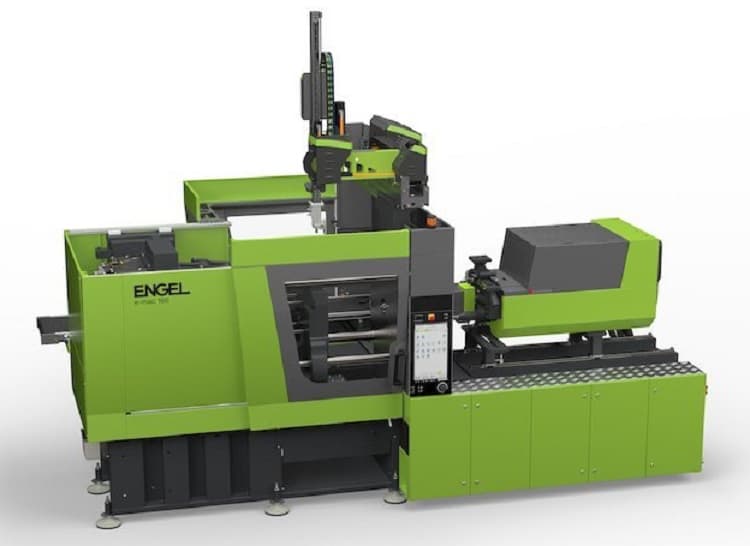
The ENGEL Group, a global leader in injection moulding machinery, reported a turnover of approximately EUR 1.5 billion for the 2024/25 financial year. While revenues declined by nearly 10% due to subdued market activity, ENGEL showcased remarkable resilience. The company successfully defended its position against European competitors and continued to grow its global market share.
“We’ve learned how to stay agile during crises,” said Stefan Engleder, CEO of ENGEL Group. “This year, we once again proved ENGEL’s ability to operate with foresight, even in challenging conditions.” Recycled Textile Waste
Strategic Focus Across Key Regions
A Triad Approach: Europe, Americas, and Asia
To navigate global demand fluctuations, ENGEL relies on a robust triad strategy—focusing on regional strength across Europe, the Americas, and Asia. Each hub operates independently, offering sales, production, support, and after-sales services. This localized approach ensures faster response times and greater customer proximity.
Boosting Service and Automation
ENGEL has rolled out key initiatives to improve automation and service delivery. These efforts aim to maximize uptime for customers and reinforce ENGEL’s reputation as a dependable partner, especially in turbulent times.
“Our mission is clear,” said Engleder. “We want to ensure maximum system availability across the full product lifecycle.”
Sector Highlights: Growth Amid Disruption
The company made strategic gains across several industries. While the automotive sector continues to face long-term uncertainties, ENGEL is seeing increased interest in lightweight construction and sustainable materials. In technical moulding, the brand’s expertise helped secure a stronger market position despite broader declines.
The Packaging division saw robust demand, bolstering overall performance. Meanwhile, the Medical segment remained steady, with interest in auto-injector applications helping offset minor losses.
Investing in the Next Generation
Global Apprenticeship Program
ENGEL’s commitment to workforce development remains strong. Currently, 397 apprentices are in training worldwide, with 227 located in Austria alone. In a competitive job market, this focus on young talent is central to ENGEL’s long-term innovation strategy.
“We’re investing in hands-on training and international career development,” Engleder explained. “It’s how we ensure a strong pipeline of skilled professionals and maintain our edge in innovation.” Recycled Textile Waste
Coca-Cola Revises Bottle Recycling Claims Under EU Pressure
EU Pushes for Transparency in Recycling Labels
Coca-Cola has agreed to revise its recycling claims after mounting pressure from the European Commission and consumer advocacy groups across Europe. The beverage giant will no longer claim its plastic bottles are made from “100% recycled plastic.” Instead, it will clarify that certain parts of the packaging—specifically the cap and label—are not made from recycled materials.
The move follows a November 2023 complaint from EU consumer groups accusing Coca-Cola of greenwashing—misleading consumers about the environmental impact of its packaging. Recycled Textile Waste
From “Recycle Me Again” to “Recycle Me”
In another notable shift, Coca-Cola will change the slogan printed on its bottles. Previously, bottles urged customers to “Recycle me again,” suggesting a closed-loop system. The new messaging—simply “Recycle me”—is aimed at presenting a more realistic picture of the recycling process, emphasizing that not every part of the bottle returns as part of another.
The European Commission praised the decision, noting that while Coca-Cola’s new commitments are voluntary and do not constitute legal wrongdoing, they demonstrate a willingness to align with broader environmental transparency goals.
Consumer Watchdogs Will Keep an Eye
The Consumer Protection Cooperation (CPC) Network, which coordinates enforcement actions across all 27 EU member states, will monitor Coca-Cola’s implementation of the new recycling messages. Recycled Textile Waste
Coca-Cola stated:
“These voluntary commitments reflect our shared ambition with the CPC Network to provide clear and factual information to consumers.”
The beverage company emphasized that these changes will be rolled out in the coming months as part of ongoing packaging updates.
Other Bottlers Under the Microscope
Consumer rights organizations welcomed the announcement. The BEUC (European Consumer Organisation) hailed the news as a positive step but stressed the importance of follow-through.
“We expect authorities to monitor if Coca-Cola turns their words into deeds,” BEUC said, calling for enforcement if promises are not kept.
The European Commission added that it will be evaluating other major bottling companies to ensure they follow the same transparency standards regarding recycling claims. Recycled Textile Waste
Final Thoughts
Coca-Cola’s shift signals a broader push for honest environmental communication across the industry. As sustainability messaging faces growing scrutiny, companies must back their words with transparent and verifiable practices.

GRECO Project Launches Greener, Safer Bioplastics for Food Packaging
A major step towards sustainable food packaging is underway with the launch of the GRECO project, a Horizon Europe-funded initiative focused on biobased, biodegradable, and recyclable packaging solutions. With 22 partners across Europe, including TotalEnergies Corbion, AIMPLAS, and Innotech Coexpan-Emsur, the project is led by the Aristotle University of Thessaloniki (AUTH). Recycled Textile Waste
What Is GRECO?
GRECO (Green and Safe Bioplastics for Food Packaging) aims to develop novel PLA copolymers, green catalysts, additives, and functional coatings based on a Safe and Sustainable by Design (SSbD) approach. These solutions will meet the new requirements of the EU Packaging and Packaging Waste Regulation, tackling both performance and environmental impact.
From Lab to Market
The project will scale packaging prototypes for flexible and rigid applications—ideal for cheese, processed meat, fresh meat, berries, and nuts. These materials will be designed to prevent moisture and aroma loss while extending shelf life.
AIMPLAS, hosting the kick-off in Valencia (16–17 June 2025), is spearheading reactive extrusion (REX) techniques to create tailor-made PLA copolymers. According to Belén Monje, these advancements will enhance safety, sustainability, and industrial readiness (up to TRL 7). Recycled Textile Waste
Innovation Through Collaboration
TotalEnergies Corbion is developing new PLA copolymers with improved functionality, recyclability, and lower carbon footprints. Jenifer Mitja notes that PLA’s biobased nature and broad availability make it a key player in circular packaging innovation.
The project will also explore advanced end-of-life strategies, such as:
- Mechanical and chemical recycling
- Open and closed-loop systems
- Biodegradability in marine, soil, and water
- Industrial and home composting
Certification bodies like TÜV AUSTRIA and DIN CERTCO will use GRECO’s findings to evolve compostability standards.
Consumer-Centric and Policy-Aligned
To ensure adoption, the GRECO team will gather insights into consumer preferences regarding sustainability, usability, and accessibility. Recycled Textile Waste
GRECO contributes directly to key EU policies including the:
- Circular Economy Action Plan
- Plastics Strategy
- Single-Use Plastics Directive
According to Hasso von Pogrell, Managing Director of European Bioplastics, this project exemplifies how collaboration, innovation, and policy can drive Europe’s bioeconomy forward.
Funded for Impact
GRECO is backed by €7.6 million
Consumer Insight and Policy Impact
Beyond the lab, GRECO will gather insights on consumer perceptions and values related to sustainability and usability. These findings will shape product development and market adoption.
The project is expected to significantly contribute to EU initiatives like the Plastics Strategy, Circular Economy Action Plan, and Single-Use Plastics Directive.
“This collaboration is a perfect model for a strong EU Bioeconomy Strategy,” said Hasso von Pogrell, Managing Director of European Bioplastics.
Project Funding
GRECO is backed by €7.6 million in funding from the European Union’s Horizon Europe Research and Innovation Programme under Grant Agreement No. 10117766. Recycled Textile Waste

HUGO BOSS Unveils NovaPoly: A Revolutionary Yarn from Recycled Textile Waste
NovaPoly is an eco-innovative yarn developed from recycled textile waste, launching globally in October 2025 as part of the BOSS Green collection.
A Game-Changer in Sustainable Fashion
HUGO BOSS has introduced NovaPoly, an innovative recycled polyester yarn developed in collaboration with Jiaren Chemical Recycling and NBC LLC. Crafted from both post-consumer and production textile waste, NovaPoly marks a significant step forward in circular fashion. This high-performance material supports the company’s BOSS THE CHANGE sustainability initiative and aims to reduce the environmental impact of microplastics. Recycled Textile Waste
Exclusive Use and Global Rollout
HUGO BOSS currently holds the trademark and exclusive usage rights for NovaPoly for the first year. The yarn will debut in October 2025 as part of the BOSS Green product line, featured in performance wear pieces from the Spring/Summer 2026 collection. Products containing NovaPoly will be available online, in BOSS retail stores, and through selected wholesale partners around the world.
Designed for Degradability
What sets NovaPoly apart is its integration of a natural additive that allows the yarn to behave more like natural fibers in the environment. This innovation makes the material degradable, addressing one of the fashion industry’s biggest challenges: microplastic pollution. The development reflects HUGO BOSS’ ongoing commitment to pushing boundaries in textile innovation.
Beyond BOSS: A Future Licensing Model
While NovaPoly will initially be exclusive to the BOSS and HUGO brands, HUGO BOSS is already exploring a licensing model. This move will allow other fashion companies to access and adopt the sustainable yarn, aiming to elevate eco-conscious practices across the industry. Recycled Textile Waste
A New Chapter in Eco-Innovation
NovaPoly builds on the brand’s previous advancements, such as the partnership with HeiQ AeoniQ to develop alternatives to traditional polyester and polyamide. By investing in sustainable materials and future-facing partnerships, HUGO BOSS is setting a new benchmark for responsible fashion.