Horizontal Recycling – Toyoda Gosei Pioneers Horizontal Recycling of Automotive Plastics CO₂ Reduction and Circular Economy Goals Drive Next-Generation Recycling Technology ? Sustainable Innovation: Recycling Plastics from End-of-Life Vehiclesg – 26-05-2025 - Archive
PET Milk Bottles – Trützschler’s TRUECYCLED Yarn Powers Sustainable Luxury in Lotus Electric Vehicles In a groundbreaking collaboration between Trützschler and Brain of Materials, Lotus has taken a bold step forward in sustainable design

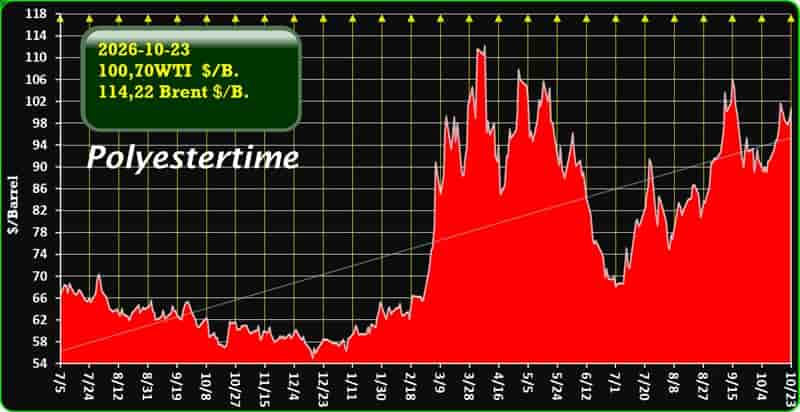
Crude Oil Prices Trend

♻️ Toyoda Gosei Pioneers Horizontal Recycling of Automotive Plastics
CO₂ Reduction and Circular Economy Goals Drive Next-Generation Recycling Technology
? Sustainable Innovation: Recycling Plastics from End-of-Life Vehicles
Toyoda Gosei Co., Ltd. has unveiled an advanced recycling technology that enables the reuse of high-quality plastic from end-of-life vehicles (ELVs) in new automotive components. Developed in response to tightening environmental regulations and growing demand for recycled materials, this breakthrough promotes a decarbonized, circular economy and will debut in vehicles such as the Toyota Camry sold worldwide from 2024.
Overcoming Challenges in Automotive Plastic Recycling
Traditional recycling methods have struggled to yield plastic with properties comparable to new materials due to impurities, leading to limited reuse or incineration for energy recovery. In contrast, Toyoda Gosei’s new method achieves the same mechanical performance as virgin plastic, even when using 50% recycled polypropylene sourced from ELVs. Horizontal Recycling
This milestone was achieved through a partnership with Isono Co., Ltd. to secure reliable recycled raw materials, alongside Toyoda Gosei’s proprietary material modification technology. The resulting recycled plastic meets the strict performance standards of automotive interior parts, enabling practical, scalable application.
Horizontal Recycling: A World First for Automotive Interiors
This innovation marks the world’s first use of 50% ELV recycled plastic in automotive interior parts such as glove boxes, which require superior impact resistance. The adoption of this recycled material in production processes reduces CO₂ emissions by up to 40% — depending on product size and other factors — as validated by the IDEA system developed by Japan’s National Institute of Advanced Industrial Science and Technology. Horizontal Recycling
? Future Goals: Expanding Recycled Plastic Applications by 2030
Toyoda Gosei is committed to the ongoing development of recycled plastics and rubber technologies as a pillar of its 2030 Business Plan for decarbonization. Looking ahead, the company plans to expand the use of recycled materials to broader automotive components, including design elements, and continually enhance the quality of recycled plastics to meet evolving market and regulatory demands.
Under the European Commission’s ELV directive, the use of recycled plastic in new vehicles may become mandatory from 2031 onward, positioning Toyoda Gosei’s technology as a pivotal advancement for sustainable automotive manufacturing.

Safeguarding the Future of Plastics Recycling in Europe
Urgent Action Needed to Rescue a Strategic Industry and Protect the EU’s Circular Economy Goals
The Crisis Facing Europe’s Plastics Recycling Sector
Europe’s plastics recycling industry is in the midst of a deepening recession, with numerous recycling businesses being forced to close. This alarming trend threatens to accelerate deindustrialisation across the continent and jeopardizes the European Union’s environmental and circular economy objectives.
In response to this crisis, Plastics Recyclers Europe (PRE) has issued a detailed position paper identifying six strategic action areas that demand immediate policy intervention.
A Call to Action: Six Urgent Strategic Measures Horizontal Recycling
“We urge policymakers to implement these six strategic actions – ranging from trade defence mechanisms to fiscal incentives — to address the deep recession we are experiencing,” said Ton Emans, President of Plastics Recyclers Europe. “Plastics recycling must be recognized as a key sector for the EU’s competitiveness and environmental success — and it must be protected accordingly.”
PRE emphasizes the need to address the persistent influx of low-cost, unverified plastic imports — both virgin and recycled — which are distorting the market, eroding fair competition, and threatening Europe’s circular economy. Horizontal Recycling
⚙️ Restoring Market Balance and Supporting Recyclers
To stabilize the market and ensure fair competition, PRE recommends the following measures:
- ? Tariffs and trade defence tools on imported plastics
- ?️ Robust verification systems for recycled materials
- ? Dedicated customs codes for recycled polymers
- ? Enhanced import surveillance mechanisms
- ⚡ Targeted subsidies and tax relief to offset high energy costs
- ? Simplification of compliance procedures for recyclers
These strategic measures aim to mitigate rising operational expenses and reduce administrative burdens that disproportionately affect recycling businesses across the EU.
Plastics Recycling: A Strategic Pillar of Sustainability
Protecting the plastics recycling sector is critical not only for achieving Europe’s climate targets but also for:
- ? Safeguarding public health Horizontal Recycling
- ? Upholding environmental and regulatory standards
- ? Preserving industrial competitiveness and innovation
The time for action is now. The European Union must recognize plastics recycling as a strategic industry and deploy the necessary policies to secure its future — for the planet, for public welfare, and for the integrity of a truly circular European economy.

? Vioneo Champions Fossil-Free Plastics with Green Methanol Breakthrough
A New Era in Sustainable Plastics
Headquartered in Antwerp, Vioneo is a trailblazing company committed to reshaping the future of plastic production. A subsidiary of A.P. Moller Holding, Vioneo’s mission is clear: produce fossil-free polyolefins using green methanol as a sustainable feedstock, significantly cutting carbon emissions associated with traditional plastics.
“We envision a future where plastics are circular,” said CEO Alex Hogan. “Green methanol allows us to break free from fossil-based materials and forge a new path forward.”
What Is Green Methanol?
Green methanol is produced through environmentally friendly processes like biomass gasification, electrolysis of water, and carbon capture utilization. Unlike conventional methanol derived from fossil fuels, green methanol provides a clean and scalable solution for fuels, chemicals, and packaging. Horizontal Recycling
The global green methanol market, valued at $2.6 billion in 2024, is expected to grow to $17.39 billion by 2034 at a CAGR of 20.92%.
Biomethanol: Vioneo’s Primary Feedstock
Vioneo primarily utilizes biomethanol from agricultural waste as its key feedstock. Hogan notes, “We label it green methanol to keep our future options open, including scaling with e-methanol—derived from renewable hydrogen and captured CO₂.”
Why Antwerp? Strategic Location and Synergies
Antwerp offers a strategic combination of port access, a robust chemical ecosystem, and renewable energy infrastructure. Vioneo is capitalizing on existing partnerships, including land and logistics support from Vopak. Horizontal Recycling
“Antwerp is ideal—close to major markets in the Benelux and rich in renewable energy potential,” said Hogan.
⚙️ Cutting-Edge Technology: Partnering with Honeywell
Vioneo has licensed Honeywell UOP’s Methanol-to-Olefins (MTO) technology to convert green methanol into ethylene and propylene. These olefins will be used to produce:
- 200,000 tonnes of polypropylene (PP)
- 100,000 tonnes of low-density polyethylene (LDPE)
“We’re building an electrified, efficient facility optimized for energy savings and circularity,” Hogan emphasized.
Permitting and Public Engagement
Unlike conventional petrochemical plants, Vioneo’s facility is designed with a minimal carbon footprint and strong regulatory alignment. “Engaging with the community and stakeholders early is essential,” said Hogan. The company is conducting environmental impact studies in collaboration with Wood Group. Horizontal Recycling
♻️ True Circularity and Emission Reductions
Vioneo’s operations are expected to cut 1.5 million tons of CO₂ annually—equivalent to 15 million tons over a decade. This reduction plays a vital role in enabling a fully circular economy for plastics.
“True circularity means reusing atmospheric carbon instead of extracting new fossil carbon. That’s what we’re doing,” Hogan noted.
Looking Ahead: Global Expansion Plans
The initial plant will cost approximately €1.5 billion, with a final investment decision expected by late 2025. “Once greenlit, we’ll build our first facility and start planning our second,” Hogan said. Vioneo is already envisioning a global footprint backed by the strength of A.P. Moller Holding. Horizontal Recycling
Complementing Recycling Technologies
Mechanical, physical, and chemical recycling will all play roles in plastic circularity—but Vioneo sees non-fossil virgin feedstock as the critical missing link. “Some sensitive applications require pure, traceable resins—green methanol makes that possible,” said Hogan.
About Vioneo
Vioneo is dedicated to producing fossil-free polyethylene and polypropylene from sustainable green methanol. As part of the A.P. Moller Group, Vioneo is leading the charge toward circular, low-emission plastics production.
About A.P. Moller Holding
Based in Copenhagen, A.P. Moller Holding is the investment arm of the A.P. Moller Foundation, supporting ventures that drive societal impact, decarbonization, and innovation—spanning shipping, packaging, wind energy, and now sustainable plastics through Vioneo. Horizontal Recycling

? NOVA Chemicals Commissions One of the World’s Largest Polyethylene Film Recycling Facilities
Launch of SYNDIGO1 Facility in Indiana
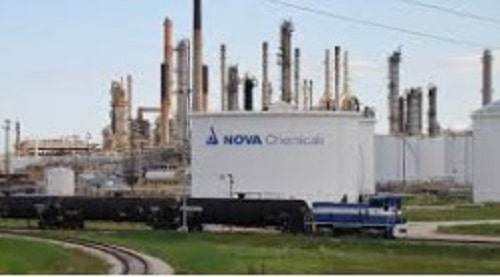
NOVA Chemicals has officially commissioned SYNDIGO1, its first polyethylene (PE) film recycling facility in Connersville, Indiana. Spanning 450,000 square feet, the plant is now among the largest and most advanced mechanical plastic film recycling facilities globally.
Once fully operational by early 2026, SYNDIGO1 will recycle approximately 145,000 bales of post-consumer plastic film annually, yielding over 100 million pounds of SYNDIGO™ recycled PE (rLLDPE) for food and non-food packaging applications.
Grand Opening and Industry Participation
The grand opening event welcomed around 100 attendees including:
- NOVA Chemicals CEO Roger Kearns Horizontal Recycling
- Novolex Chairman and CEO Stan Bikulege
- Indiana government officials and local legislators
- Representatives from EPC firms, OEMs, Novolex, and customers
The ceremony celebrated 22 months of development—planning, construction, and scale-up—culminating in a world-class facility ready to advance mechanical PE recycling at scale.
♻️ Recycling Milestones and Certifications
SYNDIGO1 achieved several key milestones:
- ✅ FDA Letter of Non-Objection in 2024 for food-contact applications
- ? Recycled Material Standard (RMS) certification in April 2025
- ? 3 of 4 lines operational; full capacity by end of 2025
Market Demand & Industry Partnerships
“There’s strong interest from converters, retailers, and brand owners,” noted CEO Roger Kearns. “SYNDIGO1 enhances our ability to meet the increasing demand for recycled PE with high-quality, sustainable products.” Horizontal Recycling
NOVA is collaborating with key partners including:
- Charter Next Generation
- M.Holland
- Osterman & Company
- Petoskey Plastics
- Pregis
- Sigma Plastics Group
- Winpak
According to McKinsey, demand for post-consumer recycled plastic is projected to triple by 2030 to 90 million tons.
From Waste to High-Quality Feedstock
The facility sources clean, consistent feedstock from major retailers and distribution centers. Horizontal Recycling
It processes about 400 bales per day, equating to over 14,000 per month—the volume diverted from landfills annually could fill four football fields to the goalposts.
The recycled output—SYNDIGO rLLDPE—meets FDA standards and is suitable for a wide range of packaging, from trash liners to freezer-grade food packaging.
Community Investment in Connersville
In conjunction with the launch, NOVA Chemicals announced a $25,000 donation to the Fayette Community Foundation to establish a Community Impact Fund.
This grant supports local initiatives such as:
- Youth development & education
- Health & human services
- Public safety and civic improvements Horizontal Recycling
The fund will receive an additional $50,000 match from the Lilly Endowment Inc.
About the Organizations
NOVA Chemicals
NOVA Chemicals is committed to innovating in the design, production, and recycling of plastics. Headquartered in Calgary, Canada, and owned by the Mubadala Investment Company of Abu Dhabi, it employs 2,600 professionals worldwide. Visit www.novachem.com or follow on LinkedIn.
Novolex
Novolex is a global packaging leader supporting foodservice, grocery, retail, and industrial sectors. Their commitment to sustainable innovation includes two world-class plastic film recycling centers. Learn more at www.novolex.com. Horizontal Recycling
Fayette Community Foundation
This nonprofit enhances quality of life in Fayette County, Indiana, through philanthropy, grantmaking, and community partnerships.
Tribunal Finds Reasonable Indication of Injury: Polyethylene Terephthalate from China and Pakistan
Source: Canadian International Trade Tribunal
Overview of the Determination
The Canadian International Trade Tribunal (CITT) has announced its determination that there is a reasonable indication of injury to the domestic industry due to the dumping and subsidizing of polyethylene terephthalate (PET) originating from or exported by the People’s Republic of China and the Islamic Republic of Pakistan.
Background: Initiation of Investigations
This inquiry was initiated under the Special Import Measures Act, following investigations launched by the Canada Border Services Agency (CBSA). The CBSA is tasked with continuing its investigations and is scheduled to issue preliminary determinations by June 17, 2025.
Mandate of the Canadian International Trade Tribunal
The CITT is a quasi-judicial and independent body that reports to Parliament via the Minister of Finance. Its primary functions include:
- Adjudicating cases related to dumped and subsidized imports
- Reviewing safeguard complaints Horizontal Recycling
- Handling federal procurement complaints
- Managing appeals on customs and excise tax rulings
Additionally, the Tribunal may offer advisory services to the federal government on economic, trade, and tariff issues upon request.
Next Steps
The CBSA’s findings expected in June 2025 will provide further clarity on the extent of dumping and subsidization, and determine whether duties or other trade remedies will be applied to imports of PET from the identified countries. Horizontal Recycling
? For more information, visit the official site of the Canadian International Trade Tribunal.