PTA and PET – China’s Ministry of Industry and Information Technology (MIIT) has convened leading petrochemical firms to tackle overcapacity in key sectors like PTA and PET, aiming to restore profitability and streamline production. 29-10-2025
PTA and PET – Context and Purpose
China’s petrochemical sector is facing a serious challenge: overcapacity in fibre- and plastic-related chemicals. The Ministry of Industry and Information Technology (MIIT) has summoned major producers involved in the production of purified terephthalic acid (PTA) and bottle-grade polyethylene terephthalate (PET) chips. The meeting aims to obtain detailed information on production capacity, output, demand, profitability and projects underway.
Overcapacity and Margin Pressure
Both the PTA and PET segments are experiencing large increases in capacity that outpace demand. For example, bottle-grade PET chip production capacity in China has doubled in the last three years to 22 million metric tons. PTA capacity has likewise doubled since 2019 to 92 million metric tons, according to data from China Chemical Fibre. PTA and PET
Despite technology improvements — where more than 60 % of PTA capacity uses advanced units by 2025 — margins remain negative. Advanced units report losses around 21 yuan per ton while older units lose as much as 561 yuan per ton. Reuters
Policy Response from Beijing
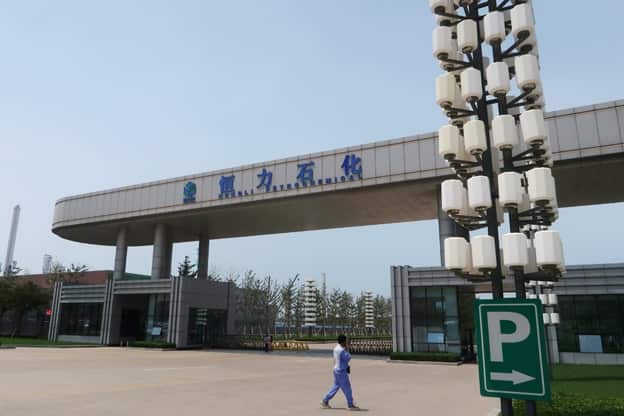
MIIT is exerting pressure on industry leaders to provide transparent data and signal the need for structural adjustment. The meeting invites companies that account for roughly 75 % of China’s PTA market share, including major players such as Zhejiang Yisheng Petrochemical, Hengli Petrochemical, Tongkun Group, Xin Feng Ming Group, Shenghong Petrochemical and Sanfangxiang Group. Reuters+1
The broader policy context sees Beijing aiming for more than 5 % growth in the added value of petrochemical output in 2025-26, while simultaneously restraining capacity expansion and phasing out outdated units.
Challenges for the Industry
The term “involution” is used in China to describe a kind of destructive internal competition where relentless capacity expansion leads to margin erosion rather than growth. The PTA and PET sectors are living examples of this: wild competition drives down profitability even as output rises.
Tariffs from the U.S. have further squeezed export-related upstream segments, especially those tied to textiles and apparel downstream from PTA, adding pressure on margins.
What This Means Going Forward
The MIIT-led meeting signals that China’s government intends to impose more discipline on its petrochemical growth model. By requiring detailed data and oversight, Beijing is preparing to guide the industry toward consolidation, capacity adjustment and higher quality output.
Key anticipated outcomes include:
-
Slower new capacity additions in the PTA and PET segments.
-
Potential closures or upgrades of older, inefficient production units.
-
Greater emphasis on profitability, market alignment and export resilience.
-
Structural shifts in the supply chain from volume-driven growth to value-driven growth.
Why It Matters Globally
Given the size and growth of China’s petrochemical sector, changes there ripple across global supply chains. Overcapacity in China has weighed on global margins and shifted trade flows. Efforts to rationalise capacity could tighten global supply, support margins and create new strategic dynamics for downstream industries including textiles, plastics and recycling.

Summary
China’s MIIT has summoned the major PTA and PET producers to respond to overcapacity and falling margins. With capacity having doubled in some cases and older units losing hundreds of yuan per ton, pressure is mounting to restructure the petrochemical landscape. Policy shifts are underway and the sector may see slower growth, consolidation and a renewed focus on value rather than sheer volume.