Europe strategic independence – Davos Revealed Europe’s Strategic Awakening as Markets, Power, and Political Resolve Finally Forced the United States to Recalculate Its Global Ambitions 24-01-2026
Europe strategic independence
A Turning Point Revealed at Davos
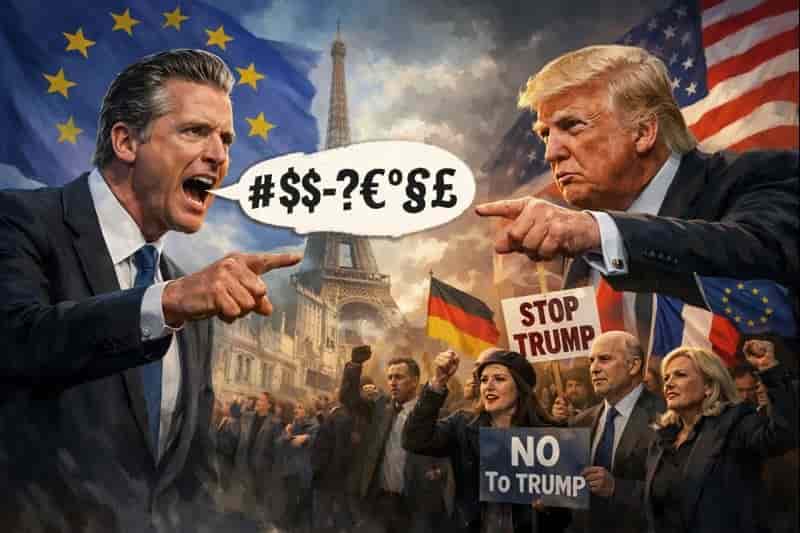
At Davos, it became clear that something fundamental had changed. Not in rhetoric, not in official declarations, but in how power, markets, and political credibility interacted in real time. Donald Trump, at least for now, will not pursue an invasion of Greenland. This restraint was not born from a sudden respect for multilateral norms or international law. It emerged from a colder calculation: fear of market backlash and a potential flight of investment from the United States.
That reaction alone would not have been remarkable. What matters is why it happened. Markets do not move in a vacuum. They respond to signals of strength, coordination, and credible resistance. The real shift at Davos was Europe’s ability to project all three simultaneously. Europe strategic independence
Why Europe’s Stance Changed Market Expectations
Had Europe continued along its familiar path of hesitation, preemptive compromise, and internal division, the idea of American unilateral action on Greenland would have been interpreted as inevitable. Markets would have priced it in quietly. Instead, Europe stood its ground, and that changed everything.
This moment did not reflect an abstract awakening of Europe or the sudden effectiveness of EU institutions. It reflected the actions of those who currently lead the continent in practical terms. A small but decisive group of countries, often referred to as the Coalition of the Willing, chose a mature strategic posture. They defended European interests even at the cost of heightened tension. Europe strategic independence
This stance neither frightened nor reassured financial markets. It clarified the balance of power. Markets understood that unilateral US action would no longer be cost-free. Political resistance would be organized, measurable, and backed by concrete instruments.
The Strategic Signal Behind Europe’s Military Presence
One of the most significant signals was the deployment of European military contingents to Greenland. Their size was modest, and their operational capacity limited. That was never the point. Europe strategic independence
What mattered was symbolism backed by irreversibility. Europe demonstrated a willingness to place tangible assets on the table rather than relying on statements and summits. This kind of commitment cannot be quietly undone. It communicates seriousness, not escalation for its own sake.
This is also the political language Donald Trump understands best. He has always maintained an instinctive relationship with financial markets. When markets tremble, he listens. But for markets to react, they must believe that resistance is real. At Davos, Europe made that belief credible.
Strategic Independence Without Isolation
The lesson emerging from Davos is straightforward but demanding. If Europe wants to escape a permanent defensive posture, it must become independent. Not autarchic. Not hostile. Independent in the functional sense of standing on its own. Europe strategic independence
Strategic independence means resilience across energy, industrial capacity, technological sovereignty, and defense planning. Above all, it requires strategic autonomy in decision-making. The assumption that the global system would remain predictable, benevolent, and rules-based has expired. The last thirty years of strategic torpor are over. Europe strategic independence
This reality was articulated clearly in Davos by Canadian Prime Minister Mark Carney, who underscored that power vacuums do not remain empty. They are filled quickly by those prepared to act.
Europe’s Internal Contradictions
Against this backdrop, two European behaviors stand out in sharp contrast.
The first is the geopolitical infantilism displayed by the European Parliament in its recent vote to refer the EU-Mercosur trade agreement to the Court of Justice of the European Union. This move reflects a deep misunderstanding of global economic competition. The protectionist reflex once symbolized by the French Polish plumber narrative has now resurfaced as anxiety over Argentine farmers. Europe strategic independence
Such thinking weakens Europe’s credibility precisely when it needs to project coherence. Trade policy is no longer a purely economic instrument. It is a strategic tool tied directly to influence, alliances, and supply chain security.
Italy’s Ambiguous Posture
The second contradiction lies in the attitude of the Italian government. Once again, Italy has positioned itself as an Atlantic bridge, presenting mediation as a virtue in itself. This posture is ineffective in a context where the core issue is not dialogue, but respect. Europe strategic independence
Bridge-builders are irrelevant when power relationships are being tested. Influence belongs to those who arrive at the table with clarity, leverage, and the willingness to say no. Strategic ambiguity is mistaken for flexibility, but it often translates into marginalization. Europe strategic independence
At Davos, the lesson was unambiguous. Credibility does not come from rhetorical balance. It comes from defined interests and the capacity to defend them.
Why Davos Marked a Structural Shift
What emerged at Davos was not a temporary alignment of circumstances, but a structural change in how Europe interacts with markets and power. For the first time in years, European political action preceded market reaction, rather than following it.
This inversion matters. It signals that Europe can shape expectations instead of merely absorbing shocks. Strategic independence, when practiced consistently, reduces volatility rather than increasing it. Markets reward clarity even when it introduces friction. Europe strategic independence
Davos revealed that Europe no longer has the luxury of strategic hesitation. It also revealed that when Europe acts decisively, even the United States recalibrates.
More…