Landmark Investment Boosts Food-Grade rPET Recycling Across Europe
Landmark Investment Boosts Food-Grade rPET Recycling Across Europe
Key Takeaways
-
Industrial Scale: Located in Torremejía, Badajoz, TorrePet operates Spain’s only bottle-to-bottle processing facility with an annual capacity of 50,000 tonnes of food-grade rPET pellets.
-
Regulatory Catalyst: The deal coincides with major European Union regulatory shifts, including the November 21, 2026 ban on EU plastic waste exports to non-OECD countries and updated food-contact recycled plastic compliance rules effective November 18, 2026. food-grade rPET recycling
-
Fund Milestone: The transaction marks the seventh and final investment for the Buenavista Infraestructuras Iberia I fund, bringing its committed capital deployment to 100%.
Europe’s circular packaging sector is undergoing a decisive structural shift as tightening environmental rules collide with institutional infrastructure capital. Nowhere is that convergence clearer than in southwestern Spain, where specialized infrastructure investor Buenavista Infrastructure has finalized the acquisition of a 30% equity stake in Extremadura TorrePet, S.L. from packaging group Valgroup.
Executed through the investment vehicles Buenavista Infraestructuras Iberia I, FCR and Buenavista Infraestructuras Coinversión I, SCR, the transaction pairs Buenavista with global environmental services leader Veolia, which retains the remaining 70% ownership in the Spanish recycler. Beyond signaling sustained private appetite for environmental assets, the deal arrives at a pivotal regulatory moment for European plastics. food-grade rPET recycling
Why European Plastic Rules Are Accelerating Domestic Recycling
For years, Europe’s packaging industry relied partly on exporting lower-grade plastic waste abroad while importing virgin polymers to meet manufacturing demand. That model is rapidly closing. Under the revised European Union Waste Shipment Regulation, a strict ban prohibiting EU exports of plastic waste to non-OECD countries officially entered into force on November 21, 2026. Remaining in effect until at least May 2029, the restriction forces member states to manage and process far more plastic waste within European borders. food-grade rPET recycling
Simultaneously, Brussels has tightened quality and traceability standards for recycled materials entering the food and beverage supply chain. Commission Regulation (EU) 2026/2376, which began applying on November 18, 2026, updated EU rules on recycled plastic food-contact materials by introducing electronic registration for decontamination installations, clearer technical specifications for pre-processed inputs, and streamlined compliance declarations across the value chain.
Together with the broader EU Packaging and Packaging Waste Regulation (PPWR) mandates taking shape toward 2030 recycled-content targets, these rules have turned certified food-grade rPET recycling capacity from a sustainability niche into critical industrial infrastructure. Beverage brands and packaging converters face mounting legal pressure to secure reliable, traceable supplies of post-consumer resin that meet strict European food-safety standards. food-grade rPET recycling
Inside Extremadura TorrePet’s Bottle-to-Bottle Advantage
Founded in 2005 in the municipality of Torremejía (Badajoz), roughly 15 kilometers from Mérida, Extremadura TorrePet established itself early as the Iberian Peninsula’s first dedicated polyethylene terephthalate (PET) recycler. Over two decades, the facility has grown into a European benchmark for circular polymer manufacturing. food-grade rPET recycling
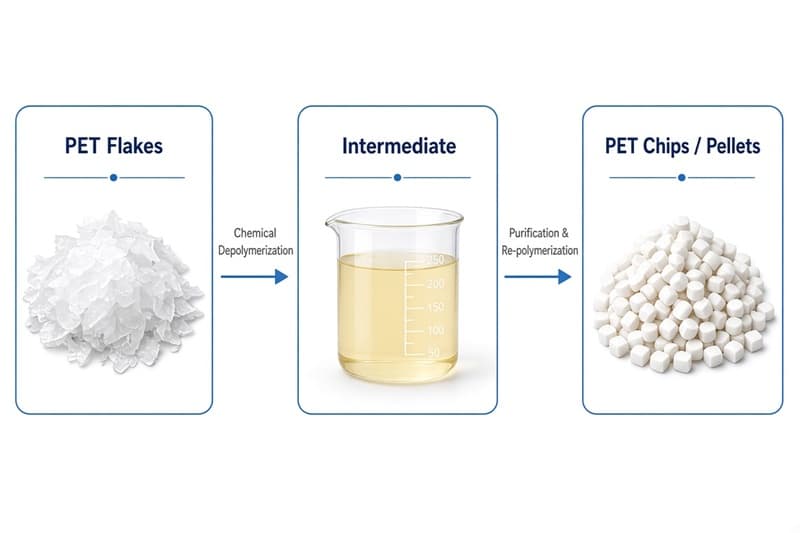
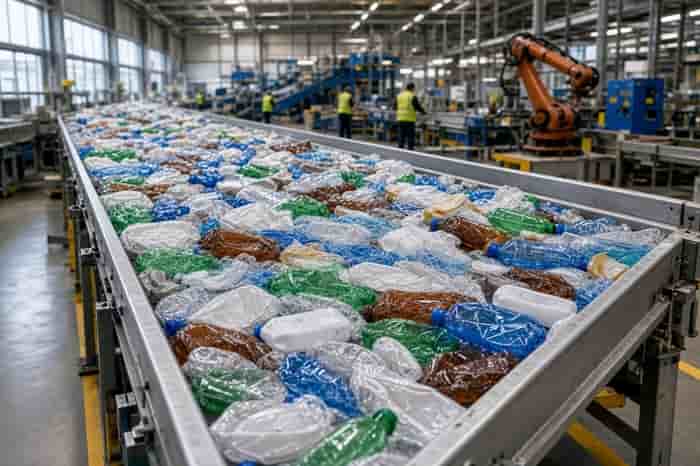
Unlike mechanical recyclers that downcycle collected bottles into lower-value fibers or strapping, TorrePet operates across every stage of the rPET production value chain and runs the only plant in Spain equipped with full bottle-to-bottle processing capability. Its lines process up to 50,000 tonnes of used PET annually, transforming post-consumer waste directly into high-purity, food-grade rPET pellets ready for manufacturing new beverage bottles.
Regulatory accreditation forms a central pillar of the plant’s competitive moat. Holding six industry certifications, TorrePet stands as the most accredited plastic recycling company in Spain. Notably, it became the country’s first plastic recycling facility to earn official End-of-Waste certification under the regulatory framework approved by Spain’s Ministry for Ecological Transition and Demographic Challenge—a designation confirming that its output meets rigorous technical and environmental safety criteria equivalent to primary raw materials. food-grade rPET recycling
Institutional Capital Moves Into Environmental Infrastructure
For Buenavista Infrastructure, the subsidiary of mid-market private capital manager Buenavista Equity Partners, entering TorrePet’s shareholder base represents both a strategic sector expansion and a major fund milestone. The transaction marks the firm’s direct entry into the waste treatment industry while completing the seventh and final investment of its Buenavista Infraestructuras Iberia I fund, which has now deployed 100% of the capital committed by its investors.
Infrastructure funds traditionally favor assets with predictable cash flows, high barriers to entry, and long-term regulatory tailwinds. High-specification recycling plants fit that profile increasingly well as European legislation mandates circularity and restricts virgin plastic reliance. food-grade rPET recycling
Victoriano López-Pinto, Managing Partner at Buenavista Infrastructure, emphasized the operational and strategic rationale behind the partnership with Veolia. Adding TorrePet brings a technologically leading food-grade rPET producer into the portfolio at a time of deep market transformation, while co-investing alongside a global environmental operator provides a platform for continued European growth and reinforces the fund’s Environmental, Social, and Governance (ESG) commitments.
On the selling side, Valgroup framed the divestment as an exercise in disciplined capital allocation rather than a retreat from circularity. Executive Director Lucas Geronimi noted that recycling remains a core pillar of Valgroup’s long-term industrial vision, and the transaction enables the packaging manufacturer to redeploy capital toward assets more closely aligned with its broader European industrial strategy while leaving TorrePet positioned to scale under Veolia and Buenavista. food-grade rPET recycling
A Diversified Blueprint for Iberian Infrastructure
With the addition of Extremadura TorrePet, Buenavista Infraestructuras Iberia I closes out a portfolio spanning mobility, environmental services, leisure, and digital infrastructure across Spain. Alongside the Badajoz recycling plant, the fund holds stakes in:
-
Transport Concessions: Two shadow toll motorways—Autovía del Eresma in Castilla y León and Autovía de los Viñedos in Castilla-La Mancha.
-
Coastal Leisure Assets: Three recreational marinas situated in Premià de Mar (Barcelona), Burriananova (Castellón), and Arrecife (Lanzarote).
-
Data and AI Infrastructure: Xoople, a technology firm focused on terrestrial data collection powering artificial intelligence applications for transportation, civil engineering, and climate adaptation.
As the European Union enforces its November 2026 plastic export restrictions and tightens food-contact traceability rules, facilities capable of turning domestic plastic waste back into certified food-grade packaging sit at the center of Europe’s green industrial transition. Backed by Veolia’s operational scale and Buenavista’s infrastructure capital, Extremadura TorrePet illustrates how regulatory enforcement is translating directly into long-term investment on the ground. food-grade rPET recycling
Powering Growth: PET Catalyst Market Gains Momentum as rPET Expansion Creates New Opportunities Through 2035
More…