News and industry information
Altilium battery patent
Altilium Wins Crucial UK Battery Patent
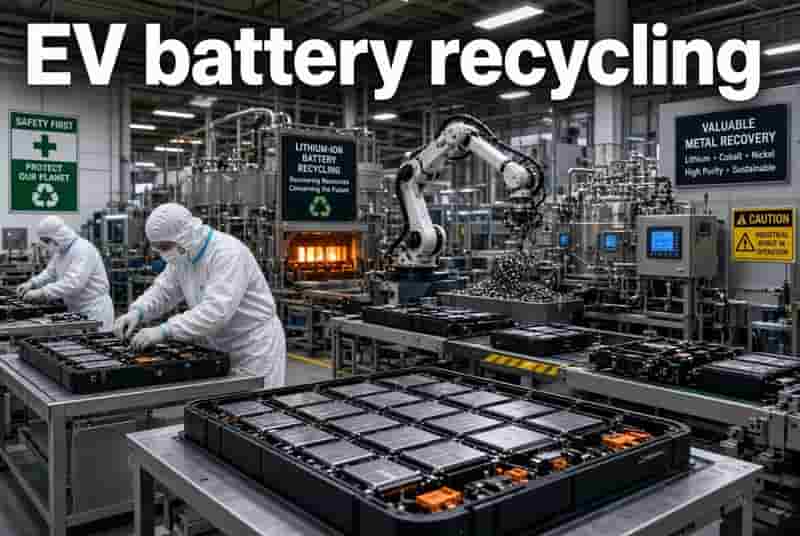
Altilium’s first UK patent protects a process designed to recover valuable materials from discarded electric-vehicle batteries and return them to battery production. The development could support a more circular and resilient UK supply chain—but commercial-scale delivery remains the decisive test.
Key facts
-
Company: Altilium Metals
-
Patent: GB2637908B
-
Patent title: Material Recovery Method and Use
-
Technology: EcoCathode
-
Method: Hydrometallurgical recovery and regeneration
-
Feedstock: Black mass from end-of-life lithium-ion batteries
-
Intended output: Battery-grade materials for new EV cells
-
Patent publication date: 1 July 2026
-
Patent status: Active
-
Planned large-scale location: Teesside, England
What the Altilium battery patent covers
British clean-technology company Altilium has secured its first UK patent for technology at the heart of its EcoCathode battery-recycling process.
Patent GB2637908B, titled “Material Recovery Method and Use,” covers a hydrometallurgical method for recovering, purifying and regenerating materials contained in lithium-ion battery black mass. Black mass is the mixture of valuable battery materials left after cells have been discharged, dismantled and mechanically processed.
The patent record identifies Altilium Metals as the owner and shows a filing date of 30 January 2024. The granted patent was published on 1 July 2026, according to the international WIPO Patentscope record.
Altilium announced the award on 29 July, while a fresh industry report published on 1 September brought renewed attention to the development. The distinction matters: the patent itself is verified, but many of the environmental and performance statements surrounding the process originate from the company. Altilium battery patent
Why EcoCathode is potentially important
Many recycling operations produce intermediate materials that must be sent elsewhere for additional refining. Altilium says EcoCathode is intended to go further by converting black mass into high-purity materials that can be used again in battery manufacturing.
Keeping more processing in Britain could shorten parts of the supply chain and reduce dependence on imported lithium, nickel and cobalt. It could also allow valuable metals already present in the country to remain in circulation instead of being treated as waste or exported for refining.
The Advanced Propulsion Centre says Altilium’s process can recover as much as 95% of cathode metals, including lithium, cobalt and nickel. That figure describes the technology’s stated recovery capability; it should not be interpreted as a confirmed recovery rate across a future commercial plant. Altilium battery patent
Testing moves beyond material recovery
Recovering metals is only part of the challenge. Recycled material must also meet the purity, consistency and performance requirements of automotive battery manufacturers.
An Advanced Propulsion Centre-backed programme involving Altilium and JLR is producing and validating cells made with recovered cathode active material. The cells are being manufactured by the UK Battery Industrialisation Centre before undergoing automotive testing.
Altilium also reports that independent work at Imperial College London found its recycled material could perform comparably with material derived from virgin resources. This is encouraging, although results from individual research and demonstration projects do not by themselves guarantee performance, cost or production yield at full commercial scale.
Patent strengthens Altilium’s commercial position
The Altilium battery patent gives the company protection for a core part of EcoCathode in the UK. Altilium says related patent applications are progressing in other jurisdictions, potentially supporting overseas licensing and partnerships.
The protection arrives as the company moves from pilot and demonstration work towards larger operations. Its Plymouth facility provides a commercial development step, while the proposed ACT4 plant in Teesside represents a much bigger ambition.
Altilium says ACT4 is being designed to process battery waste equivalent to more than 150,000 electric vehicles annually and produce about 30,000 tonnes of cathode active material. These are planned capacities, not current production figures. The Teesside facility remains under development and will depend on financing, permissions, construction and successful commissioning. Altilium battery patent
What this could mean for the UK
A domestic recycling and refining chain could help Britain retain more value from end-of-life batteries. It may also provide manufacturers with an additional source of critical materials as electric vehicles become more widespread.
The potential benefits extend beyond waste management. Recycling can complement mining, reduce exposure to geographically concentrated supply chains and help manufacturers prepare for stricter battery sustainability requirements.
However, a patent is not proof of commercial viability. Altilium must still demonstrate reliable output, competitive costs and sufficient access to used batteries and manufacturing scrap. Its customers will also require consistent material quality across large production volumes. Altilium battery patent
The next milestone matters most
Securing the patent gives Altilium a stronger intellectual-property foundation and confirms that its UK application has passed the patent examination process. It does not independently certify every environmental, performance or economic claim made for EcoCathode.
The next meaningful evidence will come from validated automotive cells, sustained plant operation and transparent production data. If Altilium can reproduce its reported recovery and performance results at commercial scale, its technology could become an important component of Britain’s emerging circular battery industry.
Sources and disclosure
This article was independently written and fact-checked using the official patent record, Altilium’s corporate announcement, the Advanced Propulsion Centre’s project description and Electrive’s 1 September 2026 report. Company projections and environmental claims are identified as such rather than presented as independently established outcomes.
EcoCathode Battery Recycling: Altilium Secures UK Patent