Oil Prices and the Iran War: Why Brent Is Near $95
Oil prices Iran war
Oil Prices and the Iran War: Why Brent Is Near $95 and WTI Near $90
Updated September 2, 2026
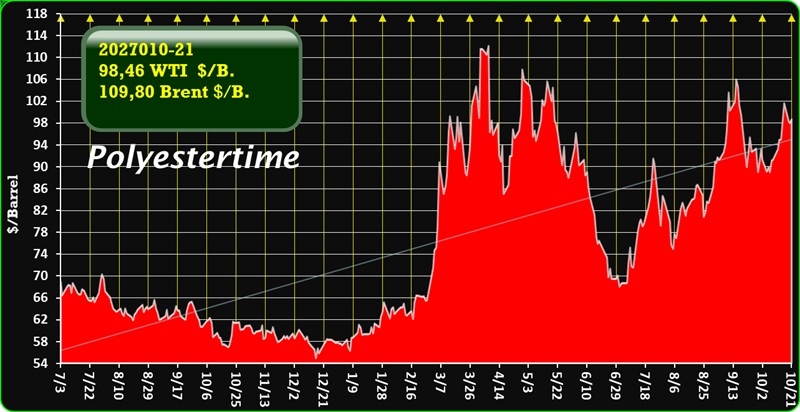
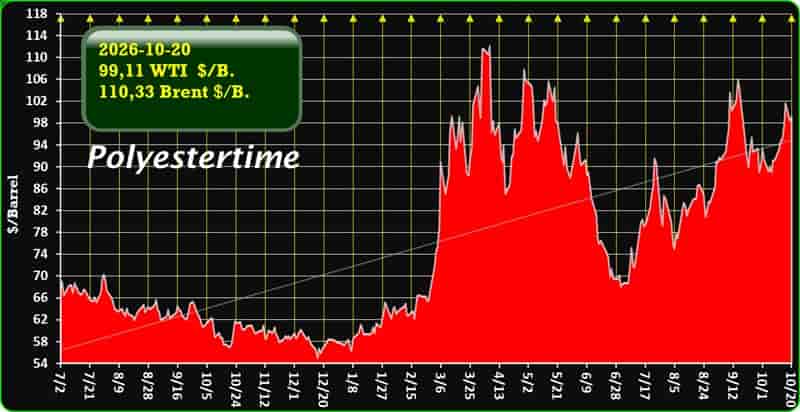
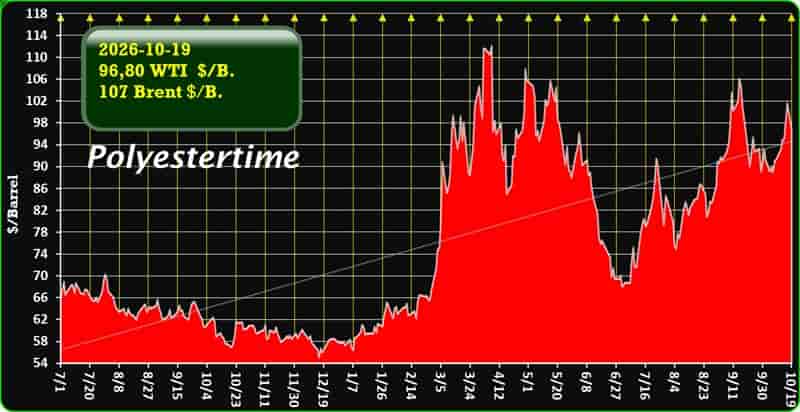
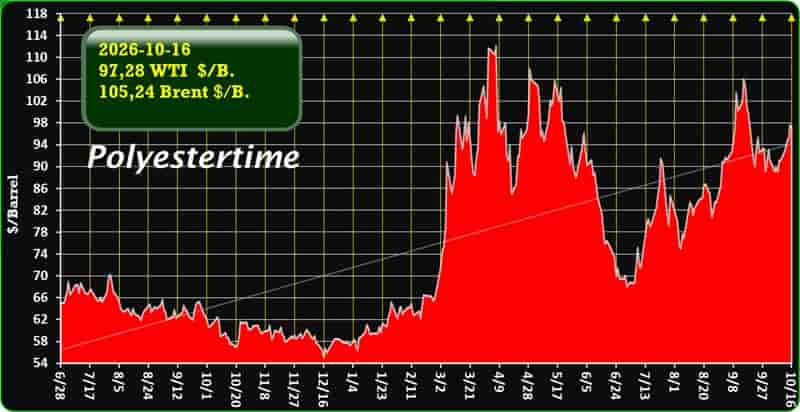
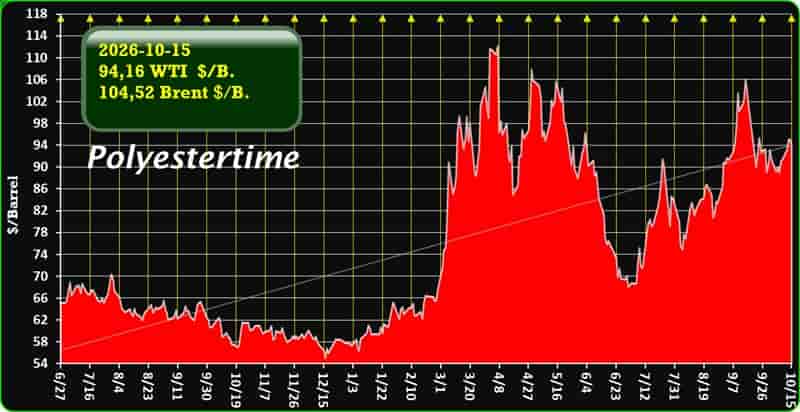
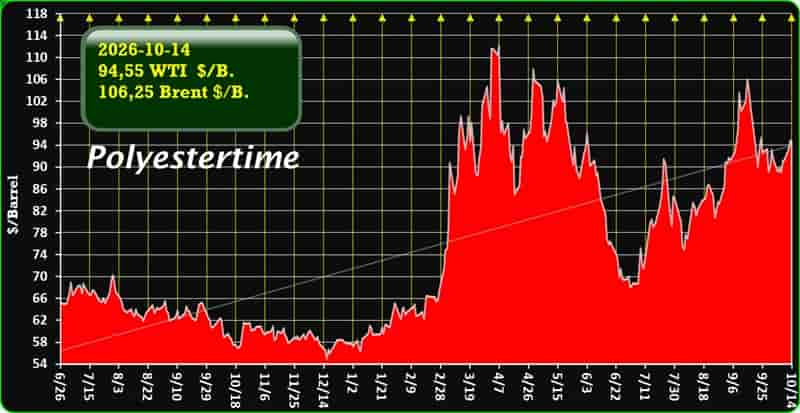
Brent crude is around $95 a barrel and West Texas Intermediate is around $90 after renewed U.S.–Iran fighting sharply increased the risk attached to oil moving through the Strait of Hormuz. The immediate price rise is a geopolitical risk premium: traders are paying more because attacks on ships, military escalation or new restrictions could interrupt physical supply.
The market is not pricing a complete and lasting shutdown of Gulf exports. It is pricing a higher probability that already-fragile flows will be disrupted again. That distinction matters. Prices could climb quickly if tanker traffic falls further, but they could also retreat if shipping stabilizes and diplomacy regains momentum. oil prices Iran war
Oil market snapshot
-
Brent futures settled at $94.65 a barrel on September 1, up $4.16, or 4.6%.
-
WTI settled at $90.22 a barrel, up $4.46, or 5.2%.
-
Both benchmarks recorded their highest closes in about five weeks.
-
The latest move followed renewed U.S. strikes on Iranian targets and reports of attacks involving commercial tankers near the Strait of Hormuz.
These are volatile market prices, not fixed values. Intraday quotations can move materially as military, shipping and diplomatic reports emerge.
Why oil prices jumped
The latest rally began with a direct change in the security picture. U.S. Central Command said American forces struck Islamic Revolutionary Guard Corps targets after attempted attacks on commercial shipping and U.S. personnel. Iran retaliated across the region, while neighboring states reported intercepting missiles or drones. Claims about casualties and damage remain contested and should not be treated as independently verified unless confirmed by multiple credible sources.
For the oil market, the central issue is not simply that fighting resumed. It is where the confrontation is occurring. The Strait of Hormuz is the narrow maritime route connecting the Persian Gulf with global markets. Before the current conflict, roughly one-fifth of global petroleum liquids consumption passed through it, according to U.S. Energy Information Administration data.
Two reported tanker incidents in the past 48 hours have reinforced the risk. Maritime reporting cited warnings involving one tanker that suffered a security incident and another vessel struck by projectiles. No casualties or environmental damage were reported in the latter incident, and investigations were continuing. Even without a full closure, attacks, naval escorts, higher insurance costs and delayed sailings can reduce effective supply and raise transport costs.
What Brent near $95 and WTI near $90 mean
Brent is the main international oil benchmark, while WTI is the leading U.S. benchmark. Brent usually trades at a premium because it more directly reflects seaborne supply conditions. When the threat is concentrated around a major export corridor, Brent can be especially sensitive.
At approximately $95 and $90, both benchmarks are signaling a tight and unusually risky market, but not the most severe scenario traders can imagine. Earlier phases of the conflict pushed prices above current levels. The latest rally therefore reflects a renewed threat to supply rather than proof that a catastrophic loss of production has already occurred.
The distinction between production and delivery is also important. Oil may still be produced in the Gulf, yet fail to reach buyers on schedule if ships cannot move safely. Markets react to barrels that are available at the right place and time, not only to headline production capacity. oil prices Iran war
Three scenarios that could drive the next move
1. Further escalation: prices move higher
Brent could move above $100 again if attacks cause sustained damage to tankers or energy infrastructure, mine-laying restricts navigation, or Gulf exports fall sharply. A wider exchange involving regional producers would increase the risk premium further. Diesel may remain particularly exposed because refinery disruptions in the Middle East and Russia have already tightened the market for refined fuels.
2. Managed disruption: prices remain elevated and volatile
If some ships continue to transit under escort while incidents remain intermittent, Brent may stay near current levels with large daily swings. In this scenario, the market would balance reduced Gulf flows against production elsewhere, commercial inventories and any coordinated release of emergency stocks. oil prices Iran war
3. De-escalation: the risk premium fades
A credible ceasefire, verified reduction in attacks and sustained recovery in tanker traffic could pull prices lower. The EIA’s July outlook had expected production and trade flows to recover as the strait reopened, illustrating how quickly the supply outlook can improve when shipping normalizes. That forecast predates the latest escalation, however, and should not be read as a current price guarantee. oil prices Iran war
Why the conflict matters beyond the oil market
Higher crude prices feed into fuel and transport costs, though the effect is neither immediate nor one-for-one. Refinery margins, taxes, exchange rates, inventories and local competition also influence what motorists pay.
Businesses face broader consequences. Airlines, shipping companies, manufacturers and farms are exposed to higher fuel bills. More expensive diesel can raise the cost of moving goods, while a sustained energy shock can slow economic growth and keep inflation elevated. That combination can complicate decisions by central banks, which must weigh price stability against weaker activity.
Oil exporters outside the disrupted region may benefit from higher prices. Import-dependent economies, especially those with limited currency or fiscal buffers, face the greatest strain.
What investors and consumers should watch now
The most useful indicators are physical, not rhetorical:
-
Confirmed tanker transits through the Strait of Hormuz
-
Maritime-security notices and changes in war-risk insurance
-
Verified damage to export terminals, pipelines, refineries or vessels
-
U.S. and Iranian military actions, alongside credible diplomatic contacts
-
Weekly U.S. petroleum inventories and changes in strategic reserves
-
Production or policy announcements from OPEC+ and other large suppliers
-
Diesel and gasoline wholesale prices, which can diverge from crude oil
Single-source battlefield claims and social-media videos should be treated cautiously. In a fast-moving conflict, reports may be incomplete, misidentified or strategically framed.
The bottom line
Oil prices are rising because the U.S.–Iran war has again put commercial shipping and Gulf energy flows at immediate risk. Brent near $95 and WTI near $90 show that traders see a meaningful danger of prolonged disruption, but current prices do not yet imply a total, permanent loss of Hormuz supply.
The next decisive signal will come from actual tanker movements and verified infrastructure damage. Continued attacks would support a higher risk premium; safer and more consistent shipping would allow that premium to shrink. oil prices Iran war
Frequently asked questions
Why is the Strait of Hormuz so important for oil prices?
It is the main sea route for crude and fuel exports from several major Persian Gulf producers. Disruption can remove or delay large volumes of supply that cannot be quickly rerouted.
Why is Brent more expensive than WTI?
Brent reflects the international seaborne market, which is directly exposed to Gulf shipping risks. WTI reflects U.S. crude conditions and inland logistics, although global shocks still affect it. oil prices Iran war
Could Brent rise above $100?
Yes, especially if tanker traffic falls sharply or energy infrastructure is damaged. It is a scenario, not a forecast: de-escalation or restored shipping could instead push prices lower.
Will gasoline prices rise immediately?
Not necessarily. Crude costs matter, but retail prices also depend on refining margins, inventories, taxes, distribution costs and local competition.
Sources and methodology
This article was updated on September 2, 2026. Market settlements are from Reuters reporting published September 1. Conflict developments were cross-checked against Associated Press reporting, U.S. Central Command statements carried by multiple outlets, maritime-security reporting citing JMIC and UKMTO notices, and U.S. Energy Information Administration analysis. Forecast language is presented as conditional scenarios rather than fact.
Sources:
-
Reuters: Oil prices settle up more than $4 a barrel on renewed U.S.–Iran fighting — https://wifc.com/2026/09/01/oil-prices-settle-up-more-than-4-a-barrel-on-renewed-us-iran-fighting/
-
Associated Press: Iran fires on Gulf neighbors after U.S. military strikes Iranian military targets — https://apnews.com/article/cc891e22860d7a53bf7ade9a3d74c0ae
-
U.S. Energy Information Administration: July 2026 Short-Term Energy Outlook press release — https://www.eia.gov/pressroom/releases/press590.php
-
Gulf News summary of JMIC and UKMTO maritime notices — https://gulfnews.com/world/mena/2-oil-tankers-attacked-in-the-last-48-hrs-near-hormuz-as-iran-steps-up-maritime-pressure-us-responds-1.500660084
US–Iran War Pushes Oil Prices Higher: What Brent at $91 and WTI at $86 Mean