Toray Accelerates Sustainable Beauty Innovation with Bio-Based Polyamide 4 Technology to Tackle Microplastic Pollution and Transform the Global Cosmetics Microparticle Market 02-03-2026
Toray Develops Bio-Based Polyamide 4 to Redefine Sustainable Cosmetics Microparticles
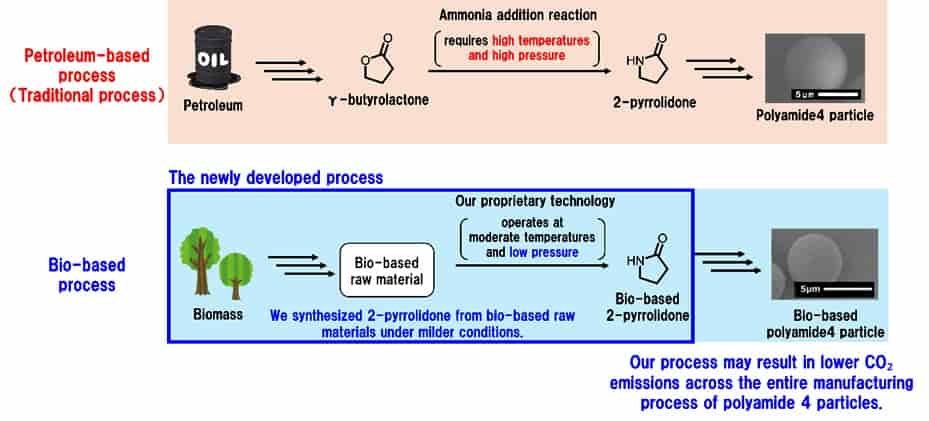
Toray Industries has taken a decisive step toward solving one of the beauty sector’s most pressing environmental challenges. The company announced that it has successfully developed proprietary technology to produce bio-based 2-pyrrolidone, the key raw material for polyamide 4, a polymer known for its exceptional biodegradability in marine and terrestrial environments.
This breakthrough positions bio-based polyamide 4 as a next-generation solution for cosmetics microparticles used in foundation, eyeshadow, and other personal care formulations. Commercial availability is targeted for the fiscal year ending March 2029, following scale-up validation.
For the global cosmetics industry, increasingly scrutinized for its contribution to microplastic pollution, this innovation could mark a structural shift toward circular materials.
Addressing the Microplastic Pollution Crisis in Cosmetics
Microplastic particles smaller than 5 millimeters have become a global environmental concern. In cosmetics, primary microplastics such as microbeads are intentionally added to improve texture, durability, and visual effects. However, once washed into waterways, these particles persist in oceans, rivers, and lakes.
Scientific research continues to highlight the ecological and potential human health impacts of microplastics across marine food chains. As a result, regulators worldwide are tightening restrictions.
In 2023, the European Union amended its REACH regulation to restrict products intentionally incorporating microplastics, including cosmetics. While transition periods of six to twelve years apply, exemptions exist for materials meeting strict biodegradability criteria.
Toray’s bio-based polyamide 4 meets the OECD 301F ready biodegradability standard, positioning it outside the scope of these restrictions. This compliance advantage strengthens its attractiveness to global cosmetics brands navigating regulatory complexity.
From Petroleum to Biomass: A Breakthrough in 2-Pyrrolidone Production
Traditionally, 2-pyrrolidone, the precursor to polyamide 4, has been derived from petroleum-based feedstocks. Toray’s innovation replaces fossil inputs with sugars and other biomass-derived sources.
The result is bio-based polyamide 4 produced through milder reaction conditions compared to conventional petrochemical synthesis. This process optimization not only supports material sustainability but also contributes to lower carbon dioxide emissions across the value chain.
Importantly, the conversion to biomass feedstocks does not compromise performance. The size and morphology of polyamide 4 microparticles produced from bio-based 2-pyrrolidone remain equivalent to conventional grades. For cosmetics manufacturers, this ensures formulation compatibility without sacrificing product aesthetics or texture.
Why Bio-Based Polyamide 4 Matters for the Beauty Industry
The beauty sector faces mounting pressure to demonstrate environmental responsibility while maintaining high-performance standards. Bio-based polyamide 4 directly addresses three core industry priorities:
-
Marine biodegradability
-
Reduced lifecycle carbon footprint
-
Regulatory alignment in key markets
Polyamide 4 is inherently biodegradable due to its chemical structure. Unlike conventional plastics that fragment into persistent microplastics, this material can be broken down by microorganisms into water and carbon dioxide. Although marine biodegradation is generally slower than in soil, polyamide 4 demonstrates meaningful degradation performance in ocean environments.
By integrating bio-based polyamide 4 into cosmetics microparticles, brands can simultaneously enhance sustainability credentials and reduce regulatory risk exposure.
Beyond Cosmetics: Expanding Bio-Based 2-Pyrrolidone Applications
Toray’s technology extends beyond beauty applications. Bio-based 2-pyrrolidone serves as a platform chemical with diverse industrial relevance.
It is a precursor for N-methylpyrrolidone, widely used in semiconductor manufacturing, engineering plastics production, and specialty solvent applications. Engineering plastics, known for their mechanical strength and heat resistance, are critical in automotive lightweighting and electronics.
Additionally, 2-pyrrolidone derivatives include N-vinylpyrrolidone, a monomer for polyvinylpyrrolidone. This polymer plays essential roles in pharmaceutical tablet binding, cosmetic thickening, and beverage clarification.
By enabling bio-based production routes for these derivatives, Toray opens the door to decarbonizing material streams that underpin next-generation industries, from electronics to healthcare.
Supporting the Circular Economy Transition
The development of bio-based polyamide 4 aligns with broader industrial efforts to transition toward a circular economy. Reducing dependency on fossil resources while improving end-of-life biodegradability addresses two critical sustainability pillars: resource conservation and waste mitigation.
Toray’s R&D program was supported in part by Japan’s Ministry of Environment through initiatives promoting decarbonized circular economy systems in fiscal years 2023 and 2024. This collaboration underscores the strategic importance of bio-based materials in national climate and industrial policy.
For investors and sustainability strategists, the integration of bio-based polyamide 4 signals a shift from incremental reformulation toward systemic material redesign.
Market Outlook for Bio-Based Polyamide 4
Demand for sustainable cosmetics ingredients is accelerating, driven by consumer awareness, ESG disclosure requirements, and evolving regulatory frameworks. The global push to reduce microplastic pollution creates a strong structural tailwind for biodegradable polymer alternatives.
Bio-based polyamide 4 offers a rare combination of performance parity, regulatory compliance, and carbon reduction potential. As brands seek materials that satisfy both marketing claims and scientific validation, scalable solutions like this are likely to gain rapid traction.
If Toray successfully completes its scale-up phase by 2029, the company could establish a competitive advantage in the emerging market for biodegradable cosmetics microparticles.
Conclusion: A Strategic Step Toward Sustainable Materials Innovation
Toray develops bio-based polyamide 4 at a pivotal moment for the global materials and cosmetics industries. By combining biomass-derived feedstocks with proven biodegradability performance, the company addresses environmental, regulatory, and market demands simultaneously.
As microplastic regulations tighten and climate targets intensify, materials innovation will determine which companies lead the next phase of industrial transformation. Bio-based polyamide 4 stands out as a credible pathway toward cleaner oceans, lower carbon emissions, and a more resilient circular economy.
Bio-based high temperature PLA – Why Filamentive Bio HT PLA Changes Industrial 3D Printing by Finally Combining High Heat Resistance, Industrial Strength, and Real Sustainability Without Post-Processing
More…