Powerful Step Forward: Aduro Taps Saipem for Chemical Recycling Plant
Powerful Step Forward: Aduro Taps Saipem for Chemical Recycling Plant
Aduro Clean Technologies has brought Saipem into the early development of its planned first-of-a-kind chemical recycling plant at Chemelot Industrial Park in the Netherlands. The appointment adds a major engineering contractor to Aduro’s effort to move its Hydrochemolytic Technology from pilot work toward industrial operation.
The proposed plant is designed to process approximately 10,000 tonnes of complex plastic waste per year at its initial capacity. Its intended products are hydrocarbon feedstocks that could return to chemical and petrochemical manufacturing, providing a possible route for material that is difficult to handle through conventional mechanical recycling.
This is a meaningful step, but it is not the same as a final investment decision or a full construction award. Aduro describes Saipem’s present assignment as Early Works and Services. The immediate scope covers preliminary engineering and procurement activities intended to define the project more precisely, improve cost estimates and reduce execution risk before the partners consider later phases.
What Saipem will do at Chemelot
During the initial phase, Saipem is expected to review Aduro’s Process Design Package, examine critical equipment packages, assess preliminary integration with site utilities and help refine capital-cost estimates. The work will also incorporate operating information from Aduro’s Next Generation Process pilot plant.
That connection between pilot data and engineering design is important. A process that performs under pilot conditions must still demonstrate that it can run reliably, safely and economically at a much larger scale. Equipment selection, material flows, energy demand, product consistency, maintenance requirements and integration with an operating chemical site can all affect whether a new technology succeeds commercially.
Aduro and Saipem plan to use a stage-gated development model. If defined technical and commercial milestones are met, and if the parties sign the necessary definitive agreements, the work could progress to front-end engineering design, detailed engineering, procurement, construction, commissioning and start-up. Those later steps should therefore be treated as possible future stages, not as work already awarded.
Aduro said the early works are expected to be funded from its existing cash resources and are not expected to require additional financing. However, the wider project remains exposed to the normal uncertainties surrounding first-of-a-kind industrial facilities, including permitting, engineering performance, equipment availability, feedstock and offtake agreements, funding for later stages and successful scale-up. chemical recycling plant
Why Chemelot matters to the project
Chemelot Industrial Park is located in Sittard-Geleen, close to the Belgian and German borders. It is an integrated chemical manufacturing cluster with shared infrastructure, utilities, wastewater treatment and links between producers and research organizations.
Aduro selected the location in January 2026 after assessing several candidate sites. The company cited the availability of industrial infrastructure, access to potential feedstock, proximity to downstream users and room for phased expansion. Aduro has also operated within the nearby Brightlands Chemelot innovation ecosystem since 2021.
Locating a first industrial unit inside an established chemical cluster may shorten some of the distance between recycled material and potential users. It can also give engineers access to existing services and operating expertise. Those advantages do not remove the challenges of commercialization, but they can provide a more realistic setting in which to validate the technology and its economics.
How Hydrochemolytic Technology fits in
Aduro describes Hydrochemolytic Technology as a water-based chemistry platform for upgrading lower-value feedstocks, including waste plastics. For the Chemelot project, the objective is to transform mixed or complex plastic waste into useful hydrocarbon intermediates rather than attempting to preserve the original plastic object or polymer through mechanical processing.
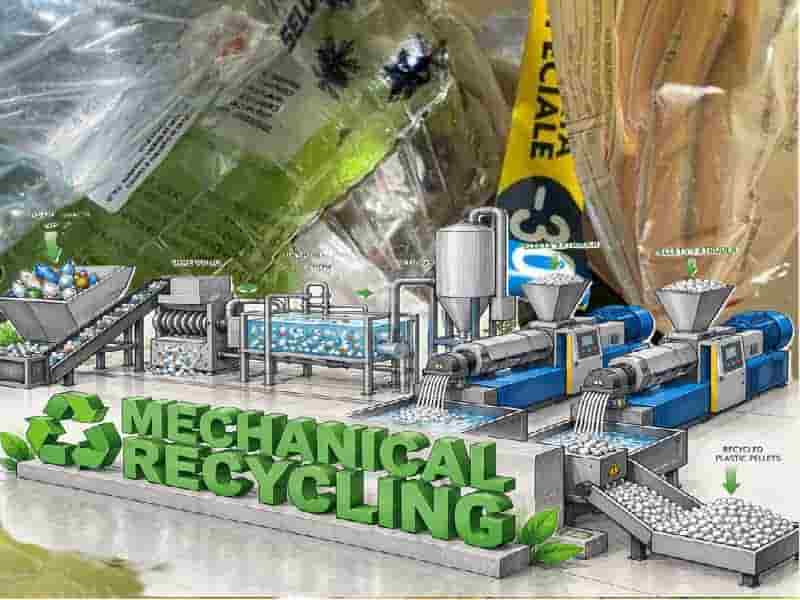
Chemical recycling is often presented as a complementary option for plastic streams that cannot be efficiently sorted, cleaned and mechanically recycled. It is not a substitute for reducing unnecessary plastic, reuse systems or well-functioning mechanical recycling. Its environmental performance also depends on factors such as energy use, process yield, emissions, the type and origin of feedstock, and whether the outputs genuinely displace virgin fossil raw materials.
For that reason, claims about circularity or emissions savings should ultimately be supported by operating data and a transparent life-cycle assessment. The current announcement establishes an engineering pathway; it does not yet provide independently verified commercial-scale performance results for the planned plant.
A wider Dutch push for difficult plastic waste
The Aduro-Saipem development is part of a broader effort to establish advanced recycling capacity in the Netherlands. On August 24, 2026, Chemical Processing reported that Covestro-backed BioBTX plans a commercial facility at Chemical Park Delfzijl. That separate project is expected to process about 20,000 tonnes of mixed plastic waste annually using catalytic pyrolysis and produce aromatic oil plus other by-products.
The two projects use different technologies and are at different development stages, so their capacities and expected outputs should not be treated as directly equivalent. Together, however, they illustrate why Dutch chemical clusters are attracting projects that seek to convert difficult waste streams into industrial raw materials. Existing utilities, chemical customers and logistics can help developers test whether circular-feedstock concepts work beyond the laboratory.
What happens next
The most useful indicators of progress will be concrete rather than promotional: completion of the early engineering scope, a decision on front-end engineering design, permitting milestones, validated pilot results, firm feedstock and product agreements, financing for subsequent phases and a disclosed construction schedule.
If Aduro and Saipem move successfully through those gates, the Chemelot facility could become an industrial reference for Hydrochemolytic Technology and inform larger future deployments. For now, the accurate conclusion is narrower: Saipem has joined the project at a crucial engineering-readiness stage, giving Aduro experienced support as it tests whether its chemical recycling plant can make the demanding transition from pilot operations to industrial reality.
Key facts
-
Project owner: Aduro Clean Technologies
-
Engineering partner for Early Works and Services: Saipem
-
Location: Chemelot Industrial Park, Sittard-Geleen, Netherlands
-
Planned initial processing capacity: approximately 10,000 tonnes per year
-
Technology: Hydrochemolytic Technology
-
Current status: preliminary engineering and procurement support; later phases remain conditional
-
Announcement date: August 19, 2026
-
Article fact-check date: August 25, 2026
Sources
-
Saipem, “Saipem selected to support the development of an advanced chemical recycling plant in the Netherlands,” August 19, 2026: https://www.saipem.com/en/media/news/saipem-selected-to-support-the-development-of-an-advanced-chemical-recycling-plant-in-the-netherlands
-
Aduro Clean Technologies, “Aduro Selects Saipem for Engineering and Procurement Support for First-of-a-Kind HCT Facility at Chemelot,” August 19, 2026: https://investors.adurocleantech.com/press-releases/press-releases-details/2026/Aduro-Selects-Saipem-for-Engineering-and-Procurement-Support-for-First-of-a-Kind-HCT-Facility-at-Chemelot/default.aspx
-
Aduro Clean Technologies, “Aduro Clean Technologies Selects Chemelot Industrial Park for First-of-a-Kind Industrial Plant,” January 29, 2026: https://investors.adurocleantech.com/press-releases/press-releases-details/2026/Aduro-Clean-Technologies-Selects-Chemelot-Industrial-Park-for-First-of-a-Kind-Industrial-Plant/default.aspx
-
Chemical Processing, “Covestro-Backed BioBTX to Build Commercial Plastic-Waste Recycling Plant,” August 24, 2026: https://www.chemicalprocessing.com/industrynews/news/55400278/covestro-backed-biobtx-to-build-commercial-plastic-waste-recycling-plant