Sumika’s Bold Automotive Plastic Recycling Push in France
Sumika’s Bold Automotive Plastic Recycling Push in France
Sumika Polymer Compounds Europe is expanding automotive plastic recycling capacity in Saint-Martin-de-Crau, southern France, as carmakers prepare for the European Union’s first binding recycled-plastic targets for new vehicles.
The company says its new mechanical-recycling plant will produce more than 10,000 tonnes of recycled polypropylene a year. Together with Sumika’s existing recycling operation in Türkiye, the two sites are expected to provide more than 25,000 tonnes of annual capacity.
The timing is significant. EU Regulation 2026/1738 entered into force on 13 August 2026 and introduces requirements covering vehicle design, recycled content, traceability and end-of-life treatment. For new vehicle types, recycled plastic must account for at least 15% of the plastic by weight from 1 September 2032, increasing to 25% from 1 September 2036.
Key facts
-
Location: Saint-Martin-de-Crau, France
-
Technology: mechanical recycling
-
Sumika’s stated annual output: more than 10,000 tonnes of recycled polypropylene
-
Combined stated capacity in France and Türkiye: more than 25,000 tonnes a year
-
EU recycled-plastic target: 15% for new vehicle types from 1 September 2032
-
Later EU target: 25% from 1 September 2036
-
Closed-loop requirement: at least 20% of the mandatory recycled content must come from end-of-life vehicles or plastic parts removed from vehicles during use
Why the new EU rules matter
The regulation changes the economics of plastic use in European vehicle manufacturing. Recycled content is moving from a voluntary sustainability objective to a measurable product requirement.
The rules extend beyond material percentages. Producers will assume greater financial and organisational responsibility for vehicles at the end of their lives. The framework also strengthens traceability, requires clearer dismantling information and restricts the export of vehicles that are no longer roadworthy.
Passenger cars and light commercial vehicles fall under the full framework. Trucks, motorcycles and special-purpose vehicles are covered by a more limited set of requirements.
The regulation does not require every obligation immediately. Most provisions begin applying from September 2028, while the recycled-plastic thresholds arrive later. That lead time gives manufacturers and suppliers an opportunity to qualify materials, redesign components and establish dependable waste streams.
What Sumika is building in France
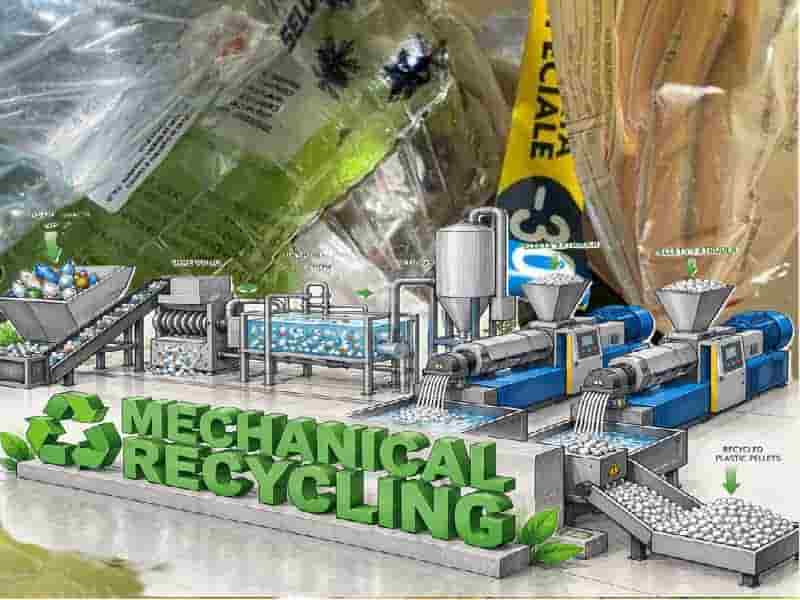
Sumika’s facility is designed to recover polypropylene from end-of-life vehicle parts and industrial waste, then process it for use in new automotive compounds. Polypropylene is widely used in vehicles because it is lightweight, versatile and suitable for components such as bumpers, interior trim and other moulded parts.
Sumika describes an investment of more than €13 million in the plant. A separate ADEME project profile lists a total project cost of €21.4 million, including €6 million in public support through France 2030. These figures appear to describe different scopes and should not be treated as interchangeable.
ADEME says the broader project is expected to regenerate 12,000 tonnes of waste a year, create 25 direct jobs and move into testing and production during 2026. It also describes a closed-loop washing system with water treatment and on-site solar generation. automotive plastic recycling
From vehicle waste to new components
The strategic aim is a closed loop: collect automotive plastic waste, recycle it under controlled conditions and return it to vehicle production in higher-value applications.
That process is more demanding than simply diverting waste from landfill. Automotive components must meet specifications for strength, appearance, odour, emissions and long-term performance. Feedstock quality and traceability therefore matter as much as recycling volume.
Sumika is connecting the new capacity with Thermofil Circle, its range of recycled polypropylene compounds for automotive applications. The company says selected grades can reduce carbon emissions by as much as 65% compared with certain virgin-resin references. Because that figure depends on the product and comparison baseline, it should be read as a company-reported, grade-specific claim rather than a universal reduction for every recycled compound.
A supply-chain opportunity—and a test
The EU targets create a clear demand signal for recyclers and compounders, but capacity alone will not guarantee success. Carmakers will need consistent material quality, auditable recycled content and sufficient supplies of suitable end-of-life plastic.
The requirement that part of the recycled content come from vehicles is especially important. It encourages a genuine car-to-car loop rather than relying entirely on recycled plastic from unrelated industries.
Sumika’s French expansion could shorten supply chains for European manufacturers and reduce reliance on virgin polypropylene. Its commercial impact will ultimately depend on production ramp-up, customer qualification and the availability of clean, traceable feedstock.
What happens next
The immediate milestone is the plant’s testing and production phase. Manufacturers then have several years to validate recycled compounds and adapt vehicle platforms before the first 15% threshold applies in 2032.
The broader direction is already clear: automotive plastic recycling is becoming part of industrial planning, not merely waste management. Sumika’s investment places the company close to both European vehicle plants and future demand, while the new EU framework gives recycled polypropylene a defined role in the next generation of cars.
Frequently asked questions
What is Sumika building in France?
Sumika Polymer Compounds Europe is developing a mechanical-recycling facility in Saint-Martin-de-Crau to recover polypropylene from end-of-life vehicle parts and industrial waste for new automotive applications.
How much recycled polypropylene will the plant produce?
Sumika states that the French unit will have capacity for more than 10,000 tonnes of recycled polypropylene per year. ADEME separately cites 12,000 tonnes of waste regenerated annually for the broader project.
When do the EU recycled-plastic targets apply?
For new vehicle types, the minimum is 15% recycled plastic by weight from 1 September 2032 and 25% from 1 September 2036.
What does closed-loop recycling mean in this case?
It means recovering plastic from vehicles or vehicle parts and using it again in new automotive products, creating a car-to-car material cycle.
Does recycled polypropylene automatically cut emissions by 65%?
No. Sumika reports reductions of up to 65% for selected Thermofil Circle grades compared with certain virgin-resin references. The result depends on the grade, feedstock, production process and comparison method.
Sources
-
Council of the European Union, “Council greenlights rules for a more circular automotive sector,” 29 June 2026: https://www.consilium.europa.eu/en/press/press-releases/2026/06/29/council-greenlights-rules-for-a-more-circular-automotive-sector/
-
Sumika Polymer Compounds Europe, “New End-of-Life Vehicle Regulation: Sumika is already ready,” accessed 25 August 2026: https://www.sumikaeurope.com/news/new-end-of-life-vehicle-regulation-sumika-is-already-ready/
-
ADEME, project profile for SUMIKA Recycling in Saint-Martin-de-Crau, updated 17 October 2025: https://agirpourlatransition.ademe.fr/entreprises/aides-financieres/catalogue-rex/unite-regeneration-polypropylene-secteur-automobile
-
Brussels Signal, “EU rules forcing 25 per cent recycled plastic in new cars enter into force,” 12 August 2026: https://brusselssignal.eu/2026/08/eu-rules-forcing-25-per-cent-recycled-plastic-in-new-cars-enter-into-force/
Automotive Plastic Recycling: Is Recycling Car Plastics Really Worth It?