PolyCycl Secures Strategic Funding to Scale Chemical Recycling Platform as Plastics Crisis Accelerates Pressure on Circular Feedstock Solutions Globally 22-01-2026
Accelerating Scale-Up in Advanced Chemical Recycling
PolyCycl has secured new investment to accelerate the industrial scale-up of its patented chemical recycling platform, a technology designed to address one of the most persistent challenges in the global plastics economy: the effective recycling of hard-to-process plastic waste.
The funding, led by Rainmatter, will enable PolyCycl to fast-track collaboration with industrial and petrochemical partners while strengthening its internal engineering and operational capabilities. The objective is clear: move from proven technical maturity to large-scale, commercially viable deployment of a fully continuous chemical recycling platform.
As regulatory, environmental, and economic pressures on plastics intensify, technologies capable of producing high-quality circular feedstock are becoming critical to the future of petrochemical and downstream manufacturing sectors.
How PolyCycl’s Chemical Recycling Platform Works
PolyCycl’s chemical recycling platform is engineered to convert plastic waste, including single-use polyethylene bags and other low-value plastics, into liquid hydrocarbon oils. These oils can be used directly as feedstock by oil, gas, and petrochemical companies to produce new materials, including food-grade virgin plastics.
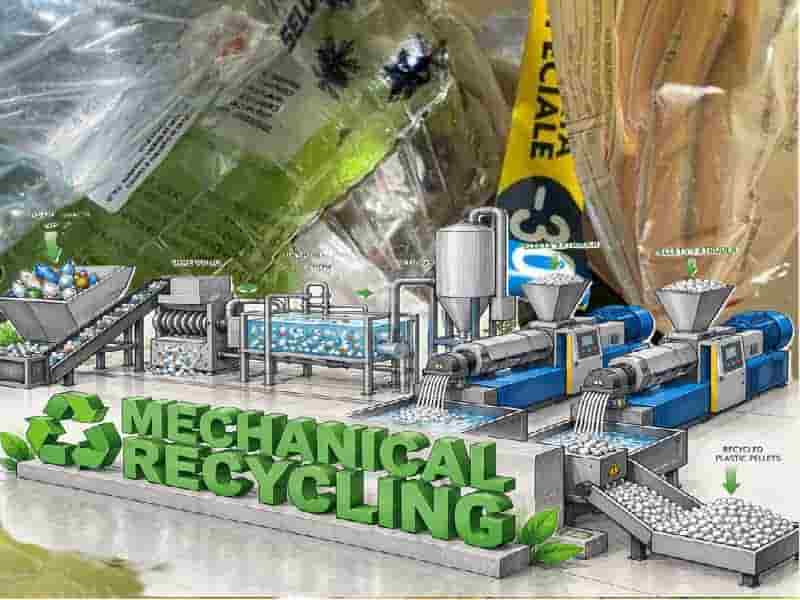
Unlike mechanical recycling, which is often limited by contamination and polymer degradation, chemical recycling enables plastics to be broken down at the molecular level. This allows recycled outputs to meet the stringent quality requirements of high-performance and regulated applications.
The PolyCycl system is designed to be cost-effective, fully continuous, and suitable for integration into existing petrochemical infrastructure. This compatibility significantly lowers barriers to adoption and supports rapid scaling across multiple geographies.
Funding Focus: From Technology Validation to Industrial Deployment
The new investment will be used across three strategic areas. First, PolyCycl plans to deepen engagement with industrial and petrochemical partners to accelerate pilot-to-commercial transitions. Second, the company aims to strengthen its engineering execution teams to support long-term licensing and global scale-up. Third, the funding will support operational readiness, ensuring consistent performance in extended industrial runs.
This approach reflects a deliberate focus on execution rather than experimentation. Chemical recycling platforms require long development cycles, high capital discipline, and operational resilience under continuous conditions. PolyCycl’s strategy emphasizes reliability and repeatability at scale.
Generation VI Platform Reaches Technology Readiness Level 7
The funding follows the successful launch of PolyCycl’s Generation VI chemical recycling platform last year. The platform has reportedly demonstrated extended continuous operations and undergone product pre-qualification by major petrochemical companies.
These milestones indicate that the technology has reached Technology Readiness Level 7, meaning it has been proven in an operational industrial environment and is ready for scalable deployment. For deep-tech solutions in chemical recycling, reaching this level is a significant achievement and a key signal for investors and industrial partners alike.
The Generation VI platform positions PolyCycl as a credible provider of industrial-scale chemical recycling solutions, capable of supporting circular feedstock production in both domestic and international markets.
Chemical Recycling as a Deep-Tech Circular Economy Enabler
Chemical recycling remains a complex and capital-intensive segment of the circular economy. Unlike consumer-facing sustainability solutions, success depends on deep engineering expertise, integration with existing industrial systems, and long-term operational performance.
PolyCycl’s approach reflects this reality. The company has prioritized technology robustness and industrial compatibility over rapid commercialization. This philosophy aligns closely with Rainmatter’s investment strategy, which focuses on long-term solutions to systemic environmental challenges rather than short-term returns.
By targeting hard-to-recycle plastic waste streams, PolyCycl’s chemical recycling platform addresses a critical gap in current recycling infrastructure and supports credible circularity at scale.
Strategic Importance of Licensing and Global Expansion
A central pillar of PolyCycl’s growth strategy is long-term licensing. By enabling industrial partners to deploy its chemical recycling platform locally, the company aims to accelerate global adoption without the need for asset-heavy ownership models.
This licensing-driven approach allows rapid geographic expansion while maintaining consistent technology standards. It also supports regional solutions to plastic waste challenges, reducing transportation emissions and improving feedstock availability.
The potential for international licensing positions PolyCycl as a scalable technology provider rather than a single-market operator, an important distinction in the global circular plastics economy.
Industry Momentum Signals Growing Demand for Circular Feedstock
PolyCycl’s funding announcement comes amid broader momentum in the chemical recycling sector. SK Chemicals recently revealed a joint venture with Chinese recycling specialist Kelinle to build a Feedstock Innovation Center focused on processing waste plastics into circular feedstock.
Meanwhile, Borealis announced plans to acquire a minority stake in BlueAlp while transferring its majority stake in Renasci. This move is expected to strengthen BlueAlp’s licensing strategy and support the development of high-quality feedstock production platforms.
These developments underscore a growing consensus within the petrochemical industry: scalable chemical recycling platforms are essential to securing future feedstock supply and meeting sustainability targets.
Outlook: Building Credible Circularity at Industrial Scale
As regulatory scrutiny increases and brand owners demand higher recycled content in plastics, chemical recycling platforms like PolyCycl’s are moving from optional innovation to strategic necessity.
With validated technology, industrial partnerships, and fresh capital to support execution, PolyCycl is positioned to play a meaningful role in reshaping how plastic waste is managed and reintegrated into the value chain.
The next phase will be defined not by proof of concept, but by the ability to deliver reliable, continuous, and economically viable circular feedstock at scale. For the global plastics industry, that transition cannot come soon enough.
More…