China diesel engine – China Challenges Global Automotive Assumptions With Advanced Diesel Technology That Claims to Cut Fuel Consumption by 50 Percent 03-02-2026
China diesel engine
China’s automotive strategy moves beyond electric vehicles
Over the past decade, China has built its global automotive strategy around battery electric vehicles. Strong government incentives, large-scale industrial policy, and rapid innovation have enabled Chinese automakers to enter European markets at speed, capturing growing market share across multiple segments.
Despite this momentum, battery electric vehicles still represent less than 20 percent of total car sales in many major European markets. This gap between policy ambition and consumer adoption is pushing Chinese manufacturers to diversify. Alongside electric vehicles, China is now investing heavily in advanced hybrids, next-generation gasoline engines, and increasingly, in diesel technology. China diesel engine
This strategic shift signals that internal combustion engines are far from disappearing in the Chinese automotive landscape.
Diesel technology re-emerges as a strategic pillar
While Europe continues to reduce investment in diesel, China is moving in the opposite direction. New diesel engine technologies are being positioned as high-efficiency, low-consumption solutions, particularly for commercial vehicles and extended-range applications.
After electric vehicles, China is now aiming to dominate advanced diesel technology as well. Innovative systems are emerging that promise dramatic reductions in fuel consumption while maintaining reliability and durability. These developments suggest that diesel may continue to play a meaningful role in global mobility, especially where electrification faces cost or infrastructure constraints.
Yuchai steps into the spotlight
A concrete example of this technological evolution is Yuchai. Although relatively unknown to European consumers, Yuchai is already a major global player in engine manufacturing. The company collaborates with a division of Rolls-Royce and supplies components and engines to major Chinese brands such as Dongfeng and BAIC. China diesel engine
Yuchai’s latest development has drawn attention across the industry. The company has introduced a commercial vehicle diesel engine equipped with an energy range extender system, commonly referred to as EREV technology. This solution is designed to combine the strengths of diesel efficiency with advanced mechanical energy management. China diesel engine
How the energy extender diesel engine works
At the core of Yuchai’s new diesel engine is a flywheel-based energy storage system. The flywheel stores kinetic energy during phases of lower load and releases it when additional power is required. This approach reduces jerking, vibration, and energy losses that typically occur during transient driving conditions.
A more rigid mechanical connection between the flywheel and the crankshaft eliminates several unnecessary components found in conventional systems. By simplifying the drivetrain and reducing friction losses, overall efficiency improves. The result is smoother power delivery and enhanced engine responsiveness, particularly under heavy or variable loads common in commercial vehicles.
Promised efficiency gains attract global attention
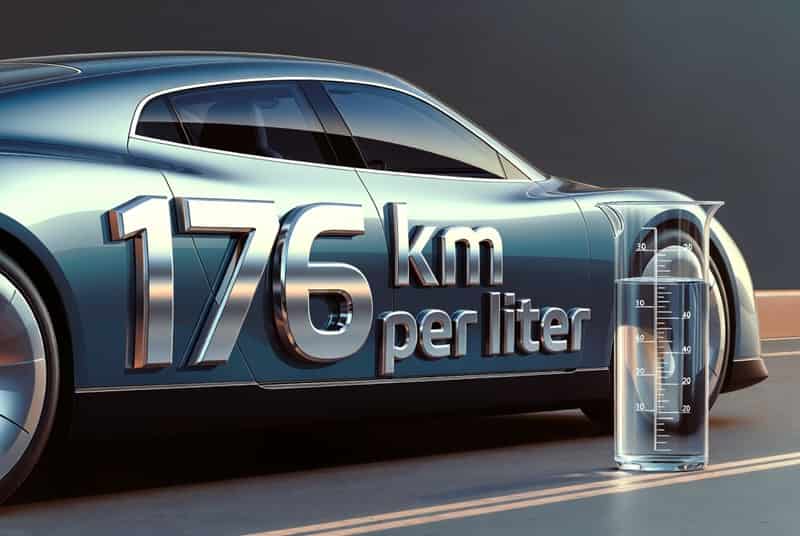
According to Yuchai, the combination of the energy extender system with a diesel engine can reduce fuel consumption by up to 50 percent compared with traditional diesel setups. The technology is designed to support a wide range of power outputs, from 20 horsepower for smaller applications up to 600 horsepower for heavy-duty vehicles. China diesel engine
Another key claim is durability. The energy extender system is described as maintenance-free for the entire lifespan of the engine. If confirmed in long-term operation, this could significantly reduce total cost of ownership, an essential factor for fleet operators and logistics companies.
Implications for the commercial vehicle market
If these performance claims are validated by independent road tests, the impact on the commercial vehicle market could be substantial. Fuel costs remain one of the largest operating expenses for transport operators, and a 50 percent reduction would represent a structural shift in competitiveness.
Such efficiency gains could also delay full electrification in certain segments, particularly long-haul transport, construction, and regions where charging infrastructure remains limited. In this context, advanced diesel engines could act as a transitional or even long-term solution. China diesel engine
Chinese diesel technology challenges European suppliers
The rise of Chinese diesel innovation comes at a difficult moment for Europe’s traditional automotive suppliers. Many European engine manufacturers are struggling with declining demand, shrinking margins, and uncertainty around future investment priorities. China diesel engine
As Europe grapples with regulatory pressure and industrial restructuring, Chinese companies like Yuchai are positioning themselves as credible alternatives in the global powertrain market. Their ability to combine cost competitiveness with technological innovation could reshape supplier relationships, especially for commercial and industrial vehicles. China diesel engine
Internal combustion engines remain relevant in China
Contrary to predictions that internal combustion engines would rapidly fade, China’s automotive strategy suggests a more pragmatic approach. Electric vehicles remain a priority, but advanced combustion technologies are being developed in parallel to address real-world market conditions. China diesel engine
Chinese EREV diesel systems are experiencing unexpected momentum, demonstrating that internal combustion engines can still evolve significantly. Efficiency, reliability, and adaptability are becoming the new benchmarks, rather than outright elimination of combustion technology. China diesel engine
A turning point for global automotive competition
The launch of China’s advanced diesel engine highlights a broader shift in global automotive competition. Innovation is no longer limited to electrification alone. Instead, multiple technological pathways are emerging, each tailored to specific use cases and market realities. China diesel engine
If Chinese diesel technologies deliver on their promises, they could redefine expectations for fuel efficiency and reshape Europe’s role in powertrain innovation. In an industry facing profound transformation, China is signaling that it intends to lead not just the electric future, but the combustion present as well.
China electric vehicle energy consumption limits – China Sets Historic Mandatory Energy Consumption Limits For Electric Cars, Reshaping Global EV Efficiency Standards, Subsidies, Manufacturing Innovation, And Long Term Carbon Strategy Leadership
More…