176 km per liter? What we know about the six-stroke engine
176 km per liter? What we really know about the six-stroke engine
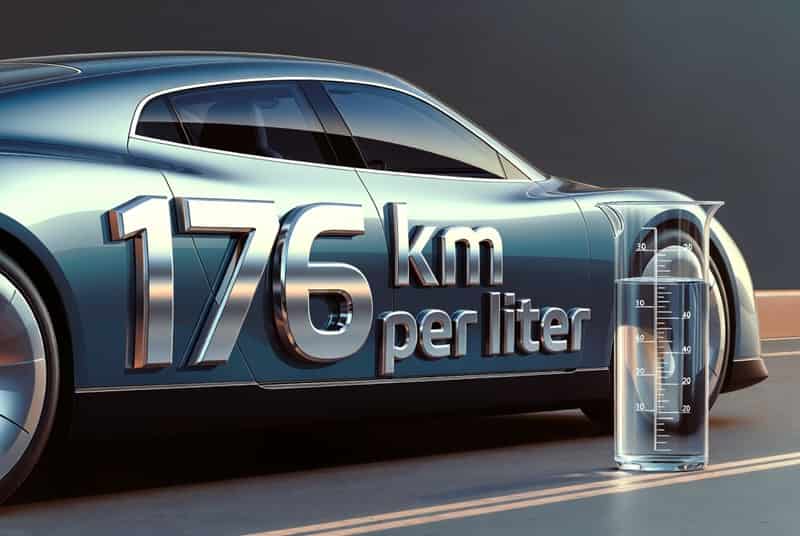
A motorcycle capable of traveling 176 kilometers on a single liter of fuel would represent an extraordinary advance in combustion-engine efficiency. That is the figure associated with an experimental six-stroke engine developed by Indian inventor Shailendra Singh Gaur.
The story has attracted considerable attention because it combines an ambitious technical claim with nearly two decades of independent research. However, the widely reported mileage figure should still be treated as a prototype claim rather than the certified performance of a production-ready engine.
Here is what is known, how the proposed system differs from a conventional engine and what would need to happen before it could genuinely change personal transport.
Key facts
Shailendra Singh Gaur says he modified a 100cc motorcycle engine to operate with a six-stroke cycle.
The prototype has reportedly achieved approximately 176 kilometers per liter in a limited test.
Gaur believes further development could raise the figure to around 200 kilometers per liter.
These figures have not been supported by a publicly available, comprehensive test report from an internationally recognized independent laboratory.
No major vehicle manufacturer has announced plans to place Gaur’s engine into mass production.
Six-stroke engine concepts are real, but different inventors use the term for substantially different mechanical cycles.
What is a six-stroke engine?
A conventional four-stroke engine completes four piston movements: intake, compression, combustion and exhaust. The crankshaft turns twice during the complete cycle, while fuel combustion supplies one power stroke.
A six-stroke engine adds two piston movements. The purpose of those additional strokes varies according to the design.
Some systems introduce fresh air after the exhaust stroke to cool the combustion chamber and remove residual gases. Others use water or air to recover heat that would otherwise escape through the exhaust or cooling system. A different approach adds another compression and combustion sequence.
Six-stroke technology is therefore not one standardized engine architecture. It is a broad category covering multiple attempts to extract more useful energy from each combustion cycle.
How Gaur’s experimental engine is said to work
Reports about Gaur’s invention say that the two additional strokes help use residual heat and burn fuel particles left after the primary combustion event.
In principle, reducing incomplete combustion could improve fuel consumption and decrease some pollutants. Recovering energy that would normally be lost as heat is also a legitimate engineering objective.
Gaur reportedly tested the system in a modified 2017-model, 100cc TVS motorcycle. One account says the motorcycle operated for 35 minutes using 50 milliliters of petrol, forming the basis of the claimed 176-kilometer-per-liter result.
That information is promising, but it does not provide all the data required for an engineering assessment. six-stroke engine
What a reliable efficiency test should include
A meaningful fuel-efficiency test should document:
-
The distance traveled
-
Average speed
-
Vehicle load
-
Road or dynamometer conditions
-
Ambient temperature
-
Fuel-measurement method
-
Engine temperature
-
Test repeatability
Without these details, the published figure cannot be independently evaluated.
Why 176 km per liter is not yet a confirmed real-world figure
The crucial distinction is between a result reported by an inventor and an independently certified vehicle-efficiency rating.
The currently available reports describe the 176-kilometer-per-liter figure as a claimed prototype result. They do not provide a complete homologation document, peer-reviewed study or standardized fuel-consumption certificate demonstrating that the motorcycle can reproduce this mileage under ordinary road conditions.
A test using a very small quantity of fuel can also be sensitive to measurement error. Fuel remaining in pipes or the carburetor, engine warm-up conditions and the method used to calculate distance can have a disproportionate effect on the final number.
This does not prove that the result is false. It means that the evidence available to the public is insufficient to describe 176 kilometers per liter as an independently established performance figure.
Could a six-stroke engine reduce emissions?
Potentially, but claims such as “near-zero pollution” require particular caution.
More complete combustion and lower fuel consumption could reduce carbon monoxide, unburned hydrocarbons and carbon dioxide emissions per kilometer. Additional air strokes may also help cool the cylinder and remove exhaust residue.
Nevertheless, combustion still creates emissions. Their composition depends on fuel, temperature, air-to-fuel ratio, engine load and after-treatment equipment.
Nitrogen oxides can remain a concern even when combustion is efficient.
Which emissions should be independently measured?
A credible emissions assessment should include laboratory measurements of:
-
Carbon monoxide
-
Carbon dioxide
-
Unburned hydrocarbons
-
Nitrogen oxides
-
Particulate matter
These measurements should be collected across a recognized test cycle rather than during a single demonstration.
Other Indian six-stroke engine projects
Gaur’s engine is not India’s only experiment with a six-stroke cycle.
The NIYKADO six-stroke system
The NIYKADO design, developed by Chanayil Cleetus Anil, adds an air-intake stroke and a separate air-exhaust stroke after the conventional combustion cycle.
Fresh air is intended to remove residual gases and cool the cylinder before the next intake event.
Kerala Startup Mission’s company profile for NIYKADO describes a claimed fuel-economy improvement of up to 50 percent.
This remains a company claim rather than proof that every engine using the system would produce the same result.
Earlier technical coverage also reported a more modest claimed efficiency improvement of approximately 23 percent for a NIYKADO prototype.
The difference between these percentages illustrates why the test configuration and comparison method must always be specified.
The Velozeta project
Another Indian student project, known as Velozeta, explored using fresh air and residual cylinder heat during additional strokes.
The expanding air was intended to create additional piston movement while helping to reduce fuel consumption.
These projects share a general objective, but their valve arrangements, thermodynamic cycles and performance characteristics are not identical.
The likely trade-off: efficiency versus power
An engine that burns fuel less frequently may consume less fuel, but it may also generate less power for a given displacement.
In many six-stroke configurations, one combustion event occurs during six piston movements instead of four.
That can reduce the number of power strokes produced at a given engine speed.
Technical analysis of earlier six-stroke systems has consequently highlighted lower output as a possible disadvantage.
Why lower power matters
For a practical motorcycle, engineers would have to evaluate:
-
Acceleration
-
Hill-climbing ability
-
Top speed
-
Heat management
-
Vibration
-
Durability
-
Performance with a passenger or luggage
Fuel economy alone is not sufficient to determine whether an engine is suitable for daily transport.
Porsche’s patent does not validate the 176 km/L claim
Porsche has also investigated a six-stroke combustion process, but its design should not be presented as confirmation of Gaur’s technology.
The Porsche patent describes a mechanically complex system with different piston travel limits and two compression-and-combustion sequences.
In simplified terms, its cycle contains intake, compression, combustion, another compression, another combustion and exhaust.
It is therefore materially different from systems that add non-combustion air strokes or attempt to burn residual fuel.
What a patent actually proves
A patent shows that an organization considers an idea sufficiently distinctive to protect.
It does not demonstrate that the system has:
-
Passed durability testing
-
Received regulatory approval
-
Achieved production readiness
-
Met emissions requirements
-
Been selected for a commercial vehicle
The existence of a Porsche patent confirms broader technical interest in six-stroke cycles, not the performance of Gaur’s prototype.
Could the engine use several fuels?
Reports say Gaur’s concept may operate using fuels including petrol, diesel or LPG.
Such flexibility would be significant, but multi-fuel capability is not achieved merely by changing the fuel supplied to an engine.
Different fuels require appropriate ignition systems, compression ratios, injection or carburetion settings and engine-control strategies.
Diesel normally relies on compression ignition, while petrol typically uses spark ignition.
What must be tested for each fuel
Before multi-fuel operation can be considered proven, the prototype would need documented testing for:
-
Fuel efficiency
-
Power output
-
Cold starting
-
Combustion stability
-
Emissions
-
Component wear
-
Long-term reliability
Each fuel would require its own validated configuration.
What must happen next
The six-stroke engine deserves technical investigation, but several steps are necessary before its potential can be judged reliably.
Independent laboratory testing
The prototype should undergo repeatable tests using recognized fuel-consumption and emissions procedures.
Results should be published with the complete testing methodology and reviewed by independent automotive engineers.
Long-term durability testing
The system would require endurance testing over thousands of kilometers.
Engineers would need to examine:
-
Lubrication
-
Temperature control
-
Valve wear
-
Combustion stability
-
Cylinder condition
-
Maintenance requirements
Commercial feasibility
The engine must also demonstrate that its fuel savings justify any additional mechanical complexity, manufacturing cost and reduction in power.
A technology can be technically interesting without being economically viable for mass production.
A promising experiment, not an automotive revolution yet
The most accurate conclusion is neither that the six-stroke engine is a miracle nor that it should be dismissed.
Recovering waste heat and improving combustion are credible engineering objectives.
Six-stroke cycles have appeared in patents and research projects for decades, and academic literature continues to examine designs that use additional strokes to extract more energy from combustion heat.
Gaur’s reported achievement is an interesting prototype claim that merits controlled independent testing.
At present, however, there is not enough publicly available evidence to say that a practical motorcycle has been conclusively shown to deliver 176 kilometers per liter in standardized, repeatable conditions.
The real breakthrough would not be the headline figure alone.
It would be a transparent test demonstrating that the engine can combine exceptional efficiency with adequate power, low emissions, reasonable cost and long-term reliability.
More…