Reju Expands Circular Textile Recycling in the United States With Rochester Regeneration Hub Targeting Massive Polyester Waste Reduction 25-01-2026
Reju strengthens circular textile recycling with first U.S. regeneration hub
Reju has selected Rochester, New York as the site for its first industrial-scale circular textile recycling facility in the United States. The decision marks a major step in the company’s global expansion strategy and reinforces its ambition to scale a circular textile system capable of addressing polyester waste at an industrial level.
The future regeneration hub will be located at Eastman Business Park, a long-established industrial campus with advanced infrastructure and logistics capabilities. With this move, Reju deepens its presence in North America while aligning near-shoring strategies with sustainability goals.
Strategic location at Eastman Business Park
The selected site covers approximately 18.9 acres and provides room for industrial growth, supply chain integration, and workforce development. Eastman Business Park offers a mature ecosystem for advanced manufacturing, making it a strategic location for circular textile recycling operations that require precision, scale, and energy efficiency.
From a supply chain perspective, the Rochester location enables Reju to diversify production, reduce reliance on overseas manufacturing, and shorten logistics routes. This approach supports resilience while strengthening the regional green economy.
Regenerating 300 million garments every year
Once operational, the regeneration hub is expected to process the equivalent of 300 million discarded textile articles annually. These materials would otherwise be landfilled or incinerated, contributing to the growing global textile waste crisis.
At the core of the facility’s output is rBHET, an intermediate product that is repolymerized into Reju PET. This regenerated polyester is engineered to meet high performance standards while remaining recyclable multiple times, supporting a truly circular textile economy.
Circular textile recycling at this scale represents a structural shift for the fashion and apparel industry, which has historically depended on fossil-based virgin polyester.
Advanced recycling technology for polyester waste
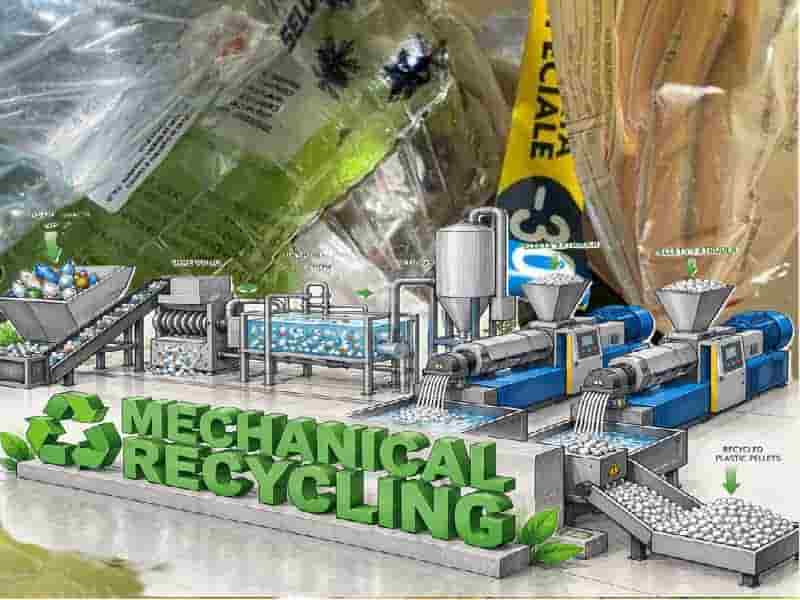
Reju relies on proprietary recycling technology developed by Technip Energies in collaboration with IBM Research. The process focuses initially on polyester, the most widely used synthetic fiber globally and one of the largest contributors to textile waste.
The regenerated polyester produced through this system delivers a carbon footprint approximately 50 percent lower than virgin polyester. By enabling repeated recycling cycles, the technology reduces dependency on fossil resources while maintaining material quality.
This approach positions circular textile recycling not as a niche solution, but as an industrial alternative capable of supporting global apparel supply chains.
Investment decision and global expansion roadmap
The Rochester project remains subject to a final investment decision by the board of Technip Energies, the parent company of Reju. If approved, the facility will become a cornerstone of Reju’s expanding global network of regeneration hubs.
The U.S. site complements existing operations and planned developments, including the demonstration facility in Frankfurt and the previously announced site at Chemelot Industrial Park in Sittard, Netherlands. Together, these hubs form the backbone of a scalable circular textile recycling platform.
By replicating standardized regeneration hubs across regions, Reju aims to localize textile waste processing while maintaining global material consistency.
Economic impact and job creation in New York State
Beyond its environmental benefits, the regeneration hub is expected to generate approximately 70 new jobs at Eastman Business Park. These roles span engineering, operations, maintenance, and supply chain management, contributing to long-term industrial employment.
The project aligns with New York State’s broader objectives to promote clean manufacturing, waste reduction, and climate-aligned economic development. Circular textile recycling projects such as this demonstrate how sustainability investments can translate into tangible economic opportunities.
Strengthening textile-to-textile traceability
A critical component of Reju’s model is full textile-to-textile traceability. Through partnerships with global brands, textile mills, and waste aggregators, the company ensures that post-consumer garments are tracked and transformed into feedstock for new materials.
This closed-loop approach increases transparency, supports regulatory compliance, and builds confidence among apparel brands seeking credible circular textile recycling solutions. Traceability also enables data-driven optimization of recycling streams, improving efficiency over time.
Near-shoring and resilience for the apparel industry
The establishment of a U.S. regeneration hub reflects a broader shift toward near-shoring in the textile and apparel sector. By locating recycling and material regeneration closer to end markets, brands can reduce exposure to supply chain disruptions while lowering transportation emissions.
For the U.S. market, the Rochester facility strengthens domestic capacity for circular textile recycling and reduces reliance on imported recycled materials. This strategic positioning supports long-term resilience as regulatory and consumer pressure around textile waste continues to increase.
Circular textile recycling as a market signal
The expansion of Reju’s footprint in the United States sends a clear signal to the global market that circular textile recycling at scale is achievable today. The project demonstrates that post-consumer textile waste can be transformed from an environmental liability into a valuable industrial resource.
As apparel brands face growing scrutiny over material sourcing and emissions, access to regenerated polyester with lower carbon intensity becomes a competitive advantage. Reju’s regeneration hubs are designed to meet this demand while accelerating the transition toward a circular textile economy.
Outlook for circular textiles in North America
With its Rochester regeneration hub, Reju positions itself at the center of the North American circular textile recycling landscape. The facility lays the foundation for future expansion, additional hubs, and deeper collaboration with brands committed to closing the loop on polyester.
As regulatory frameworks tighten and sustainability expectations rise, scalable solutions like this will play a decisive role in reshaping how textiles are produced, used, and regenerated.
More…