EU circular economy plastic recycling – EU accelerates circular economy transformation with bold plastic recycling reforms reshaping markets boosting competitiveness strengthening sustainability and reinforcing Europe’s industrial leadership for future growth 02-01-2026
EU circular economy plastic recycling
EU launches decisive circular economy push focused on plastics
The European Union has unveiled a far-reaching pilot package designed to accelerate the transition toward a circular economy, placing plastic recycling at the center of its industrial and environmental strategy.
The initiative reflects growing urgency to strengthen EU competitiveness, reduce resource dependency, and address climate challenges through circular solutions. EU circular economy plastic recycling
This new policy direction positions the EU circular economy plastic recycling agenda as both an environmental necessity and an economic opportunity, particularly as global competition intensifies and supply chains remain under pressure.
Two-step strategy toward a stronger circular economy
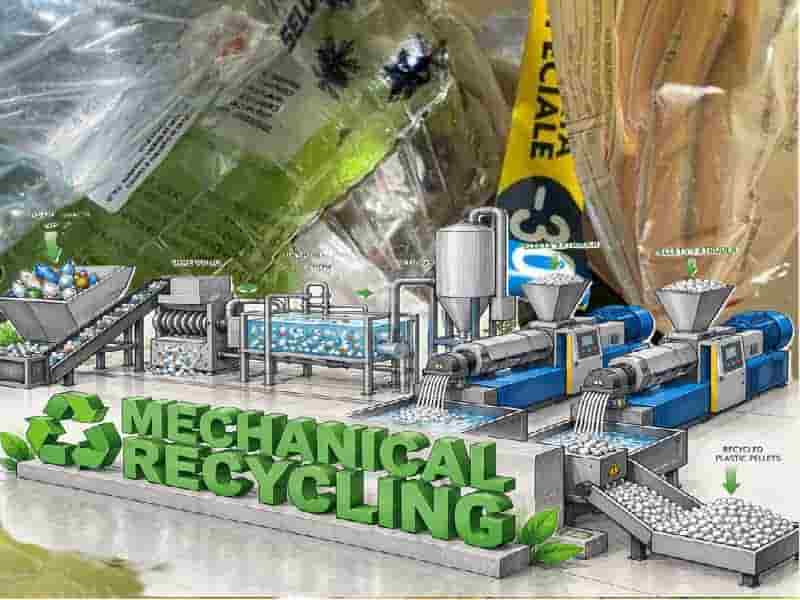
The European Commission’s approach follows a clear two-step structure. The first phase introduces immediate pilot measures aimed specifically at the plastics sector. These short-term actions focus on improving recycling performance, stabilizing markets for recycled plastics, and unlocking investment. EU circular economy plastic recycling
The second phase will arrive in 2026 with a comprehensive Circular Economy Act. This legislation is expected to introduce horizontal measures that strengthen the Single Market for secondary raw materials, extending beyond plastics to other key industrial sectors.
Together, these steps are designed to remove structural barriers that currently prevent the EU circular economy plastic recycling market from scaling efficiently. EU circular economy plastic recycling
Why plastics are central to EU circularity goals
Plastics represent one of the most resource-intensive and emissions-heavy material streams in Europe. According to Commission analysis, circular solutions in the plastics industry could reduce climate-related emissions by nearly half, decarbonize energy use, and improve the EU trade balance by billions of euros annually by mid-century.
Despite this potential, the sector faces serious obstacles. Fragmented national rules, high energy costs, volatile virgin plastic prices, and competition from lower-standard imports have weakened profitability and reduced capacity utilization. These pressures threaten both recycling targets and Europe’s industrial base. EU circular economy plastic recycling
Addressing these challenges is essential for the long-term success of EU circular economy plastic recycling.
Creating a true Single Market for recycled plastics
One of the most impactful measures in the pilot package is the introduction of EU-wide end-of-waste criteria for plastics under the Waste Framework Directive. This implementing act defines when recycled plastic materials can officially re-enter the market as usable products rather than waste.
Harmonized standards will simplify administrative procedures, particularly for small and medium-sized recyclers, and ensure a consistent supply of high-quality recycled plastics across Member States. Public feedback on the draft rules remains open until January 2026, allowing stakeholders to shape final outcomes.
This reform is a cornerstone in building a functional Single Market for EU circular economy plastic recycling.
Recycled content rules and chemical recycling investment
The Commission has also advanced new rules on recycled content for PET single-use plastic bottles under the Single-Use Plastics Directive. These measures are currently moving through the Member State voting process.
Clearer recycled content requirements are expected to improve legal certainty and unlock investment in advanced recycling technologies, including chemical recycling. By clarifying how recycled materials are counted and verified, the EU aims to reduce regulatory risk for investors and accelerate innovation across the plastics value chain.
Strengthening industry cooperation and fair competition
To improve coordination, the Commission will relaunch and reinforce the Circular Plastics Alliance. This platform brings together industry, national governments, and EU institutions to jointly address competitiveness, investment gaps, and circularity challenges.
On the trade front, the EU is introducing separate customs codes for virgin and recycled plastics. This distinction will strengthen enforcement of EU standards on imports and improve market transparency. Ongoing monitoring of EU and global plastics markets will inform potential trade defense measures, with a formal review planned for 2026.
These steps aim to protect domestic recyclers while supporting the growth of EU circular economy plastic recycling.
Financing circular innovation and regional hubs
Financial support will play a critical role in scaling circular solutions. National promotional banks and the European Investment Bank will expand backing for circular economy projects, especially those with cross-border potential.
A pilot Competitiveness Coordination Tool will promote Trans-Regional Circularity Hubs. These hubs are designed to align smart specialization strategies, foster industrial cooperation, and accelerate the deployment of recycling infrastructure across regions.
This investment framework supports faster commercialization and stronger industrial resilience.
Reviewing the Single-Use Plastics Directive
The Commission has launched a public consultation to evaluate the effectiveness of the Single-Use Plastics Directive. The assessment will examine environmental impacts, human health outcomes, and the Directive’s role in fostering a circular and innovative economy. The consultation remains open until March 2026.
Insights from this review will shape future regulatory adjustments and ensure alignment with broader circular economy objectives.
The road to 2030 and beyond
Despite recent progress, only a small share of materials used in the EU currently comes from recycled sources. Meeting targets outlined in major policy frameworks will require faster removal of regulatory, financial, and market barriers.
The EU’s ambition is clear. By focusing on plastics through targeted, practical measures, the current pilot package lays the groundwork for a robust Circular Economy Act in 2026 and positions Europe as a global leader in circular economy plastic recycling by 2030.
More…