A Massive Win for Plastics: Eastman Chemical Recycling Grant Reinstated by U.S. DOE – Polymer Price Trends
Chemical recycling grant – Full price table (26/10/2026 →02/11/2026)
| ITEM | 26/10/2026 | 02/11/2014 | +/− |
|---|---|---|---|
| Bottle grade PET chips domestic market | 8,900 yuan/ton | 9,000 yuan/ton | +100- |
| Chinese bottle-grade PET chips FOB export price | 1,200 $/ton | 1,240 $/ton | +40 |
| LDPE domestic market China | 12,900 $/ton | 13,100 $/ton | +200 |
| PET Semidull — Fiber chips | 8.570 yuan/ton | 8,550 yuan/ton | -20 |
| PET Bright — Fiber chips | 8,620 yuan/ton | 8,650 yuan/ton | +30 |
| Pure Terephthalic Acid PTA domestic market | 7,265 yuan/ton | 7,310 yuan/ton | +45 |
| Pure Terephthalic Acid PTA FOB China | 990 $/ton | 980 $/ton | -10 |
| Monoethyleneglycol (MEG) South China | 5,644 yuan/ton | 5,824 yuan/ton | +180 |
| Monoethyleneglycol (MEG) CFR China | 690 $/ton | 705 $/ton | +15 |
| Paraxylene PX FOB Taiwan market | 1,312 $/ton | 1,382 $/ton | +70 |
| Paraxylene PX FOB South-Korea market | 1,286 $/ton | 1,356 $/ton | +70 |
| Paraxylene PX FOB EU market | 1,320 $/ton | 1,349 $/ton | +29 |
| Polyester filament POY 150D/48F domestic market | 9,350 yuan/ton | 9,300 yuan/ton | -50 |
| Recycled Polyester filament POY 150/48F domestic market | 8,050 yuan/ton | 8,050 yuan/ton | – |
| Polyester filament DTY 150D/48F domestic market | 10,400 yuan/ton | 10,400 yuan/ton | – |
| Polyester filament FDY 68D/24F | 10,200 yuan/ton | 10,050 yuan/ton | -150 |
| Polyester filament FDY 150D/96F domestic market | 9,500 yuan/ton | 9,350 yuan/ton | -150 |
| Polyester staple fiber 1.4D 38mm domestic market | 9,020 yuan/ton | 8,950 yuan/ton | -70 |
| Caprolactam (CPL) domestic market | 13,900 yuan/ton | 13,625 yuan/ton | -275 |
| Caprolactam (CPL) CFR China | 1,550 $/ton | 1,750 $/ton | +200 |
| Nylon 6 chips overseas market |
China Export / East Asia~1,850-1,950 Southeast Asia~1,900-2,000 South Asia~1,950-2,050 Europe~2,250-2,450 North America~2,750-2,950
|
China Export2,050-2,150 US$/mt Southeast Asia2,100-2,200 US$/mt Northeast Asia (Japan/Korea)2,150-2,300 US$/mt India2,180-2,320Europe2,600-2,850 US$/mt North America2,900-3,200 US$/mt |
– |
| Nylon 6 chips conventional spinning domestic market | 14,800 yuan/ton | 14,650 yuan/ton | -150 |
| Nylon 6 chips high speed spinning domestic market | 14,800 yuan/ton | 14,550 yuan/ton | -250 |
| Nylon 6.6 chips domestic market | 18,100 yuan/ton | 18,500 yuan/ton | +400 |
| Nylon6 Filament POY 86D/24F domestic market | 16,000 yuan/ton | 15,900 yuan/ton | -100 |
| Nylon6 Filament DTY 70D/24F domestic market | 18,000 yuan/ton | 17,900 yuan/ton | -100 |
| Nylon6 Filament FDY 70D/24F | 16,200 yuan/ton | 16,200 yuan/ton | – |
| Spandex 20D domestic market | 31,200 yuan/ton | 31,200 yuan/ton | – |
| Spandex 30D domestic market | 30,700 yuan/ton | 30,700 yuan/ton | – |
| Spandex 40D domestic market | 28,000 yuan/ton | 28,000 yuan/ton | – |
| Adipic Acid China domestic market | 10,100 yuan/ton | 10,100 yuan/ton | – |
| Adipic Acid Europe market | 2,200 $/ton | 2,200 $/ton | – |
| Benzene domestic market East China | 10,500 yuan/ton | 9,850 yuan/ton | -650 |
| Benzene CFR China | 1,270 $/ton | 1,228 $/ton | -42 |
| Ethylene South East market | 1,130 $/ton | 1,170 $/ton | +40 |
| Ethylene NWE market CIF | 1,202 Euro/ton | 1,171 Euro/ton | -31 |
| Acrylonitrile (ACN) domestic market | 11,250 yuan/ton | 12,900 yuan/ton | +1,650 |
| Acrylonitrile ACN Southeast Asia | 1,570 $/ton | 1,600 $/ton | +30 |
| Acrylic staple fiber (ASF) CFR China | 15,975 yuan/ton | 16,250 yuan/ton | +275 |
| VSF viscose staple fiber | 14,750 yuan/ton | 14,750 yuan/ton | – |
| PP Powder domestic market | 11,050 yuan/ton | 11,800 yuan/ton | +750 |
| Naphtha overseas market | 943 $/ton | 935 $/ton | -8 |
| Phenol domestic market (Jinan Dezheng / Yanshan Petrochemical, Shandong) | 9,800 yuan/ton | 9,850 yuan/ton | +50 |
| Recycled PET | 4,600 yuan/ton | 4,900 yuan/ton | +300 |
A Massive Win for Plastics: Eastman Chemical Recycling Grant Reinstated by U.S. DOE
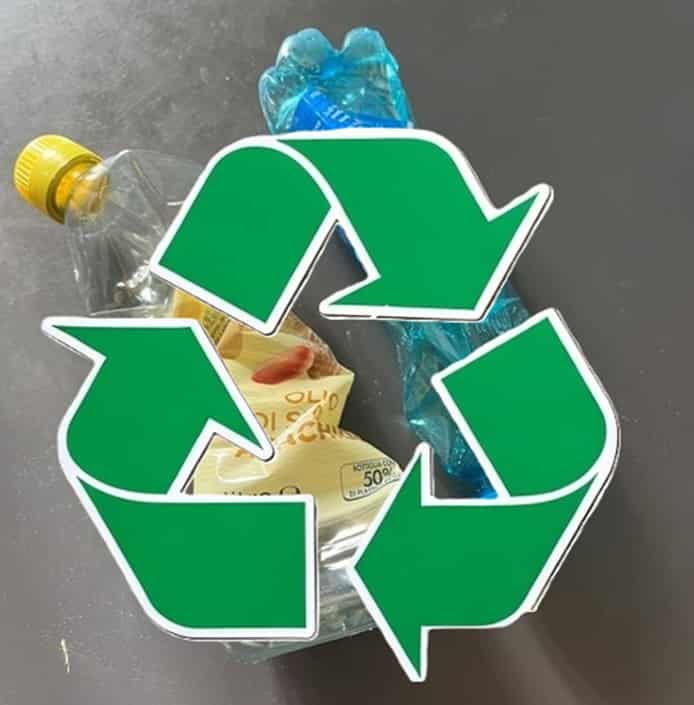
In a dramatic shift for the domestic circular economy, the U.S. Department of Energy (DOE) has officially announced the reinstatement of a $375 million chemical recycling grant to support Eastman Chemical Co.. This critical injection of federal capital revitalizes a milestone-based strategy to eliminate landfill waste and reconstruct the American supply chain for difficult-to-recycle plastics. By shifting away from previous structural constraints, the updated project scope directly targets infrastructure acceleration and advanced manufacturing efficiency. Chemical recycling grant
The Evolution of the $375 Million Federal Funding
The journey of this federal funding marks a significant turnaround in industrial environmental policy. Initially authorized under the Biden administration in 2024, the original $375 million allocation was abruptly terminated in May 2025 during a sweeping federal review of industrial decarbonization programs. At that time, administrative changes led the Department of Government Efficiency to freeze multiple industrial grants. This sudden cancellation forced Eastman to place its massive proposed molecular recycling facility on a strategic hold, leaving the future of advanced domestic recycling uncertain.
The newly reinstated agreement, finalized on October 29, 2026, accounts for approximately $35 million that Eastman previously received for early-stage engineering and design phases under the original contract. This leaves roughly $340 million in active federal resources to deploy across a heavily updated, highly capital-efficient scope. Chemical recycling grant
Under the new operational layout, Eastman will directly fund approximately half of the revised investment program, optimizing performance outcomes while safeguarding corporate capital expenditures against macro-inflationary pressures.
Strategic Scope Shift: From Texas Construction to Tennessee Optimization
The core structural transformation of the reinstated project lies in its geographic and tactical footprint. The initial 2024 investment blueprint called for constructing a massive, standalone $1.2 billion molecular recycling facility in Longview, Texas. While Longview remains on the table for future capacity expansion, the newly approved framework pivots toward an infrastructure-first deployment that leverages pre-existing facility footprints:
-
- Kingsport Capacity Influx: Funding will directly drive an approximate 30% increase in output at Eastman’s existing commercial-scale methanolysis facility in Kingsport, Tennessee. This is achieved through rapid technological advancements and targeted operational debottlenecking. Chemical recycling grant
- Reindustrializing Asset Networks: Instead of building everything from scratch via high-risk greenfield developments, the plan prioritizes restarting, repurposing, and modernizing underutilized recycling infrastructure throughout the United States.
- Supply Chain Resiliency: The revised framework scales up domestic capacity to process complex, difficult-to-recycle polyethylene terephthalate (PET) and polyester waste streams into high-purity, virgin-quality materials.
By shifting the scope toward debottlenecking the active Kingsport site, Eastman significantly reduces its execution risk while drastically shortening the timeline needed to bring new recycled plastic volumes to market. Chemical recycling grant
Methanolysis Technology: Giving Trash Infinite Commercial Scale
At the center of Eastman’s market leadership is its proprietary, U.S.-developed methanolysis technology. Traditional mechanical recycling relies on sorting and melting clean plastics, which progressively degrades polymer quality and restricts how often material can be reused. In contrast, molecular recycling breaks down hard-to-recycle polyester waste into fundamental chemical building blocks.
The process treats PET scrap with methanol and specialized catalysts under extreme thermal environments ranging from 350 to 530 degrees Fahrenheit. These building blocks can be seamlessly rebuilt into new, premium-grade polymers without any loss in functional integrity. The resulting materials match the structural and safety profiles of virgin petroleum-based resins. Consequently, they are suitable for highly regulated consumer applications, such as medical-grade containers and durable Rubbermaid food storage solutions. Chemical recycling grant
Financial Momentum and Market Impact
The commercial proof of Eastman’s strategy is heavily reflected in its corporate financial trajectory. As detailed in recent market updates from Yahoo Finance, the operational success of the Kingsport plant is translating directly into visible bottom-line growth. The company anticipates an incremental revenue expansion of up to $100 million for the year 2026 compared to 2025, driven entirely by advanced recycling operations.
Looking further out, an additional revenue jump of more than $100 million is already modeled for 2027. Approximately half of this projected growth stems from consumer packaging demands, while the remaining half is fueled by advanced specialty material contracts. This strong baseline proof minimized federal risk, giving the DOE the confidence required to authorize the revised, milestone-driven investment roadmap. Even though Eastman’s concurrent Q3 earnings report highlighted seasonal slowdowns in automotive and consumer durables, the long-term fundamentals of the advanced recycling division remain exceptionally robust. Chemical recycling grant
Building a Future-Proof Supply Chain
By shifting from capital-heavy Greenfield developments to agile infrastructure reindustrialization, Eastman and the U.S. DOE are creating a flexible blueprint for modern manufacturing. Assistant Secretary of Energy Audrey Robertson emphasized that expanding proven, American-made technology strengthens domestic industrial competitiveness while putting idle manufacturing assets back to work safely.
Corporate leadership emphasizes that this approach provides brand partners a clear, low-risk path to secure reliable, domestic sources of high-quality recycled content immediately. This initiative effectively turns a massive environmental challenge into a powerful driver of regional economic resilience and domestic supply chain security. Chemical recycling grant
More…