Unstoppable $60M Facility Revolutionizes Food-Grade Plastic Recycling in Africa
Game-Changing $60M Facility Revolutionizes Food-Grade Plastic Recycling in Africa
For thousands of informal waste pickers across West Africa, plastic recovery is evolving from a marginal survival tactic into a formal economic pathway. Streets littered with post-consumer bottles and clogged urban drainage channels represent both an environmental crisis and an uncaptured industrial resource.
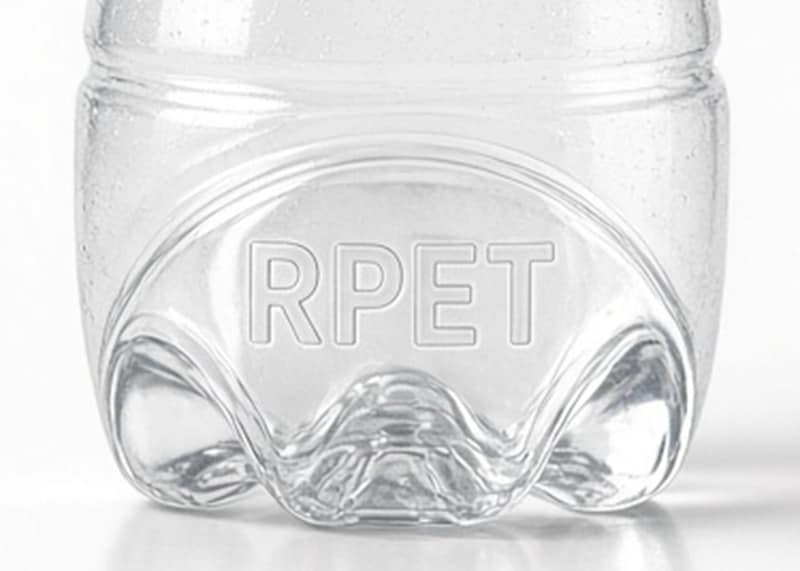
The industrial transition toward food-grade plastic recycling reached a major historical milestone when Polysmart Packaging Limited officially commissioned phase one of its expanded $60 million recycling facility in Mowe, Ogun State, Nigeria. Recognized as Africa’s largest food-grade recycled Polyethylene Terephthalate (rPET) processing site, the facility establishes a localized bottle-to-bottle circular manufacturing model that directly converts waste streams into high-value resin. food-grade plastic recycling
Expanding Industrial Capacity and Waste Diversion
The Mowe facility is engineered to process up to 100,000 tonnes of discarded PET bottles annually. At peak operational throughput, the plant yields 60,000 tonnes of food-grade recycled materials alongside 20,000 tonnes of non-food-grade recycled plastics each year. food-grade plastic recycling
To put this operational volume into perspective, the facility has the mechanical capacity to divert roughly 6.5 billion plastic bottles per year out of landfills, waterways, and municipal collection sites. Rather than allowing post-consumer polymers to degrade local ecosystems or trigger catastrophic flooding in metropolitan centers like Lagos, this infrastructure integrates discarded bottles back into regional packaging supply chains.
  +-----------------------------------------------------------------+
  |                  POLYSMART PLANT METRICS                        |
  +-----------------------------------------------------------------+
  | Total Investment Capital : $60 Million USD                       |
  | Annual Input Capacity    : 100,000 Tonnes of PET Bottles        |
  | Food-Grade rPET Yield    : 60,000 Tonnes Annually               |
  | Non-Food Plastic Yield   : 20,000 Tonnes Annually               |
  | Bottle Diversion Volume  : ~6.5 Billion Bottles/Year            |
  | Direct & Indirect Jobs   : ~51,000 Across Supply Chain          |
  +-----------------------------------------------------------------+
Empowering the Waste Recovery Ecosystem
Beyond its physical footprint, the facility relies heavily on expanding local collection systems. To sustain continuous raw material throughput, Polysmart operates 25 aggregation hubs across eight Nigerian states, with concrete expansion plans to establish 250 collection centers across all 36 states over the next two years.
This infrastructural expansion significantly affects human capital across the informal and semi-formal waste recovery sector:
-
Direct Workplace Expansion: The facility creates approximately 1,000 direct technical, engineering, and operational roles.
-
Value-Chain Employment: More than 50,000 indirect opportunities are opening across sorting, baling, logistics, and aggregation. food-grade plastic recycling
-
Livelihood Formalization: Standardized aggregation pricing offers plastic pickers, transport operators, and small waste enterprises predictable financial returns.
As Wasiu Balogun, Group Managing Director and CEO of Polysmart Group, stated during the launch: “When we started this journey in 2013, many people told us that world-class, food-grade recycling could not be built in Nigeria. Today, it has been built here by Nigerians, for Nigeria and for Africa. We are not only recycling plastics; we are restoring dignity to our environment and creating opportunity for our people.”
Foreign Exchange Conservation and Import Substitution
Nigeria consumes roughly 600,000 tonnes of virgin PET resin every year, relying heavily on foreign suppliers to meet packaging demand. This import dependency exposes local beverage manufacturers to foreign exchange volatility, currency devaluation risks, and international trade bottlenecks.
By scaling domestic food-grade plastic recycling, the new plant provides local manufacturers with high-purity, domestically produced resin. Financial models indicate that substituting virgin PET imports with locally processed rPET resin will save Nigeria approximately $72 million annually in foreign exchange reserves. food-grade plastic recycling
Technological Integration and Regulatory Compliance
Processing post-consumer plastic into packaging safe for direct food contact requires stringent decontamination standards. The Ogun State facility integrates state-of-the-art optical sorting, washing, and extrusion technologies supplied by leading European engineering firms, including EREMA, SOREMA, and TOMRA.
       [ Post-Consumer PET Bottle Collection ]
                         │
                         ▼
      [ TOMRA Optical Sorting & Sensor Tech ]
                         │
                         ▼
        [ SOREMA Industrial Washing Systems ]
                         │
                         ▼
    [ EREMA Extrusion & Decontamination Systems ]
                         │
                         ▼
   [ US FDA & EFSA Compliant Food-Grade rPET Resin ]
These automated systems ensure the recycled resin complies with international health and safety mandates, including regulatory benchmarks established by the United States Food and Drug Administration (FDA) and the European Food Safety Authority (EFSA).
Consequently, domestic food and beverage manufacturers can fulfill Extended Producer Responsibility (EPR) mandates and meet global Environmental, Social, and Governance (ESG) standards without compromising product safety or importing costly recycled stock. food-grade plastic recycling
Aligning with Regional Circular Economy Policies
The rollout of large-scale recycling operations aligns directly with broader circular economy policy initiatives launched across West Africa. Recent initiatives—such as the national circular plastics projects executed by UNIDO and the Japanese government, alongside stricter environmental regulations enforced by NESREA—emphasize systemic waste conversion over linear disposal models.
Recent regional evaluations demonstrate that localized collection centers do more than manage waste—they function as neighborhood economic drivers. Facilities that incorporate digital weighing scales, structured collection tricycles, and transparent payment structures consistently yield higher plastic recovery rates while lifting informal waste workers out of subsistence-level poverty.
The Path Ahead for Waste Recovery Infrastructure
While processing capacity is now established at scale, the long-term success of sub-Saharan Africa’s circular economy hinges on collection efficiency. The $60 million plant provides a major market sink for recovered materials, but maintaining steady operations requires clean input streams, consistent household source-sorting, and resilient transportation infrastructure. food-grade plastic recycling
If local recovery channels grow alongside industrial processing capacity, Africa’s pioneer food-grade rPET plant will serve as a definitive blueprint for waste-to-value manufacturing across emerging markets.
Major Worksop Plastics Recycling Plant Moves Forward Despite Fierce Local Backlash
More….