Houthi Aramco Attack Sparks Alarming Regional Escalation
Houthi Aramco Attack Sparks Alarming Regional Escalation
Updated August 9, 2026
Yemen’s Houthi movement says it carried out a drone attack against Saudi Aramco’s refinery in Jazan, adding a new flashpoint to an increasingly volatile security crisis spanning Yemen, the Red Sea and the Strait of Hormuz.
Saudi Arabia confirmed that a fire occurred at the facility early Sunday and said it was extinguished without casualties. However, the Saudi Energy Ministry did not publicly identify the cause of the fire.
That distinction is important: the refinery fire has been confirmed, but the Houthi claim that its drone caused it has not been independently established.
What happened at the Jazan refinery?
Houthi military spokesperson Yahya Saree said the group successfully targeted the Aramco refinery in Jazan, a Saudi city near the Yemeni border, using a drone.
According to the Houthis, the operation was retaliation for alleged Saudi drone activity over Yemen’s Hajjah and Saada provinces. Saudi officials had not publicly addressed that specific allegation at the time of publication.
The Saudi Energy Ministry reported that emergency teams brought the refinery fire under control and that no one was injured. It offered no immediate explanation for how the fire began, according to reports from Reuters and Al Jazeera.
The incident follows other missile and drone operations attributed to or claimed by the Houthis against Saudi and maritime targets. It could test the relative calm that has prevailed between Saudi Arabia and the group since the 2022 Yemen truce sharply reduced major cross-border fighting.
Separate attack reported at Yemen’s Mocha port
Yemeni government officials also accused the Houthis of attacking the government-controlled port of Mocha with missiles and drones.
Mocha is an important Red Sea facility operated by forces aligned with Yemen’s internationally recognized government. Its renovation has allowed some shipping to avoid ports around Hodeida that remain under Houthi control.
The Associated Press reported that Yemeni officials said at least seven people were killed and 15 civilians injured in the Mocha attack. Those casualty figures came from government authorities and could change as more information becomes available.
The Houthis had not immediately issued a public response to the accusation concerning Mocha.
Could the attacks reignite Yemen’s war?
The latest incidents do not by themselves mean Yemen has returned to full-scale civil war. They nevertheless increase the risk of retaliation, miscalculation and renewed cross-border hostilities.
A United Nations-brokered truce in 2022 expired without a permanent political settlement, but it helped stop much of the major fighting. Yemen consequently remains in an unresolved and fragile position rather than a settled peace.
Direct Houthi attacks on Saudi territory, combined with operations against a Yemeni government port, could weaken the informal restraint that has prevented a broader resurgence of the conflict.
Iran sets conditions for negotiations and Hormuz reopening
The escalation comes as Iran and Oman work on a potential temporary arrangement for maritime traffic through the Strait of Hormuz.
Iranian Foreign Minister Abbas Araghchi said discussions with Oman over new shipping routes were close to completion. He stressed that an agreement on navigation routes would not automatically mean the full reopening of the strait.
Araghchi also said messages were being exchanged with the United States through intermediaries but described those contacts as something short of formal negotiations. Tehran maintains that negotiations cannot properly resume until Washington remedies what Iran considers violations of an earlier interim understanding.
Iran’s Supreme National Security Council has presented broader conditions, including sanctions relief, the release of frozen Iranian assets, compensation for war damage and changes to the U.S. military posture in the region. Washington had not publicly accepted those demands.
The status of the talks and Iran’s conditions were reported on August 8 and 9 by The Guardian and Al Arabiya. Houthi Aramco attack
Why the Strait of Hormuz matters
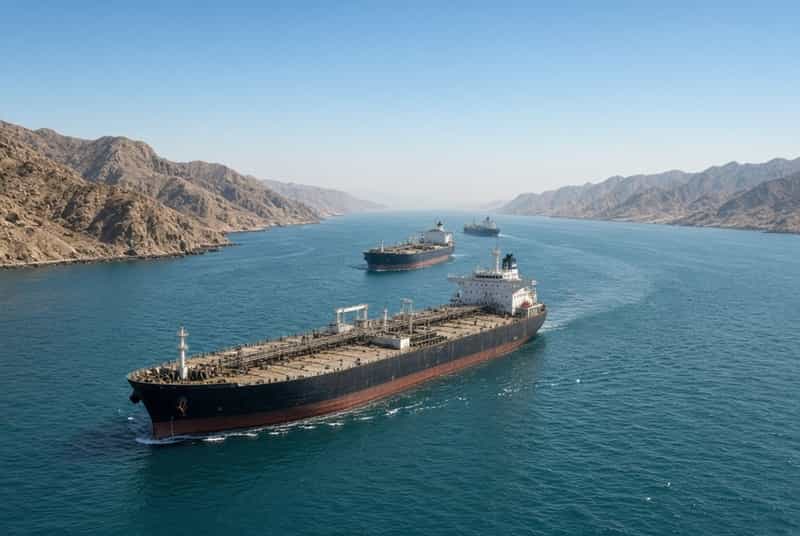
The Strait of Hormuz is one of the world’s most important maritime energy routes. Prolonged restrictions or attacks on commercial vessels can affect shipping costs, insurance premiums and expectations for global oil and liquefied natural gas supplies.
Details of any Iran-Oman arrangement remain subject to negotiation. Proposals reportedly under discussion include defined routes close to the Iranian and Omani coasts, but no final, fully implemented agreement had been announced at publication time.
For that reason, reports suggesting that the waterway is about to return to normal should be treated cautiously.
Pentagon presses manufacturers for faster production
The Pentagon is separately asking U.S. defense manufacturers to accelerate weapons and munitions production.
Pentagon spokesperson Sean Parnell confirmed that the department was working to expand acquisitions and deliver weapons more quickly. He characterized the effort as part of a broader modernization program that began before the current conflict.
The Associated Press reported that the initiative also reflects concern about diminished supplies of advanced missile interceptors. Precise public estimates of operational stockpiles should be treated carefully because they are based on outside analysis rather than complete Pentagon inventory data.
What happens next?
Three developments now require close attention:
- Whether Saudi Arabia attributes the Jazan fire to an external attack after completing its investigation.
- Whether the Houthis continue operations against Saudi territory or Yemeni government infrastructure.
- Whether Iran, Oman and other parties announce a verifiable maritime agreement for the Strait of Hormuz.
The immediate damage at Jazan appears contained and no casualties were reported. The wider strategic danger, however, lies in several interconnected confrontations escalating at the same time.
Frequently asked questions
Did the Houthis attack Saudi Aramco?
The Houthis say they attacked Aramco’s Jazan refinery with a drone. Saudi Arabia confirmed a fire at the facility but did not publicly confirm that a Houthi drone caused it.
Were there casualties at the refinery?
Saudi authorities reported no casualties and said the fire was extinguished.
Is the Strait of Hormuz reopening?
Not yet. Iran and Oman are discussing maritime routes, but Iranian officials say a route agreement would not automatically amount to fully reopening the strait.
Why is the Mocha port important?
Mocha is a government-controlled Red Sea port that offers an alternative to facilities around Hodeida, which are controlled by the Houthis.
Oil Surplus Forecast: WTI Near $73 as Hormuz Masks the Glut
More…