Velvet PET Masterbatch Brings an HDPE Feel to PET Bottles – Polymer Price Trends
Velvet PET Masterbatch Brings an HDPE Feel to PET Bottles – Full price table (03/08/2026 →10/08/2026)
| ITEM | 03/08/2026 | 10/08/2026 | +/− |
|---|---|---|---|
| Bottle grade PET chips domestic market | 7,450 yuan/ton | 7,360 yuan/ton | -90 |
| Chinese bottle-grade PET chips FOB export price | 1,005 $/ton | 1,000 $/ton | -5 |
| LDPE CFR Est China | 1,210 $/ton | 1,110 $/ton | – |
| PET Semidull — Fiber chips | 7,050 yuan/ton | 7,080 yuan/ton | +30 |
| PET Bright — Fiber chips | 7,050 yuan/ton | 7,080 yuan/ton | +30 |
| Pure Terephthalic Acid PTA domestic market | 5,910 yuan/ton | 6,015 yuan/ton | +105 |
| Pure Terephthalic Acid PTA FOB China | 795 $/ton | 800 $/ton | +5 |
| Monoethyleneglycol (MEG) South China | 5,208 yuan/ton | 5,430 yuan/ton | +222 |
| Monoethyleneglycol (MEG) CFR China | 640 $/ton | 640 $/ton | – |
| Paraxylene PX FOB Taiwan market | 1,068 $/ton | 1,074 $/ton | +6 |
| Paraxylene PX FOB South-Korea market | 1,057 $/ton | 1,063 $/ton | +6 |
| Paraxylene PX FOB EU market | 1,281 $/ton | 1,131 $/ton | -150 |
| Polyester filament POY 150D/48F domestic market | 8,450 yuan/ton | 8,400 yuan/ton | -50 |
| Recycled Polyester filament POY 150/48F domestic market | 7,200 yuan/ton | 7,200 yuan/ton | – |
| Polyester filament DTY 150D/48F domestic market | 9,450 yuan/ton | 9,350 yuan/ton | -100 |
| Polyester filament FDY 68D/24F | 9,300 yuan/ton | 9,250 yuan/ton | -50 |
| Polyester filament FDY 150D/96F domestic market | 8.650 yuan/ton | 8,600 yuan/ton | -50 |
| Polyester staple fiber 1.4D 38mm domestic market | 7,550 yuan/ton | 7,560 yuan/ton | +10 |
| Caprolactam (CPL) domestic market | 12,100 yuan/ton | 11,800 yuan/ton | -300 |
| Caprolactam (CPL) CFR China | 1,530 $/ton | 1,100 $/ton | -430 |
| Nylon 6 chips overseas market | Northeast Asia / China Export$1,680 – $1,730 /MTCFRSoutheast Asia $1,740 – $1,760 / MT CFR
Europe (Germany Benchmark) $2,120 – $2,180 / MT FD EU North America (USA)$2,670 – $3,130 / MT Delivered |
Northeast Asia (China/Taiwan) $1.68 – $1.73 / kg Southeast Asia $1.72 – $1.76 / kg Middle East $1.78 – $1.82 / kg Europe (FOB) $2.05 – $2.12 / kg North America (FOB) $2.60 – $2.67 / kg
|
– |
| Nylon 6 chips conventional spinning domestic market | 12,300 yuan/ton | 12,100 yuan/ton | -200 |
| Nylon 6 chips high speed spinning domestic market | 12,550 yuan/ton | 12,450 yuan/ton | -100 |
| Nylon 6.6 chips domestic market | 16,800 yuan/ton | 16,800 yuan/ton | – |
| Nylon6 Filament POY 86D/24F domestic market | 14,000 yuan/ton | 14,000 yuan/ton | – |
| Nylon6 Filament DTY 70D/24F domestic market | 16,100 yuan/ton | 16,100 yuan/ton | – |
| Nylon6 Filament FDY 70D/24F | 14,100 yuan/ton | 14,100 yuan/ton | – |
| Spandex 20D domestic market | 31,700 yuan/ton | 31,700 yuan/ton | – |
| Spandex 30D domestic market | 31,200 yuan/ton | 31,200 yuan/ton | – |
| Spandex 40D domestic market | 28,500 yuan/ton | 28,500 yuan/ton | – |
| Adipic Acid China domestic market | 8,400 yuan/ton | 8,300 yuan/ton | -100 |
| Adipic Acid Europe market | 1,81 $/ton | 1,810 $/ton | – |
| Benzene domestic market East China | 8,000 yuan/ton | 7,500 yuan/ton | -500 |
| Benzene CFR China | 979 $/ton | 915 $/ton | -64 |
| Ethylene South East market | 940 $/ton | 950 $/ton | +10 |
| Ethylene NWE market CIF | 880 $/ton | 857 $/ton | -23 |
| Acrylonitrile (ACN) domestic market | 12,300 yuan/ton | 12,300 yuan/ton | – |
| Acrylonitrile ACN Southeast Asia | 1,480 $/ton | 1,510 $/ton | +30 |
| Acrylic staple fiber (ASF) CFR China | 15,855 yuan/ton | 15,885 yuan/ton | – |
| VSF viscose staple fiber | 14,200 yuan/ton | 14,200 yuan/ton | – |
| PP Powder domestic market | 9,990 yuan/ton | 9,990 yuan/ton | – |
| Naphtha overseas market | 778 $/ton | 717 $/ton | -61 |
| Phenol domestic market (Jinan Dezheng / Yanshan Petrochemical, Shandong) | 8,637 yuan/ton | 8,410 yuan/ton | -227 |
| Recycled PET | 4,200 yuan/ton | 4,200 yuan/ton | – |
Velvet PET Masterbatch Gives PET Bottles a New Tactile Identity
Key facts
- Product: Velvet PET masterbatch
- Manufacturer: Lifocolor
- Application: PET and recycled-PET bottles
- Processing method: injection stretch blow molding
- Main effect: a soft, matte surface resembling HDPE
- Presentation: Fakuma 2026, Friedrichshafen, Germany
- Event dates: October 12–16, 2026
Lifocolor is preparing to present a masterbatch that changes how PET bottles look and feel without requiring manufacturers to abandon the established PET production process.
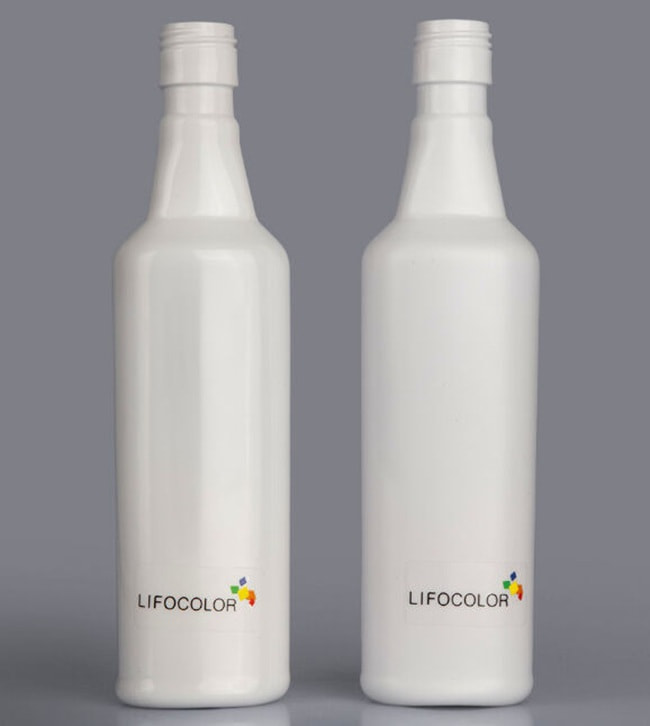
The Velvet PET masterbatch creates the soft, matte surface commonly associated with high-density polyethylene, or HDPE. Unlike an actual material coating, the effect is introduced through a formulation developed for PET processed by injection stretch blow molding, commonly known as ISBM.
The technology will form part of Lifocolor’s exhibit at Fakuma 2026, where the German company plans to highlight packaging solutions related to material conversion, recycling-sortability and changing European requirements.
An HDPE-like finish produced in PET
Standard PET bottles are often recognized by their smooth, glossy surface. HDPE bottles, by comparison, generally have a softer-looking, more opaque finish that is widely used for cosmetics, personal-care products and pharmaceuticals.
Velvet PET is intended to narrow that sensory difference. Lifocolor says its formulation can give a PET bottle a velvety, premium-quality surface while retaining the dimensional precision and processing characteristics associated with PET.
The manufacturer describes the masterbatch as a “drop-in” solution for existing ISBM lines. This could allow processors to introduce a different surface effect without installing an extrusion blow-molding line solely to obtain an HDPE-style appearance.
Actual compatibility, dosing and performance will nevertheless depend on the bottle design, polymer grade and production parameters. Converters should therefore validate the formulation on their own equipment before commercial use.
Why the ISBM process matters
ISBM begins with an injection-molded preform, which is subsequently reheated, stretched and blown into its final shape. It is extensively used for PET beverage, food, cosmetic and pharmaceutical containers.
According to Lifocolor’s technical presentation of Velvet PET, the masterbatch can be adapted to PET or recycled PET, production settings, opacity, color and the desired tactile effect.
The company also says formulations can be prepared for food-contact applications. This statement refers to the availability of suitable formulations and supporting documentation; it does not automatically make every finished package compliant. Compliance remains dependent on the complete container, its intended contents and the conditions of use.
Potential applications beyond cosmetics
The combination of a matte finish and PET processing may be relevant to several markets:
- Cosmetics and personal-care packaging, where touch and appearance influence product positioning
- Food bottles requiring a differentiated visual identity
- Pharmaceutical containers that need controlled, application-specific formulations
- Brands considering a transition from HDPE to PET or recycled PET
A material change should not be judged by appearance alone. Packaging developers must also examine barrier performance, closures, decoration, transport resistance, product compatibility and local recycling guidance.
NIR-detectable dark packaging
Velvet PET is only one part of the portfolio Lifocolor plans to bring to Fakuma. The company will also show black masterbatches designed to be detectable by near-infrared, or NIR, sorting equipment.
Conventional carbon-black pigments can absorb near-infrared light, making some dark packages difficult for automated sorting systems to identify. Detectable formulations are designed to improve recognition, although successful sorting still depends on the package as a whole and on the equipment used at each facility.
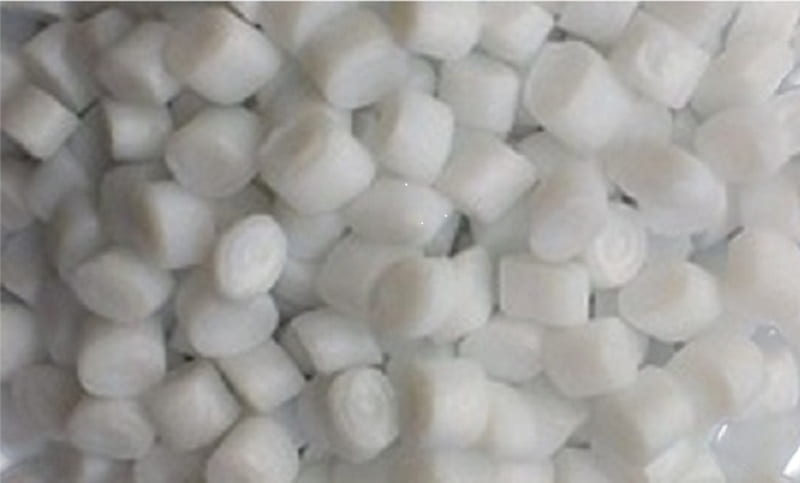
Lifocolor says certain black formulations can also be laser-marked. This makes it possible to add permanent codes or identifiers without conventional printing inks. The planned range additionally includes NIR-detectable silver concentrates. Velvet PET masterbatch
Color solutions for recycled PET
The company’s Fakuma portfolio will include products from its LifoCycle range for coloring and correcting the appearance of recycled PET.
Color correction can help processors manage some of the visual variability found in recycled feedstock. It does not, however, remove contaminants or improve the underlying quality of unsuitable material. Feedstock specifications and quality-control procedures remain essential.
Decorative developments announced for the exhibition include holographic depth effects made with coated glitter pigments, as well as surfaces inspired by granite, sandstone and cork.
Food-contact documentation under updated EU rules
Lifocolor has also reorganized its food-contact masterbatch offering according to the intended application and the level of documentation required.
The change is connected to Commission Regulation (EU) 2025/351, which amended several EU rules covering plastic food-contact materials, recycled plastics and good manufacturing practice.
The regulation entered into force in March 2025 and introduced changes concerning matters such as purity, quality control and supporting information. Companies should examine the applicable provisions and transitional arrangements for their specific products rather than treating the regulation as a single future implementation date.
What to watch at Fakuma 2026
The 30th Fakuma trade fair will take place in Friedrichshafen from October 12 to 16, 2026, according to the official event website.
Lifocolor’s presentation reflects three increasingly connected packaging priorities: distinctive design, compatibility with sorting technology and more detailed regulatory documentation.
Velvet PET is particularly notable because it attempts to change the consumer’s perception of a PET bottle without changing the underlying polymer to HDPE. Its broader value will ultimately depend on industrial trials, finished-package compliance and how effectively the resulting containers perform within real collection and recycling systems.
Frequently asked questions
What is Velvet PET?
Velvet PET is a Lifocolor additive masterbatch developed to give PET bottles a soft, matte surface resembling the look and feel of HDPE.
Does Velvet PET require a different molding process?
Lifocolor developed it for PET injection stretch blow molding. The company says it can be incorporated into existing ISBM production lines, subject to application-specific testing.
Can it be used with recycled PET?
The manufacturer states that formulations can be adapted to both PET and recycled PET. Results depend on the recycled feedstock, bottle design and production settings.
Is Velvet PET suitable for food packaging?
Lifocolor says food-contact formulations are available. The legal suitability of a finished package must still be assessed for its composition, intended food and conditions of use.
When is Fakuma 2026?
Fakuma 2026 is scheduled for October 12–16, 2026, at Messe Friedrichshafen in Germany.
Sources: Lifocolor product information, recent Fakuma portfolio report published August 6, 2026, European Union regulation, and the official Fakuma website.
PET Recycling Market Crisis Exposes Gap Between Sustainability Goals and Economic Reality