Oil Surplus Forecast: WTI Near $73 as Hormuz Masks the Glut
Oil Surplus Forecast: WTI Near $73 as Hormuz Masks the Glut
The short answer: At the $73-per-barrel WTI reference level used in this analysis, oil still appears to carry a substantial Strait of Hormuz and war-risk premium. If the waterway were fully open, tanker traffic had normalised and the US-Iran conflict no longer threatened regional supply, WTI below $60 would be a plausible counterfactual—not a certainty. The reason is increasingly clear: supply is growing faster than consumption, and official forecasts point to a large accumulation of global oil inventories through 2027.
Oil market snapshot
| Benchmark | Approximate price | Primary role |
|---|---|---|
| WTI crude | Near $73 per barrel | Reference level requested for this analysis |
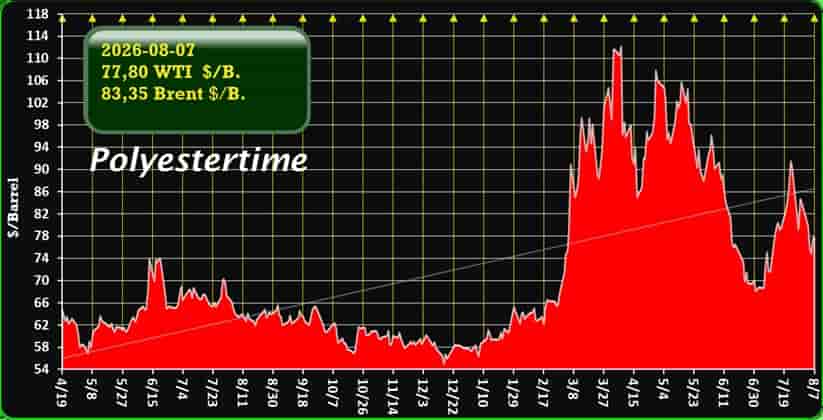
| Verified 7 August WTI | About $77–$78 per barrel | Later intraday market reporting; update before publication |
| EIA 2027 Brent forecast | $65 per barrel average | Baseline forecast with continued inventory accumulation |
The $73 WTI figure is a reference snapshot, not the latest verified quote for 7 August. Market reports available that day showed WTI closer to $77–$78. This distinction should remain visible: changing a market price to fit a narrative would weaken both reader trust and search credibility.
The central argument: without Hormuz risk, WTI could be below $60
No one can observe the exact price oil would have reached in a world without the Hormuz disruption. It is a counterfactual. Nevertheless, a sub-$60 WTI price is increasingly plausible when three factors are considered together:
-
The war and shipping disruption added a large premium. Brent fell below $70 in early July after the June ceasefire improved tanker traffic, showing how quickly the market repriced when supply risk eased.
-
A strong surplus is developing. The US Energy Information Administration forecasts global inventories to build by an average of 2.7 million barrels per day in the fourth quarter of 2026 and 5.0 million barrels per day in 2027 as supply grows faster than consumption.
-
WTI normally trades below Brent. The EIA forecasts Brent to average $65 in 2027. A normal Brent–WTI discount, combined with a fully removed war premium and larger-than-expected stock builds, creates a credible route to WTI below $60.
That conclusion must not be presented as a guaranteed fair value. The EIA’s published baseline is $65 for Brent, not a formal sub-$60 WTI forecast. The below-$60 figure is an inference based on the benchmark spread, surplus trajectory and removal of the geopolitical premium. oil surplus forecast
Why WTI can remain near $73 despite the surplus
The market is pricing today’s physical risk before tomorrow’s excess supply. A barrel that must pass through a conflict zone is less certain to arrive on time and may cost more to insure and transport. That can support WTI near $73 even while the medium-term balance is turning bearish.
The immediate focus is the Strait of Hormuz. Iran and Oman have reported progress on arrangements for commercial shipping, but public accounts differ over whether the negotiations amount to a full reopening. Iranian officials have linked safe passage to wider conditions, including an end to the US blockade of Iranian ports. That gap between diplomatic optimism and operational certainty is keeping volatility high.
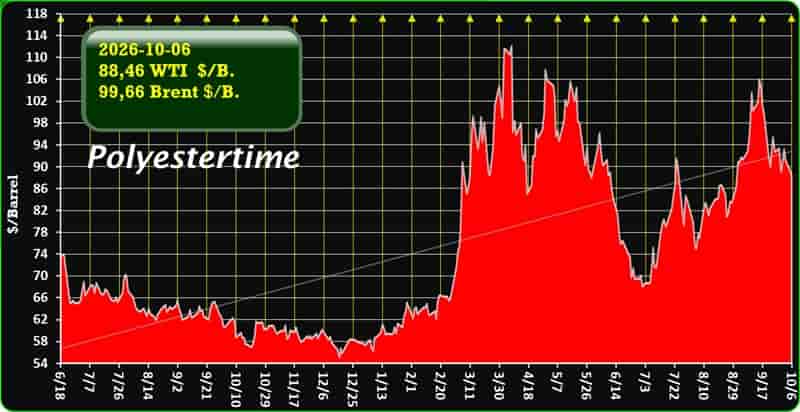
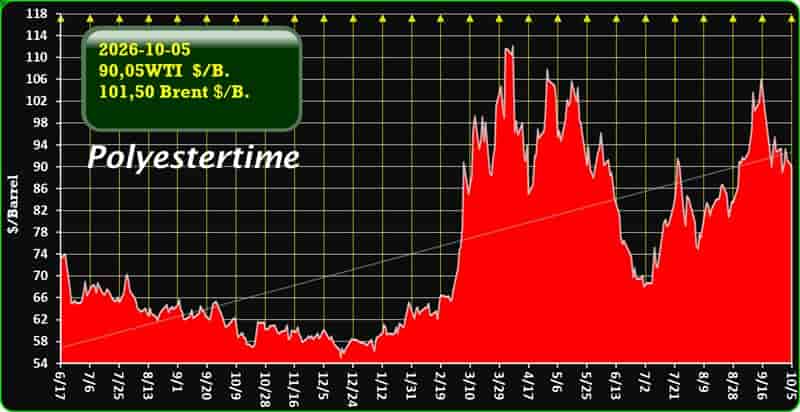
Recent price action reflects this uncertainty. Brent rose back above $82 on 6 August after falling below $80 during the preceding three-day decline. Verified 7 August reports placed WTI closer to $77–$78. The rebound shows that traders were not yet willing to remove the conflict premium, even though the underlying supply outlook pointed in the opposite direction.
What is happening in the US-Iran conflict?
The war began on 28 February 2026 and sharply impeded energy trade through the Strait of Hormuz. A June memorandum of understanding between the United States and Iran supported an interim ceasefire and a recovery in tanker traffic, but renewed hostilities in July showed how fragile that improvement was.
The latest diplomatic effort centres on Iran and Oman, the two states bordering the strait. Reports on 6–7 August indicated that they were close to an arrangement for managing vessel traffic. However, the available reporting did not establish a final, unconditional and durable reopening. The practical questions—who manages each route, what security conditions apply and how the US blockade is addressed—remain central.
This distinction matters. A political announcement can push prices lower within minutes, but a sustained decline would probably require evidence that tankers are moving safely, insurance costs are easing and export volumes are recovering. Conversely, renewed attacks on ships, ports or regional energy infrastructure could quickly lift the risk premium.
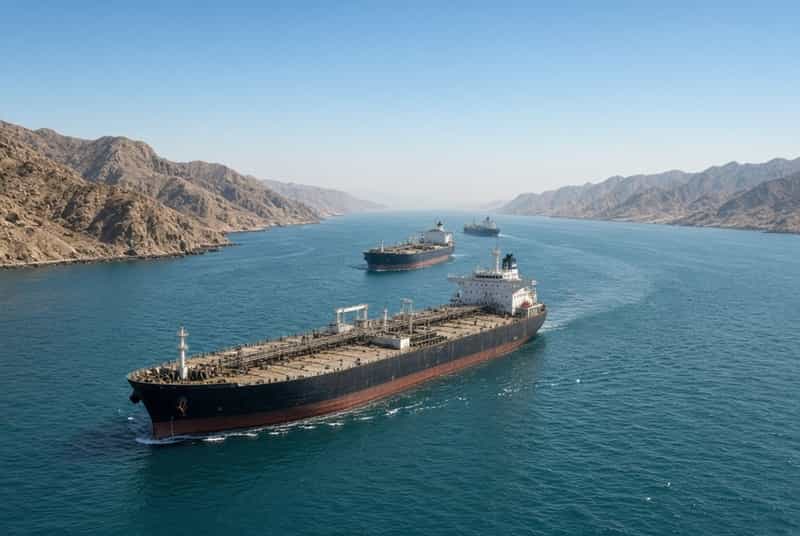
Why the Strait of Hormuz matters so much
The Strait of Hormuz is the world’s most important oil transit chokepoint. US Energy Information Administration data show that, in 2024 and the first quarter of 2025, flows through the strait represented about one-fifth of global oil and petroleum-product consumption and more than one-quarter of seaborne oil trade. Around one-fifth of global liquefied natural gas trade also used the route in 2024.
There are bypass pipelines, but they cannot replace all seaborne capacity. The EIA estimated that Saudi and Emirati pipelines had about 2.6 million barrels per day of unused capacity that could bypass Hormuz during a disruption. That is helpful, but far smaller than the volume normally exposed to the strait.
Asian economies bear much of the direct supply risk. The EIA estimated that 84% of crude oil and condensate moving through Hormuz in 2024 went to Asian markets, with China, India, Japan and South Korea the leading destinations. The global effect nevertheless reaches consumers everywhere through benchmark prices, freight, insurance, refining costs and inflation expectations.
What WTI near $73 tells us
WTI near $73 does not necessarily signal a tight underlying market. It can instead reflect a loose market temporarily overlaid by an unusually large geopolitical premium. Brent normally carries more direct exposure to international shipping and Middle East risks, while WTI reflects North American conditions more closely, but both benchmarks react to a threat of disruption at Hormuz.
The June ceasefire pushed Brent below $70 in early July, according to the EIA. That move provides real-world evidence that easing Hormuz risk can remove many dollars from a barrel. If the disruption disappeared entirely while global stocks were building rapidly, WTI could test levels below $60. The timing and depth of such a decline would still depend on actual tanker flows, producer policy and demand.
It would be misleading, however, to attribute every daily move to the war. Oil also responds to global demand, OPEC+ supply policy, US production and inventories, the dollar, refinery activity and non-Middle Eastern exports. The International Energy Agency has noted that weaker demand, emergency stock releases, rerouted Gulf exports and higher production outside the Middle East helped the market adjust to the initial shock.
Three scenarios for an increasingly oversupplied market
1. A workable shipping agreement
If Iran and Oman establish a credible navigation system and tanker flows increase without fresh attacks, the security premium could unwind while surplus barrels move into storage. Under that combination, WTI below $60 becomes plausible. The strongest confirmation would come from actual vessel movements, lower war-risk insurance costs and sustained inventory builds—not from headlines alone.
2. Prolonged uncertainty
If negotiations continue without a durable operating framework, WTI may remain supported above the level implied by supply and demand alone. Conflicting statements could produce sharp moves while physical supply remains constrained or expensive to transport. The surplus would not vanish; its bearish effect would merely be delayed or partly hidden.
3. A renewed escalation
Attacks on tankers, export terminals, pipelines or other regional infrastructure would create the clearest upside risk. The scale of any move would depend on how much supply is lost, for how long, and whether bypass routes, non-Middle Eastern production or emergency stocks can compensate. Even a strong future surplus cannot prevent a short-term spike when deliverable supply is suddenly threatened.
These are scenarios, not price forecasts. War developments and oil prices are inherently difficult to predict.
What consumers and businesses should watch next
Five indicators are more useful than any single headline:
-
Confirmed tanker traffic: Are commercial vessels moving through Hormuz consistently?
-
The final Iran-Oman terms: Do the arrangements provide free and safe passage, and are they accepted by the relevant parties?
-
US and Iranian military actions: A ceasefire in practice matters more than optimistic language.
-
Shipping and insurance costs: Falling war-risk premiums would signal improved confidence.
-
IEA and EIA updates: Supply, demand, inventory and emergency-stock data show whether the physical market is tightening or adjusting.
For motorists, airlines, freight companies and energy-intensive manufacturers, crude-price changes do not pass through instantly or evenly. Exchange rates, taxes, refining margins and local inventories also affect retail fuel prices.
Frequently asked questions
Why is Brent more expensive than WTI?
Brent is the main benchmark for globally traded crude and is more directly exposed to international shipping and Middle East supply risks. WTI reflects the US market more closely. Quality, location, transport and inventory conditions also influence the spread.
Could a Hormuz deal lower oil prices?
Yes, if it produces safe and sustained tanker traffic. A preliminary agreement may move prices temporarily, but lasting relief would require operational proof and lower transport and insurance risks.
Could oil prices rise further?
Yes. Renewed attacks or a deeper disruption to exports could lift prices. Greater supply from other producers, weaker demand, emergency stocks or a durable ceasefire could limit or reverse the increase.
Is WTI currently at $73?
The $73 figure is the reference snapshot for this article. It is not the latest verified 7 August quote: reporting that day placed WTI closer to $77–$78. Check a live market source and update the timestamp immediately before publication.
Would oil definitely trade below $60 without the Hormuz disruption?
No. Below $60 is a plausible WTI counterfactual, not a guaranteed price. It is based on removing the war premium from a market in which the EIA expects supply to exceed consumption and inventories to build sharply. Demand, OPEC+ policy, the dollar and production outages could produce a different result.
Bottom line
The oil surplus forecast changes how WTI near $73 should be interpreted. The price is not only a verdict on supply and demand; it also includes the cost of an impaired Strait of Hormuz and the possibility of renewed escalation. Without that disruption, and with official projections showing very large inventory builds, WTI below $60 is increasingly plausible. The decisive evidence will be sustained tanker movement, falling insurance costs and visible stock accumulation.
Sources and methodology
This article distinguishes verified facts from claims and scenarios. Market prices are time-sensitive and rounded. Conflict-related statements are attributed where accounts differ.
-
US Energy Information Administration: Short-Term Energy Outlook, July 2026
-
US Energy Information Administration: July 2026 forecast and inventory-build outlook
-
US Energy Information Administration: Strait of Hormuz flows and bypass capacity
-
International Energy Agency: Middle East and global energy markets
-
Associated Press: latest regional and Strait of Hormuz developments, 6 August 2026
-
Trading Economics: Brent crude market snapshot, 7 August 2026
US Iran Oil Prices: Brent at $79, WTI at $75